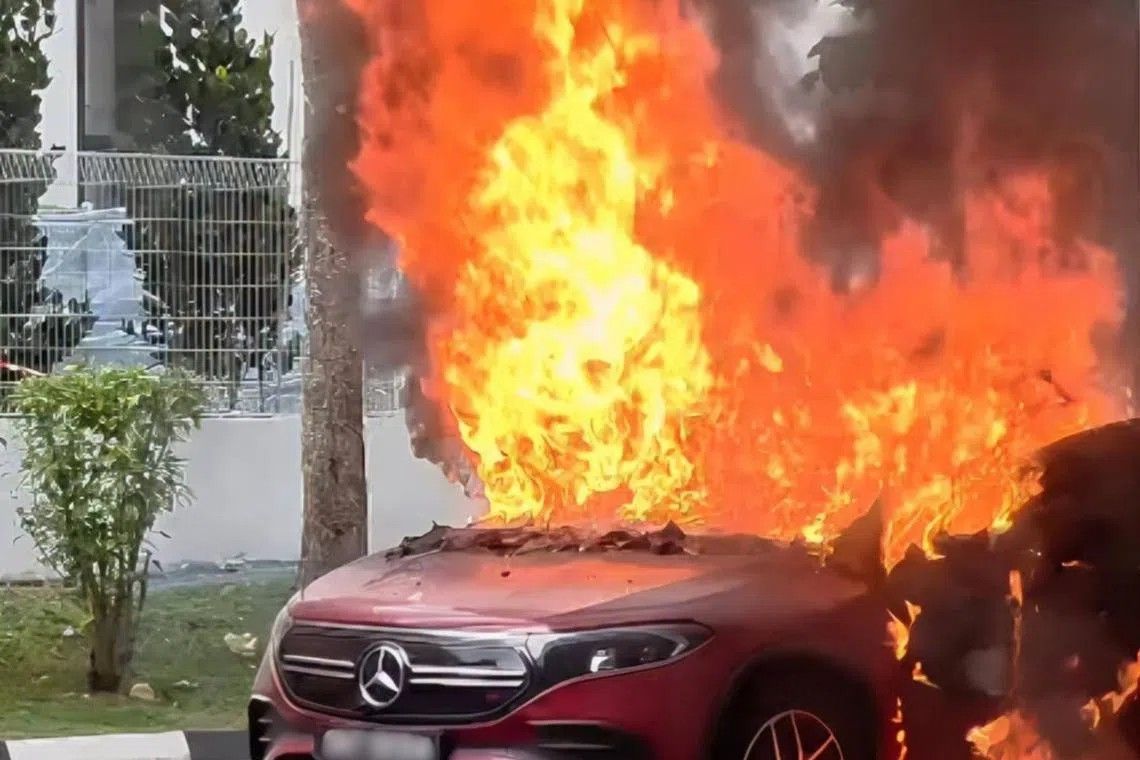
A fire broke out inside an electric vehicle parked near a multi-storey carpark entrance at Block 548 Woodlands Drive 44 in Singapore on the morning of July 21, prompting a rapid emergency response and raising fresh concerns about EV safety in densely populated residential areas. The Singapore Civil Defence Force (SCDF) received the alarm at approximately 10.10am and dispatched crews to the scene near Vista Point, where they discovered the combustion confined largely to the vehicle's interior. Firefighters deployed a single water jet to extinguish the flames, bringing the incident under control without any reported casualties or injuries to bystanders or emergency personnel.
Accounts from the vehicle's driver provide crucial insight into how the incident unfolded and the sequence of events that led to SCDF intervention. The motorist recalled that she was exiting the carpark when an acrid burning odour first became apparent inside the cabin. Upon stopping and investigating, she observed smoke billowing from within the vehicle, prompting immediate concern. She identified the fire's apparent origin as the gap between the driver and front passenger seats—the location where the vehicle's battery pack is housed. This detail aligns with known patterns in EV fire incidents worldwide, where thermal runaway in lithium-ion battery cells frequently produces flames and smoke in the underbody and central console areas.
The driver's attempts to address the situation initially relied on assistance from nearby security personnel, who responded to her urgent request for help. However, the security guards found their efforts to suppress the fire using conventional fire extinguishers to be ineffective against what was rapidly becoming an uncontrollable blaze. Recognising the escalating danger and fearing potential explosion as flames intensified and spread, both the driver and security staff wisely retreated to a safe distance and immediately contacted the SCDF. This decision proved prudent, as EV batteries can release flammable gases and propellant when ignited, making amateur suppression attempts potentially hazardous.
Photographic documentation of the vehicle following the incident reveals the extent of thermal damage sustained. The interior of the car was almost entirely charred, with virtually no intact upholstery, padding, or cabin materials remaining. The dashboard had warped and collapsed severely under the intense heat, and the metal framework supporting the front seats had become exposed where the fire's epicentre had burned away surrounding components. Such comprehensive incineration underscores the intense temperature generated by a lithium-ion battery thermal runaway event, which can exceed 1000 degrees Celsius, far surpassing the heat generated by conventional petrol or diesel vehicle fires.
The incident has prompted SCDF to open a formal investigation into the root cause of the battery ignition. Without a clear trigger—whether manufacturing defect, impact damage, prolonged overcharging, or electrical fault—authorities cannot yet determine whether this represents an isolated malfunction or signals a broader safety concern affecting specific vehicle models or battery suppliers. Such investigations are critical for public safety and for building confidence in EV adoption across Singapore and the broader Southeast Asian region, where electric vehicle ownership has been steadily climbing as governments promote electrification to meet carbon reduction targets.
Singapore has been positioning itself as a leader in electric vehicle infrastructure and adoption, with substantial government incentives for battery-powered vehicles and growing investment in charging networks across the island. However, incidents such as this underscore the importance of rigorous safety standards, manufacturer accountability, and public education regarding the proper operation and maintenance of EVs. The incident also highlights potential challenges for high-density urban environments and residential areas, where carpark fires pose particular risks due to proximity to homes and limited emergency egress routes.
For Malaysian readers and the broader Southeast Asian context, this incident carries particular relevance. Malaysia's automotive sector has been gradually embracing electrification, with national policies increasingly favouring zero-emission vehicles. However, the country's infrastructure for EV charging remains less developed than Singapore's, and public awareness of battery safety protocols may be less widespread. Similarly, in sprawling HDB-type residential developments common across Malaysia and other regional cities, the concentration of parked vehicles and proximity to housing means that any vehicle fire poses significant risks to broader communities.
The episode also raises important questions about emergency preparedness and training. While SCDF's response was swift and effective, not all fire brigades in the region may have personnel specifically trained in EV fire suppression techniques, which differ from conventional vehicle fire protocols. Water, while effective in cooling lithium-ion batteries and reducing fire spread, does not always extinguish these fires completely, and requires careful application to prevent steam explosions or further thermal runaway. Regional fire services may need to upgrade training and protocols to address the growing fleet of battery-powered vehicles on their roads.
Insurance and liability considerations also loom large for vehicle owners and manufacturers in the aftermath of such incidents. While no injuries occurred in this Woodlands case, a similar fire occurring in an enclosed carpark with residents nearby or in a multi-vehicle setting could have resulted in catastrophic property damage and potential loss of life. Insurance companies and regulatory bodies will likely scrutinise such incidents closely when assessing risk profiles for EV policies and coverage terms across the region.
The vehicle was eventually towed away from the carpark at approximately 12.15pm, according to reporting from the Chinese-language media outlets that interviewed the driver. As the SCDF continues its investigation and manufacturers and regulators examine the findings, this incident will likely influence future policy discussions around EV safety standards, mandatory inspections, and the role of technology and design in preventing thermal runaway events. For now, the successful containment and lack of injuries represent a positive outcome, but the underlying cause remains a critical question for authorities and the broader automotive industry seeking to build public trust in electric vehicle technology.

