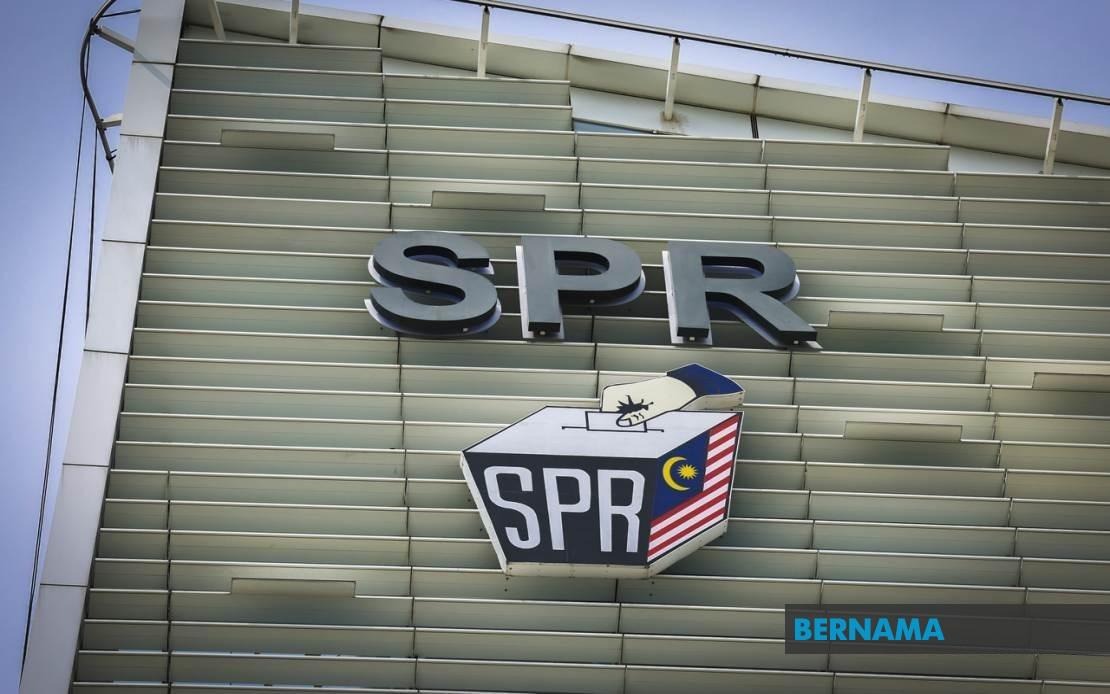
The Election Commission has committed to examining a proposal that would extend postal voting privileges to auxiliary police officers deployed across Malaysia's most sensitive installations and essential services. Deputy Minister in the Prime Minister's Department (Law and Institutional Reform) M. Kulasegaran announced the decision following a motion raised by Senator Datuk Salehuddin Saidin during the Dewan Negara's Adjournment Speech session, signalling movement on an issue that affects a substantial segment of the country's security workforce.
Auxiliary police personnel represent a distinct category within Malaysia's broader security apparatus, yet currently find themselves excluded from the early and postal voting mechanisms available to their counterparts in the uniformed forces. Approximately 27,000 of these officers maintain watch over critical national infrastructure spanning ports, airports, energy facilities, financial institutions, government-linked companies, and utilities across multiple ministries and agencies. Their deployment profile differs fundamentally from regular police and armed forces personnel, creating a gap in electoral accessibility that has prompted legislative attention.
The operational challenges facing auxiliary police during polling days form the crux of the proposal. Unlike standard voters who can plan around election schedules, officers stationed at strategic facilities often cannot be released en masse without compromising security protocols and essential service continuity. A simultaneous grant of leave to all auxiliary police at a particular installation could create dangerous gaps in surveillance and protection systems, particularly at ports, airports, and power generation facilities where continuous monitoring proves essential. This structural constraint distinguishes auxiliary personnel from other security categories already entitled to postal voting arrangements.
Kulasegaran outlined the three existing postal voting categories currently recognised under Malaysian electoral regulations. Category 1A encompasses Election Commission members and staff, election workers, armed forces and police personnel performing duty, and accredited media on assignment during polls. Category 1B serves Malaysian citizens permanently residing abroad who retain voting rights. Category 1C includes personnel from select government departments and agencies required to work on election day. The potential expansion to incorporate auxiliary police would represent a meaningful adjustment to this framework, though not an unprecedented one.
The Deputy Minister emphasised that any decision would navigate multiple considerations beyond simple administrative convenience. Electoral law provisions, operational security requirements, and the imperative to maintain electoral integrity throughout the voting process all demand careful analysis. The Election Commission's approach indicates recognition that security personnel categories deserve accommodation within democratic processes without compromising either election standards or national security infrastructure. This balancing act reflects the complexity of administering elections across a modern nation-state with dispersed critical facilities.
Kulasegaran additionally highlighted an alternative mechanism already available to voters facing geographical inconvenience: the option to transfer electoral registration to their current place of residence. This approach allows officers and other relocated citizens to vote at accessible polling stations aligned with their actual abodes rather than their official registration constituencies. Encouraging such transfers represents a complementary strategy to expand voting participation, though it provides incomplete solutions for those whose security duties genuinely prevent simultaneous leave on polling day.
Salehuddin's motion proposed comprehensive government action involving the Election Commission, Home Ministry, and relevant security and infrastructure agencies. His suggestion included potential amendments to the Election (Registration of Electors) Regulations 1981, indicating recognition that legislative revision might prove necessary to accommodate the auxiliary police cohort. This procedural emphasis underscores the formal pathway required for expanding electoral participation categories and reflects Malaysia's commitment to regulatory precision in electoral matters.
The proposal carries implications beyond administrative procedure. Roughly 27,000 workers across Malaysia's most critical economic and security infrastructure deserve fair participation in democratic processes. Their roles protecting ports handling billions in monthly trade, airports managing millions of passengers annually, and utilities serving the entire nation merit recognition within electoral frameworks. Denial of voting access risks creating a permanent disenfranchised class among those performing essential national security functions, a situation increasingly difficult to justify within democratic principles.
From a Southeast Asian perspective, Malaysia's consideration of expanded postal voting for security personnel aligns with broader regional trends toward facilitating civic participation among those serving essential functions. Neighbouring democracies have grappled with comparable challenges, recognising that sustainable electoral legitimacy requires incorporating all citizen categories within democratic processes. The region's experiences with balancing security imperatives against democratic inclusion offer valuable comparative context for Malaysia's deliberations.
The timing of this parliamentary attention reflects evolving recognition that auxiliary police, despite their critical roles, have been overlooked in previous electoral reforms. As Malaysia continues developing its critical infrastructure—particularly in energy transition, digital security, and supply chain resilience—the auxiliary police workforce will likely expand, magnifying any existing electoral access disparities. Addressing the issue prospectively through legislative amendment appears more efficient than managing recurring cases of disenfranchisement.
The Dewan Negara motion also represents a broader shift in parliamentary oversight, with Datuk Awang Bemee Awang Ali Basah noting this constituted the first government administrative matter debated during an Adjournment Speech since the procedure's introduction in 2022. This institutional development reflects the Senate's evolving role in scrutinising executive administration and ensures matters affecting specific functional groups receive parliamentary attention and ministerial response.
The Election Commission's commitment to studying this proposal establishes a clear pathway for evidence-based decision-making. The examination will require input from security agencies regarding operational vulnerabilities, electoral specialists on implementation mechanics, and legal experts on constitutional alignment. A comprehensive study framework increases likelihood that any eventual decision reflects genuine consensus among stakeholders rather than hasty political accommodation.
Resolution of the auxiliary police postal voting question ultimately depends on demonstrating that security interests and electoral fairness can coexist through carefully designed mechanisms. The Election Commission's analytical approach suggests officials recognise this as achievable, provided appropriate safeguards prevent fraud or operational compromise. For Malaysia's approximately 27,000 auxiliary police and the public infrastructure they protect, the coming examination period will determine whether democratic participation and essential security duties can be satisfactorily balanced within existing or revised electoral law.

