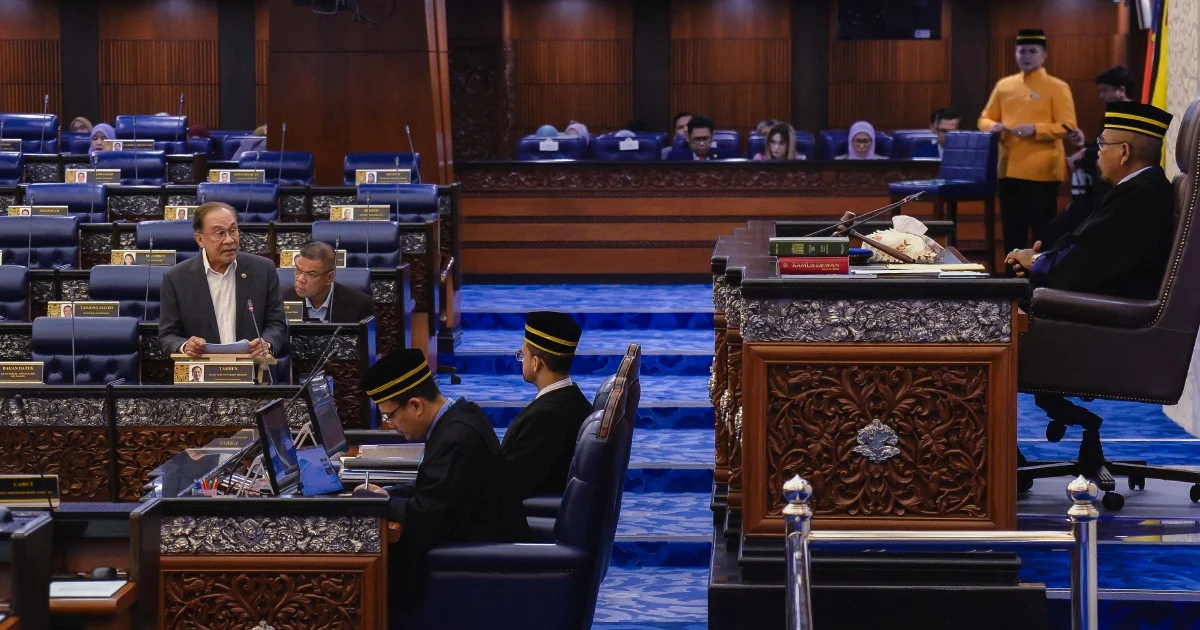
Prime Minister Datuk Seri Anwar Ibrahim has confirmed that the Election Commission will enforce strict compliance with electoral guidelines, signalling a more active regulatory approach towards caretaker administrations that overstep their mandate through financial commitments or significant policy changes.
The statement underscores growing concerns about the conduct of caretaker governments during election periods, when constitutionally-mandated interim administrations continue in a limited capacity pending the formation of a new government. The tension between maintaining essential governance functions and preventing elected executives from abusing their temporary authority during electoral campaigns has long been a contentious issue in Malaysian politics.
During election campaigns, caretaker governments operate under strict constitutional constraints designed to prevent sitting administrations from using state resources or announcing popular policies to gain electoral advantage. These restrictions typically prohibit major financial commitments, policy reversals, or announcements that could influence voter behaviour. The Election Commission's role is to monitor compliance and ensure a level playing field for all competing parties.
The Prime Minister's remarks reflect an acknowledgement that the existing framework requires active enforcement to remain credible. Without meaningful consequences, caretaker restrictions become merely advisory, allowing governments to circumvent electoral fairness principles by announcing incremental benefits, subsidies, or infrastructure projects timed to influence campaign messaging.
Malaysia's electoral framework has experienced numerous instances where caretaker administrations have skirted the boundaries of acceptable conduct. Previous elections have witnessed controversies involving government announcements, procurement decisions, and policy initiatives announced during the campaign period, raising questions about whether such actions violated the spirit—if not the letter—of electoral guidelines.
The Election Commission's willingness to take enforcement action represents a significant development for electoral governance in Southeast Asia's most established democracy. Other regional democracies grapple with similar challenges around caretaker conduct, and Malaysia's approach could establish important precedents for maintaining electoral integrity while preserving executive functionality during transitional periods.
For voters and civil society organisations, the PM's statement offers reassurance that electoral processes will be monitored for compliance. However, questions remain about the specific thresholds that trigger enforcement action and whether the Election Commission possesses sufficient enforcement mechanisms to deter violations effectively. Clear, transparent criteria for what constitutes prohibited financial implications are essential for the policy to function fairly and consistently.
The practical implications extend to all government ministries and agencies, which must now recognise that caretaker periods carry enhanced scrutiny. Officials involved in implementing caretaker government decisions must understand that financial commitments or policy announcements made during campaign periods could face post-election scrutiny or reversal. This uncertainty may slow routine government operations during elections, though the trade-off arguably serves broader democratic integrity.
Business stakeholders, particularly contractors and vendors awaiting government tenders or approvals, should be aware that decisions made during caretaker periods carry heightened legal and political risk. Agreements entered during election campaigns may face challenges if they violate electoral guidelines, potentially creating contractual complications. Prudent business practice suggests deferring non-essential commercial engagements with caretaker governments until a new administration is formally established.
Politically, the statement reflects the current government's commitment to democratic norms—a strategic positioning that demonstrates institutional respect even as the ruling coalition faces electoral uncertainty. By pre-emptively accepting Election Commission oversight, the government establishes moral authority to challenge opposing parties if they violate similar guidelines during their potential future caretaker periods.
The effectiveness of this framework will ultimately depend on the Election Commission's willingness to investigate complaints impartially and apply enforcement mechanisms consistently across all political parties. Public confidence in electoral fairness requires demonstrable evenhandedness; selective enforcement would undermine the stated objective of maintaining level campaign conditions.
Looking forward, stakeholders should monitor how the Election Commission interprets and applies these guidelines during future election campaigns. Specific cases involving borderline financial decisions or policy announcements will clarify what constitutes actionable breaches versus permissible caretaker administration functions. Clear precedents will help government agencies, businesses, and political parties understand compliance boundaries more precisely.

