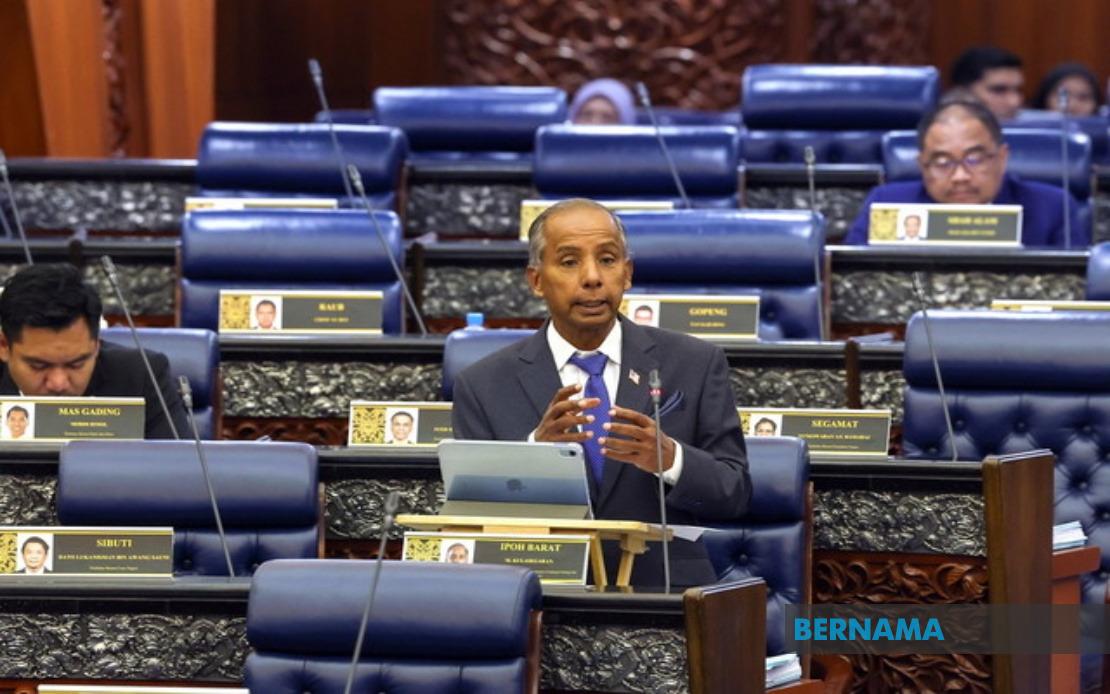
The Election Commission is undertaking a comprehensive examination of plans to roll out domestic postal voting to eligible voters throughout Peninsular Malaysia, Sabah and Sarawak, according to the Deputy Minister in the Prime Minister's Department (Law and Institutional Reform). The initiative addresses longstanding calls from lawmakers and civil society advocates to modernise Malaysia's electoral infrastructure and expand voting accessibility across the geographically dispersed nation.
M. Kulasegaran indicated that the investigation process demands extensive consultation with multiple stakeholders, particularly political parties across the parliamentary spectrum, whose input will shape the Commission's ultimate recommendation. The thorough approach reflects the politically sensitive nature of electoral reform in Malaysia, where voting mechanisms can carry implications for voter turnout and campaign strategies. Without clear buy-in from major political actors, any postal voting framework risks facing parliamentary opposition or implementation challenges.
The inquiry is scheduled to conclude in 2025, providing a defined timeline for a proposal that has generated considerable discussion in recent parliamentary sessions. The extended timeline suggests the Commission recognises the complexity of establishing postal voting infrastructure across three geographically distinct regions with varying administrative capacities. Peninsular Malaysia, with its dense population centres and established postal networks, presents fewer logistical obstacles than Sabah and Sarawak, where vast distances and dispersed communities create distinct operational challenges.
In a separate development reflecting broader institutional governance concerns, the government expressed openness to reconsidering the Election Commission's administrative position within the federal apparatus. Currently, the Commission sits under the Prime Minister's Department, but proposals have emerged suggesting it should instead operate under parliamentary oversight. Kulasegaran characterised this structural shift as worth serious consideration, indicating the government would escalate the matter to appropriate decision-making bodies for formal evaluation.
The proposal to reposition the Commission addresses persistent concerns among electoral reform advocates and opposition figures regarding institutional independence. Placing the EC under parliamentary supervision rather than executive purview could theoretically insulate the body from political pressures originating from the sitting government, though supporters of the current arrangement contend that Prime Minister's Department oversight ensures efficient coordination with other state institutions. This debate reflects broader Southeast Asian discussions about electoral governance and the appropriate institutional location of such bodies within democratic frameworks.
Separately, questions regarding enforcement of restrictions on mobile telephone usage at polling stations remain unresolved. Critics have contended that the existing prohibition lacks sufficient enforcement mechanisms, potentially allowing voters and election observers to document or photograph ballots through mobile devices, which could facilitate vote-buying or coercion in communities where such practices persist. The concern carries particular relevance in Malaysian constituencies where tight electoral margins occasionally produce disputed outcomes.
The government maintained that existing control mechanisms remain adequate for preventing mobile phone misuse at polling stations. Rather than introducing amendment to legislation, officials stated that the current framework under the Election Offences Act 1954 provides sufficient legal foundation without requiring an explicit mobile phone violation category. This perspective implies that violations related to phone usage can be prosecuted under existing breach-of-voting-rules provisions, though enforcement remains dependent on Election Commission officials exercising vigilance at polling locations.
Postal voting has emerged as a significant electoral modernisation issue across multiple Commonwealth democracies and several Asian nations grappling with geographic size, population dispersal, or significant migrant worker populations. Malaysia's consideration of domestic postal voting reflects similar pressures facing countries confronted with voters living in remote regions or requiring flexibility in exercising franchise rights. The proposal carries particular resonance for Malaysian workers temporarily residing outside their constituencies during parliamentary election periods.
The comprehensive study signals official recognition that Malaysia's current voting architecture, designed during earlier periods when internal migration was less prevalent, may benefit from supplementary mechanisms accommodating contemporary population mobility patterns. Postal voting could substantially increase turnout among diaspora populations and reduce logistical barriers for voters in peripheral areas, though implementation requires careful attention to security protocols preventing fraudulent applications or duplicate voting through multiple postal mechanisms.
These institutional developments underscore the Election Commission's gradual evolution from a ceremonial electoral administrator into a more analytically engaged institution examining structural modernisation opportunities. Concurrent examination of postal voting expansion, institutional positioning, and enforcement protocols suggests a more comprehensive electoral reform agenda gradually materialising within government circles, even as implementation timelines remain extended and legislative action uncertain. The process reflects the cautious approach Malaysian policymakers typically adopt toward electoral system modifications, where competing political calculations frequently delay substantive changes despite acknowledged demand for modernisation.

