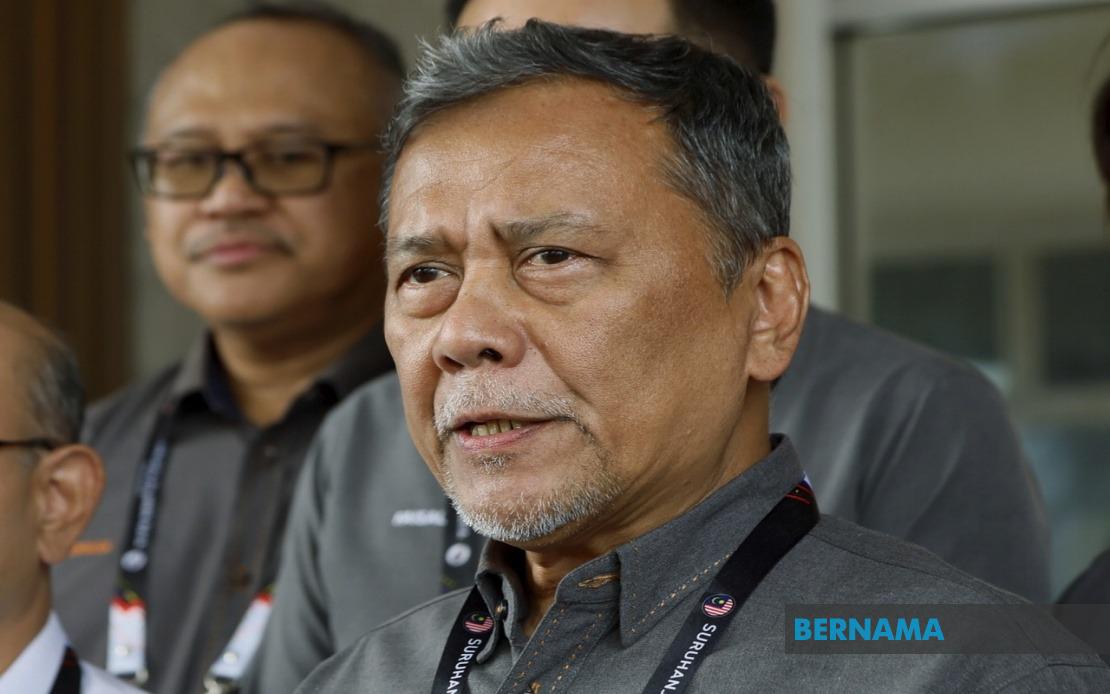
The Election Commission has documented 588 separate complaints alleging various electoral violations during the campaign leading up to the 16th Johor State Election, according to disclosures made by EC chairman Datuk Seri Ramlan Harun in Kluang on July 7. The figure underscores the intensity of scrutiny surrounding the contest and reflects both heightened public vigilance and the regulatory machinery's capacity to receive and track allegations throughout the election period.
Of the 588 total complaints received, 44 have already been escalated to police for formal investigation, indicating that a portion of allegations have crossed a threshold of apparent seriousness warranting criminal examination. Separately, three additional reports have been submitted to the Malaysian Anti-Corruption Commission, suggesting that some alleged breaches involve suspected corrupt conduct rather than, or in addition to, general electoral violations. This distribution of referrals demonstrates the multi-agency approach required to oversee complex election operations across different categories of potential wrongdoing.
Ramlan made these disclosures during a press conference held at Dewan Mahkota, Kem Mahkota, a venue chosen to highlight ongoing polling oversight activities. His comments came as the EC chairman was engaged in field-level monitoring of the election machinery, accompanied by Army Chief General Tan Sri Azhan Md Othman, reflecting the institutional weight placed on ensuring procedural integrity during the voting exercise.
The monitoring visit included inspection of early voting centres at multiple locations, notably the Kluang District Police Headquarters and Kem Mahkota itself, enabling senior election officials to observe firsthand how the accelerated voting arrangements were functioning. These advance polling sessions represented a significant logistical undertaking, with early voting allocations designed to accommodate personnel from uniformed services and their family members who face deployment constraints during standard polling hours.
During the early voting period assessed by the EC leadership, participation reached 20,607 voters, a cohort composed predominantly of military and police voters and their spouses. The Malaysian Armed Forces contingent numbered 8,544 individuals, while police personnel and their families comprised 12,063 voters. This segregated voting arrangement, while administratively necessary to accommodate service commitments, requires heightened procedural safeguarding to ensure that the compression of voting into designated early periods does not compromise electoral principles.
The contest itself involves a substantial field of aspirants vying across the state's electoral geography. A combined total of 172 candidates are running for the 56 available seats in the Johor state assembly, translating to an average of just over three candidates per seat—a figure suggesting meaningful competition in most constituencies but also indicating consolidation around major parties rather than extreme fragmentation of the ballot.
The poll was scheduled to take place on the Saturday immediately following Ramlan's statement, representing the culmination of a campaign period whose incident rate—judged by the volume of complaints—appeared substantial. Whether the documented complaints would translate into material electoral irregularities or would be resolved through investigation as unfounded allegations remained to be determined, though the EC's willingness to publicise the figures suggested institutional confidence in the complaint-handling mechanisms.
For Malaysian observers and regional analysts monitoring democratic governance in Southeast Asia, the complaint volume and the EC's responsiveness offer a mixed picture. On one hand, the documented complaints and institutional pathways for referral to enforcement agencies indicate operational transparency and the existence of grievance channels. Conversely, the sheer number of complaints—approaching 600—raises questions about the effective enforcement of electoral standards, the sophistication of campaign finance oversight, and whether parties and candidates understand, or are adhering to, the regulatory framework governing their conduct.
The Johor election represents a significant electoral event not only for the state's internal political dynamics but as a barometer of electoral administration and compliance across Malaysia more broadly. The mechanisms deployed to monitor early voting, track complaints, and coordinate across multiple enforcement bodies provide a template for how subsequent electoral exercises might be supervised. The EC's proactive communication about complaint statistics, rather than awaiting post-election analysis, reflects a modern approach to electoral transparency though also signals the scale of oversight challenges encountered in real-time campaigning.

