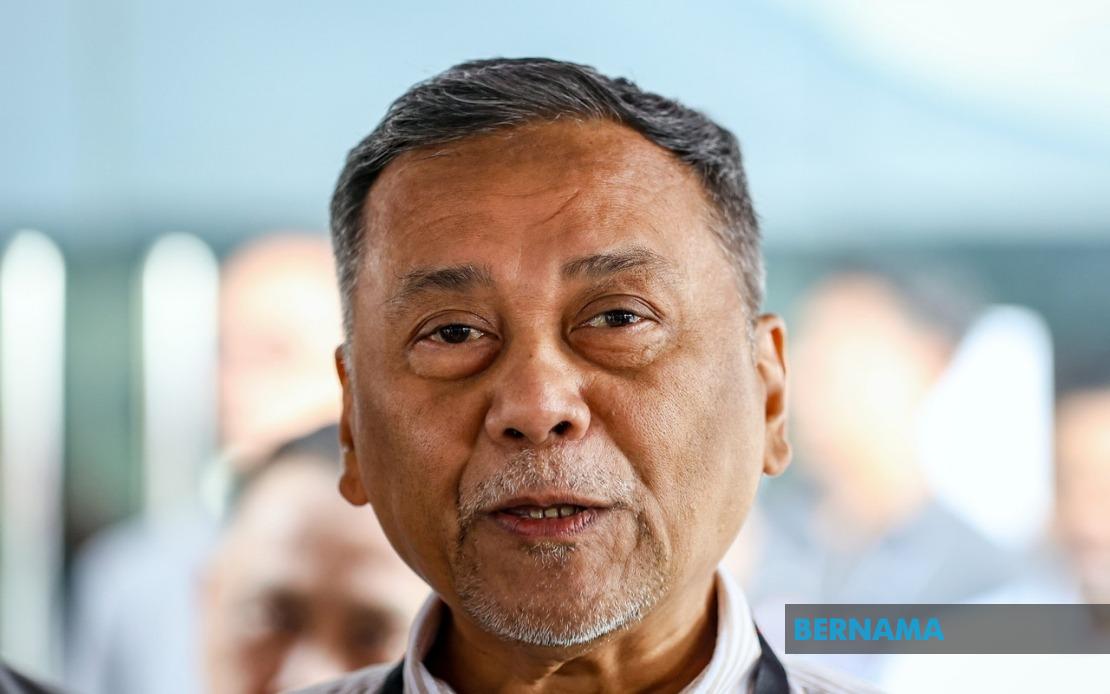
The Election Commission has projected that roughly 70 per cent of eligible voters will cast their ballots in tomorrow's Johor state election, a forecast anchored in observable levels of public enthusiasm witnessed throughout the campaign period. EC chairman Datuk Seri Ramlan Harun attributed this optimistic projection to what he characterised as a notably engaged electorate demonstrating genuine commitment to their civic duty. The anticipated turnout, if realised, would represent a significant expression of democratic participation across Johor's electoral landscape.
Ramlan's assessment emerged from tangible indicators gathered during the campaigning phase, which he noted had been characterised by vibrant activity and considerable voter interest. The commission's leadership has identified this buoyant campaign atmosphere as a reliable barometer for anticipating turnout levels. Beyond the visible energy of campaign activities themselves, Ramlan underscored that public consciousness regarding the significance of electoral participation has risen noticeably, contributing to the optimistic outlook. This combination of factors—active campaigning coupled with heightened civic awareness—provided the foundation for the 70 per cent projection.
The electoral exercise will involve approximately 2.7 million registered voters across Johor, representing a substantial democratic engagement. This figure encompasses the breadth of the state's eligible population, each with the opportunity to shape the political direction of Malaysia's second-largest state. The scale of participation invited by this voter base underscores the importance of comprehensive logistical and administrative preparation to facilitate smooth voting operations.
Polling stations will commence operations at 8 am, with closing times staggered to accommodate geographical and logistical considerations across the state's varied terrain. The commission has established a granular closing schedule designed to manage the voting process efficiently while accounting for accessibility challenges in certain areas. Island locations present particular scheduling complexities—Pulau Besar, situated roughly thirty minutes from Mersing, will close exceptionally early at 11 am, whilst Pulau Aur and Pulau Pemanggil, two additional island constituencies, will conclude voting at noon. The remaining polling centres follow a graduated closure timeline, with seventeen facilities closing at 2 pm, forty-two at 4 pm, and the substantial majority of 1,114 centres concluding operations at the standard 6 pm.
The commission has deployed 43,036 election officials to oversee voting procedures, reflecting the substantial human resource commitment required to administer a state-level electoral event. This workforce represents trained personnel distributed across all polling locations to ensure operational compliance, voter assistance, and procedural integrity. Simultaneously, the commission has processed 24,677 postal ballot papers for voters unable to cast ballots in person, with a strict deadline of 6 pm tomorrow for receipt of these materials by the Election Commission.
Logistical considerations have received meticulous attention from the commission, particularly regarding transportation challenges in island constituencies. The commission has emphasised that contingency arrangements have been incorporated throughout the planning process to address potential disruptions or unforeseen circumstances. Coordination with law enforcement authorities and the Malaysian Armed Forces has been established to facilitate the movement of ballot boxes from island polling stations and to provide support should operational difficulties arise. This collaborative approach reflects recognition that remote voting locations require specialised coordination to ensure ballots are securely transported and counted.
The projection of 70 per cent turnout, if achieved, would signal robust public confidence in electoral processes and a demonstrated commitment to participatory democracy within Johor. For Malaysian politics more broadly, strong state-level turnout carries implications for the legitimacy and mandate of electoral outcomes, whilst also reflecting public sentiment regarding the relevance of state governance to citizens' daily concerns. Johor's size and economic significance within the Malaysian federation mean that outcomes here resonate beyond the state's boundaries.
The commission's confidence in elevated turnout rests partly on shifts in public perception regarding the importance of voting. Ramlan's observations suggest that voter education initiatives and media coverage have successfully communicated that state elections merit the same engagement citizens might extend to federal contests. This represents a potential maturation of democratic culture, where voters increasingly recognise that state legislative composition directly affects local policy domains including education, land administration, and development priorities.
The administrative framework established by the Election Commission for tomorrow's voting reflects lessons accumulated from previous electoral events and anticipates challenges specific to Johor's geography and demography. The staggered closing times, in particular, demonstrate sophisticated understanding of how distance, island accessibility, and population distribution intersect with democratic participation. By enabling island voters to conclude balloting early whilst maintaining standard times for mainland constituencies, the commission has sought to balance operational efficiency with equitable access.
As the election approaches, the 70 per cent turnout projection serves as both an indicator of public sentiment and a target that will test the Election Commission's administrative capacity. Should this forecast materialise, it would represent successful mobilisation of nearly three-quarters of eligible voters, a figure that would underscore Johor's electoral significance and reflect broader patterns of democratic engagement across Malaysia's electorate during a period of apparent heightened political interest and civic participation.

