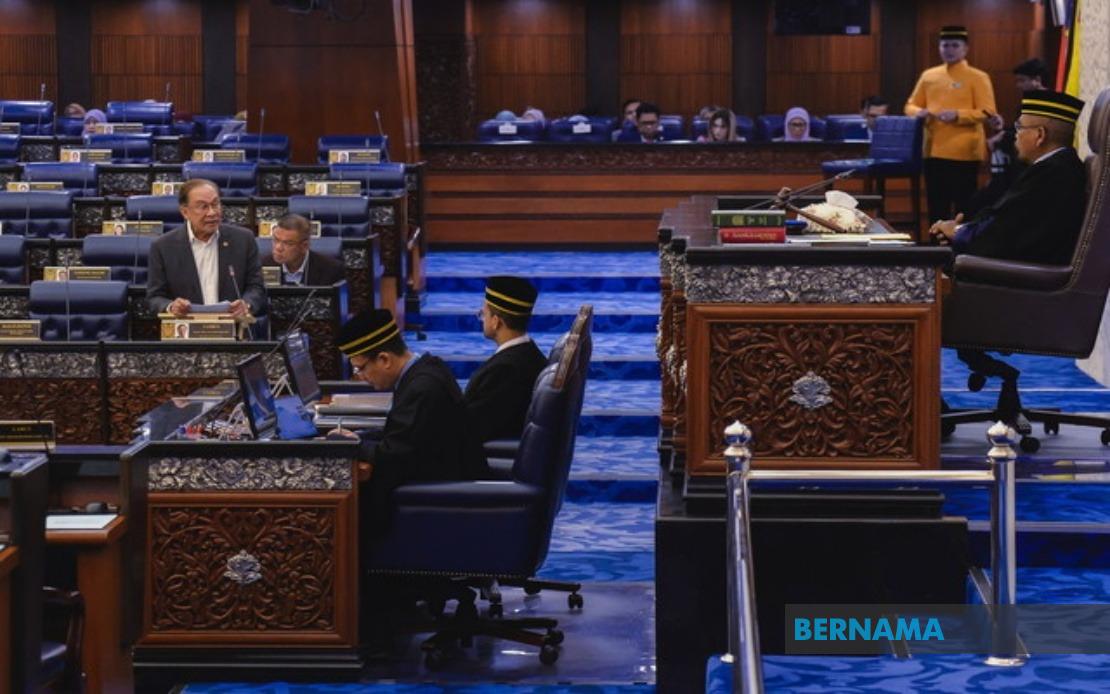
Prime Minister Datuk Seri Anwar Ibrahim has restated Malaysia's longstanding electoral rules prohibiting the announcement of new initiatives during election campaigns, underscoring the government's commitment to maintaining clean and equitable election standards. Speaking during Minister's Question Time in the Dewan Rakyat, Anwar clarified that such restrictions are embedded in Section 24B of the Election Offences Act 1954 and apply uniformly across all levels of government. The clarification comes as Malaysia approaches state elections in Johor, Melaka, and Negeri Sembilan, states where election officials and candidates must navigate complex rules governing campaign conduct.
The Prime Minister's remarks address recurring concerns about the misuse of government machinery during electoral contests. Anwar explicitly stated that once nomination day is declared, the campaign period begins but brings with it clear limitations on governmental announcements. Government bodies at all tiers—including city councils, state administrations, and the Federal Government—are bound by these rules and cannot utilise their platforms or resources to trumpet new schemes during the voting period. This comprehensive approach aims to prevent any appearance that the machinery of state is being weaponised to influence electoral outcomes in favour of incumbent parties or candidates.
The distinction Anwar made between prohibited and permissible announcements carries particular significance for understanding how these election laws function in practice. Projects and policies that have already received federal budget approval and allocated funding in previous fiscal years do not breach electoral regulations even if they are disclosed during campaign periods. This provision recognises the practical reality that government operations must continue despite the electoral calendar and prevents an artificial freeze on all governmental communication. However, the crucial threshold remains whether announced initiatives are genuinely pre-existing commitments or are being introduced specifically to influence voters during the campaign window.
The question posed by Datuk Seri Dr Shahidan Kassim from Perikatan Nasional's Arau constituency sought clarity on enforcement mechanisms and the continuing applicability of these restrictions. His inquiry reflects broader political sensitivities surrounding election conduct in Malaysia, where concerns about fair play have periodically emerged across different electoral contests. The opposition parliamentarian's focus on compliance procedures suggests ongoing uncertainty about how stringently these rules are applied and whether all government entities consistently adhere to electoral standards. Anwar's response attempted to provide reassurance that the position remains firm and uniform.
Election law enforcement in Malaysia operates through multiple channels, including the Election Commission, which holds primary responsibility for overseeing compliance with electoral legislation. Section 24B of the Election Offences Act 1954 serves as the legal foundation, and violations can result in penalties ranging from fines to imprisonment. However, the practical challenge lies in distinguishing between genuinely pre-approved projects and those merely presented as pre-approved to circumvent restrictions. This grey area has historically generated political disputes, with opposition parties frequently alleging that incumbent governments blur these boundaries to gain electoral advantage.
The upcoming Johor, Melaka, and Negeri Sembilan elections will serve as a test case for how thoroughly these rules are implemented. Given Malaysia's competitive political landscape, where both government and opposition parties actively contest state-level contests, the stakes surrounding electoral fairness remain high. Any perception that one side enjoys unequal access to government resources for campaign purposes can undermine public confidence in electoral integrity. Anwar's clear reiteration of the restrictions aims to preempt such allegations and establish that the federal government intends to play by established rules.
The tension between governmental continuity and electoral fairness remains inherent in these provisions. Government ministries and agencies continue functioning throughout election periods, and some announcements regarding ongoing operations or previously planned initiatives are inevitable. The challenge becomes ensuring that discretionary decisions about timing and emphasis do not effectively convert legitimate governmental work into campaign propaganda. For instance, inaugurating a completed highway or announcing the reopening of a restored government facility might technically violate the spirit of election laws if timed deliberately to maximise electoral impact, even if the project itself was approved years earlier.
Regional observers across Southeast Asia have noted that election conduct rules vary significantly across democracies in the region. Malaysia's approach of codifying restrictions in electoral legislation reflects broader efforts to maintain procedural fairness during contested elections. However, enforcement and interpretation frequently generate controversy, particularly in systems where opposition parties lack equivalent access to government communication channels. The Prime Minister's emphasis on uniformity across all governmental levels suggests awareness that perceived inconsistency in enforcement could fuel accusations of political bias.
The implications for Malaysian politics extend beyond the three upcoming state elections. Precedents established during these contests regarding interpretation and enforcement of Section 24B will inform future electoral conduct, potentially shaping how subsequent state and federal election campaigns unfold. Political parties, candidates, and government agencies will monitor how strictly these rules are applied, with any perceived leniency potentially inviting challenges in subsequent contests. Conversely, overly rigid interpretation could create administrative burdens for government operations that continue regardless of electoral timelines.
Anwar's restatement represents an effort to establish clear parameters before campaign periods formally commence, reducing the scope for later disputes about compliance. By emphasising that government machinery cannot be deployed to announce new projects, the Prime Minister has positioned the federal government as committed to clean electoral standards. However, the practical effectiveness of such reiterations depends ultimately on consistent implementation by election authorities and respect for guidelines by all participating parties. The coming weeks will reveal whether these principles translate into actual practice during the campaign periods in Johor, Melaka, and Negeri Sembilan.

