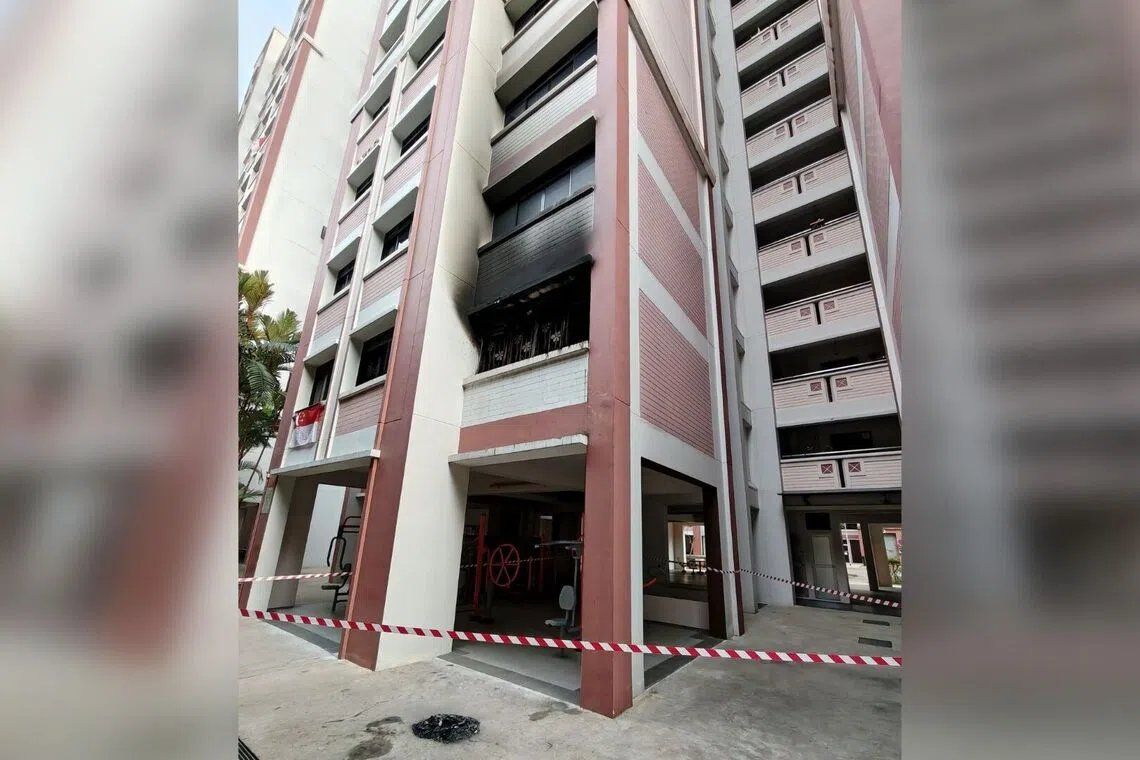
A fire erupted in a second-storey bedroom of an HDB flat in Buangkok Crescent during the early morning hours of Thursday, 20 August, prompting emergency response and hospitalising an elderly occupant. The Singapore Civil Defence Force (SCDF) received the alert at approximately 12.25am regarding the fire at Block 979B Buangkok Crescent. Firefighters swiftly contained the blaze, which had been limited to the contents within the bedroom, using a water jet to extinguish the flames. The rapid response prevented the fire from spreading to other parts of the unit or neighbouring properties.
Following the incident, one resident was transported to Sengkang General Hospital for medical evaluation and treatment. According to an official statement from SCDF, the patient was receiving appropriate care at the medical facility. Later that afternoon, Ang Mo Kio GRC Member of Parliament Victor Lye disclosed additional details about the affected resident's condition in a Facebook update posted around 1pm on 20 August. Lye revealed that the hospitalised individual was an elderly man who had sustained cuts to his feet during the fire incident but had already been discharged from the hospital by the time of his post.
Beyond the official emergency services response, the situation highlighted the critical role played by community members in emergency situations. Lye specifically acknowledged the courageous actions of an ITE student residing in an adjacent flat, crediting this young neighbour with instrumental efforts during the evacuation. The student demonstrated quick thinking and community spirit by retrieving a fire extinguisher and using it to help control the fire's spread before emergency personnel arrived. More significantly, the student guided three residents out of the affected unit to safety, potentially preventing more serious injuries or fatalities.
Such rapid intervention by civilians during emergencies underscores the importance of fire safety awareness and neighbourhood vigilance in residential communities across Singapore. The presence of accessible fire extinguishers in HDB blocks and resident knowledge of their proper use can substantially improve outcomes during building fires. The student's actions exemplify the kind of proactive neighbour involvement that can make the difference between a contained incident and a tragedy in densely populated public housing estates.
As part of the official response infrastructure, the Residents' Network centre in the area was made available to provide temporary accommodation and support services to the displaced family members. However, the affected residents ultimately decided to remain with their neighbour rather than utilise the temporary facility, a decision that reflects both the close-knit nature of some HDB communities and the family's preference for staying within their familiar social circle during a stressful period. This arrangement, facilitated by a helpful neighbour, demonstrates the practical value of strong neighbourhood bonds.
MP Victor Lye personally visited the affected flat to express official support and assess the situation firsthand, reinforcing the political leadership's engagement with constituents during times of crisis. Such direct visits by elected representatives serve multiple purposes: they provide reassurance to affected families that their concerns are acknowledged at the political level, they gather ground-level information about emergency response effectiveness, and they publicly recognise community members who have acted heroically. Lye's public acknowledgment of the ITE student's role sends a positive signal throughout the Ang Mo Kio GRC about the value placed on civic responsibility and neighbourly assistance.
The circumstances surrounding fires in HDB flats carry particular significance in Singapore's context, where approximately 80 percent of the population resides in public housing. Any residential fire incident affects not only the immediate household but also neighbouring families and the broader community's sense of security. The concentration of population in high-rise residential blocks means that fire prevention and rapid response protocols are essential infrastructure concerns at the national level. Investigations into the root cause of such fires contribute to ongoing efforts to identify patterns and improve safety standards across the housing stock.
At present, the SCDF remains engaged in determining the underlying cause of the fire at Block 979B Buangkok Crescent. This investigative process typically examines potential factors such as electrical faults, cooking-related accidents, or other ignition sources within the bedroom. Understanding causation helps inform public safety messaging and may lead to recommendations for additional precautions if a systemic issue is identified. For Malaysian readers familiar with their own HDB equivalents and public housing challenges, such incidents highlight the shared concerns regarding fire safety that span across the region's urban centres.
The incident also reflects broader regional patterns regarding residential fire risk in Southeast Asia's densely populated urban areas. High-rise public housing concentrations, ageing building stock, and the prevalence of electrical appliances in residential spaces create ongoing fire hazard challenges. The swift action by emergency services and the community response in this case demonstrate best practices in incident management that have relevance beyond Singapore's borders. As Malaysian urban centres continue to expand and population density increases, the lessons from such incidents—particularly the value of community engagement and fire safety preparedness—offer important insights for housing policy and public safety planning.

