Federal authorities in the United States have brought charges against eight men accused of plotting a coordinated terrorist attack against a mixed martial arts event held at the White House compound, the Department of Justice announced this week. The arrests represent a significant security intervention by American law enforcement agencies determined to prevent what prosecutors describe as a carefully orchestrated scheme targeting high-profile government officials and dignitaries gathered for a major public celebration.
The conspiracy charges carry substantial legal consequences for those convicted. According to the DOJ's formal complaint, the defendants face multiple federal counts including conspiracy to provide material support to designated terrorist organisations, conspiracy to commit murder on federal government property, and conspiracy to murder federal government officials. These charges collectively carry potential life sentences, reflecting the severity with which prosecutors view the alleged plot and the comprehensive threat assessment authorities conducted.
The operational plan uncovered by investigators reveals a sophisticated two-phase attack strategy designed to maximise casualties among prominent targets. Prosecutors contend the group intended to deploy unmanned aerial vehicles laden with explosives around the perimeter of the event venue. These drone-based explosions would serve as an initial shock, deliberately creating chaos and prompting mass evacuation of attendees from the designated seating areas. Once guests and officials fled the scene in the predicted direction, the plotters would position trained shooters at strategic vantage points to engage what they termed "high-value targets" among those attempting to escape.
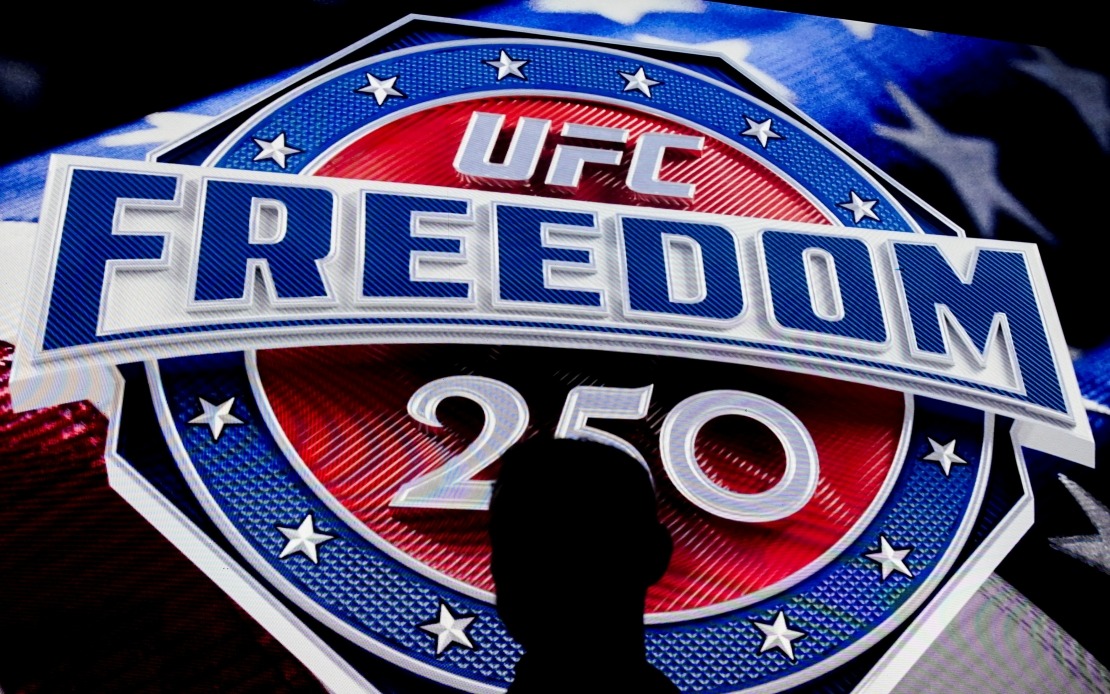
The event in question was "UFC Freedom 250," a major mixed martial arts championship sanctioned by the Ultimate Fighting Championship and held on June 14 at a specially constructed arena positioned outside the South Lawn of the White House. The gathering drew considerable political significance due to the attendance of President Donald Trump, his family members, and several cabinet-level officials representing different government departments. Security protocols for such an event would naturally be elevated given the concentration of senior government figures in a single location.
The occasion carried dual historical significance that is worth noting for regional context. While the event directly coincided with Trump's eightieth birthday celebration, the official branding positioned it within the broader context of America's 250th independence anniversary commemorations. This national milestone moment, combined with the president's personal birthday, created a uniquely symbolic setting for the official gathering. The timing during June is notably distant from the traditional July 4 Independence Day holiday, reflecting the government's decision to spread celebratory events across a broader period.
The investigation appears to have yielded arrests at different stages, suggesting an evolving law enforcement response as evidence accumulated. Authorities had previously announced the apprehension of seven individuals connected to the alleged conspiracy. However, the case expanded to include an eighth defendant, identified as a 21-year-old man from West Virginia, who prosecutors allege was specifically recruited to serve as a sniper in the proposed attack. This additional arrest occurred more recently, indicating that investigative agencies continued developing the case even after initial charges were filed against the earlier group of suspects.
The emergence of this plot carries implications that extend beyond the immediate security dimensions. For Malaysia and other Southeast Asian democracies with significant Western ties, the incident underscores the persistent threat landscape facing high-profile state events and the operational sophistication that contemporary extremist networks can demonstrate. The use of drone technology combined with conventional weapons represents an evolving tactic seen in various terror-related incidents globally, warranting attention from security planners in other nations hosting major diplomatic or ceremonial gatherings.
The federal grand jury in Columbus, Ohio took the formal step of issuing indictments after reviewing evidence compiled by investigators. This grand jury process, central to American criminal procedure, typically involves examination of witness testimony, physical evidence, and expert analysis before formal charges proceed. The Columbus jurisdiction's involvement suggests that elements of the conspiracy may have been centred in Ohio or that the alleged plotters maintained operations across state lines, a factor that elevates cases to federal rather than state-level prosecution.
The comprehensive nature of the charges and the authorities' apparent confidence in the evidence demonstrates considerable investigative groundwork prior to the formal announcement. Security agencies operating across the federal system would have coordinated resources from multiple departments to disrupt what they assessed as an active and developing threat. The timing of arrests, with the final apprehension occurring this week following the earlier detentions, suggests investigators may have been working backwards through a network of associates to identify all alleged conspirators.
The plot's sophistication in terms of planning, resource acquisition, and alleged recruitment of specialist personnel—particularly the identification of a dedicated sniper element—indicates this was not a spontaneous or loosely conceived threat. Rather, prosecutors evidently view this as an organised conspiracy requiring coordination among multiple individuals with different operational roles. The detention of the West Virginia suspect specifically for the sniper function suggests law enforcement were tracking not merely general seditious sentiment but specific preparations for violent action.
For American observers and international allies monitoring domestic security threats, the case illustrates both the vulnerability of major public events and the capacity of federal law enforcement to detect and apprehend individuals planning such attacks before execution. The prevention of what could have been a catastrophic loss of life at a high-level state gathering demonstrates the functioning of intelligence networks and investigative procedures designed for precisely such scenarios. However, the incident also raises questions about how such conspiratorial networks form and operate in the modern era, particularly regarding recruitment mechanisms and communications security among alleged plotters.

