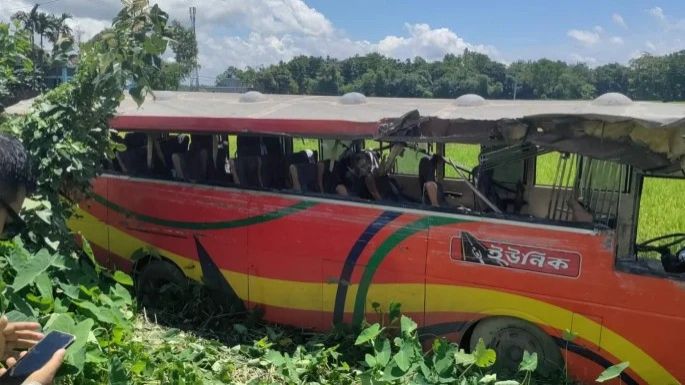
Eight people died and two dozen others sustained injuries when two passenger buses collided head-on in Bangladesh's Sylhet region on Friday morning, marking another tragedy on the country's notoriously dangerous roads. The accident took place approximately 240 kilometres northeast of Dhaka, the capital, around 7:30 a.m. local time, according to Golam Mostafa, the officer-in-charge of Sylhet's Osmani Nagar police station, who confirmed the incident to media outlets.
The collision left 25 passengers hospitalised with varying degrees of injury, alongside the eight fatalities. Emergency response teams worked through the morning to extract survivors from the twisted wreckage of both vehicles and transport them to medical facilities in the region. Investigators immediately began examining the circumstances surrounding the crash, though the precise cause remained undetermined at the time of reporting.
This incident represents the latest in a grim pattern of catastrophic road accidents that plague Bangladesh year-round. The country's transportation sector has become synonymous with tragedy, consistently ranking among the world's most dangerous places to travel by road. What transforms these collisions from unfortunate accidents into predictable disasters is a constellation of systemic failures and neglect that pervades Bangladesh's entire transport infrastructure.
The quality of highways across Bangladesh remains substantially below acceptable standards for safe vehicular movement. Many major routes suffer from poor construction, inadequate maintenance, and deteriorating surfaces that make vehicles difficult to control, particularly for large vehicles like buses. These infrastructure deficiencies create hazardous conditions that exponentially increase the likelihood of accidents, especially during peak travel periods when roads are congested and drivers operate under pressure.
Vehicle maintenance standards throughout the country's bus and truck fleets are notoriously inadequate. Many operators prioritise rapid deployment of ageing vehicles over essential safety checks and repairs. Brake systems, steering mechanisms, and tires frequently fail, yet buses continue operating because operators lack either the financial resources or the regulatory incentive to address mechanical defects. When vehicles fail mechanically on busy roads, the consequences prove catastrophic, particularly when two vehicles collide simultaneously.
Driver behaviour and competency represent another critical vulnerability in Bangladesh's road safety landscape. Traffic regulations are frequently disregarded by operators who view speed limits, lane discipline, and proper following distances as unnecessary constraints on schedules and profits. Many drivers lack adequate training, with licensing processes that fail to ensure minimum competency standards. Additionally, fatigue from overworking and substance use remain common problems that impair driver judgment and reaction times.
Regulatory oversight and enforcement mechanisms remain chronically weak throughout Bangladesh's transportation sector. The traffic department operates with insufficient resources, personnel, and authority to monitor compliance with safety regulations across the country's extensive road networks. Spot checks and enforcement actions remain sporadic and inconsistent, providing little meaningful deterrent to dangerous driving practices. Without credible consequences for violations, drivers and operators have minimal incentive to prioritise safety over speed and efficiency.
For Malaysian readers accustomed to Malaysia's relatively stringent road safety standards and better-maintained infrastructure, the scale of Bangladesh's transportation crisis warrants attention. While Malaysia itself experiences significant road fatalities, the underlying causes differ substantially. Bangladesh's challenges reflect fundamental governance and infrastructure investment deficits that create systemic rather than individual failures. The frequency and preventability of accidents like the Sylhet collision underscore how road safety represents an indicator of broader development and institutional capacity.
The regional implications extend beyond Bangladesh's borders. As Southeast Asian countries continue strengthening economic integration and cross-border mobility increases, the stark disparities in road safety standards between nations become increasingly relevant. Bangladeshi buses regularly travel long distances carrying passengers across borders, and the maintenance standards and driver training they reflect pose considerations for neighbouring countries. Furthermore, the tragedy highlights how investment in infrastructure and safety compliance requires political will and resources that many developing nations struggle to prioritise against competing demands.
The Sylhet accident will likely generate temporary investigations and perhaps official statements expressing commitment to safety improvements, following the pattern established after previous major incidents. However, without substantive reforms addressing the underlying structural deficiencies—meaningful investment in road infrastructure, comprehensive vehicle inspection regimes, professional driver training requirements, and credible enforcement mechanisms—such tragedies will continue at regular intervals. Bangladesh's road safety crisis remains fundamentally a governance and resource allocation challenge rather than an unavoidable consequence of development.

