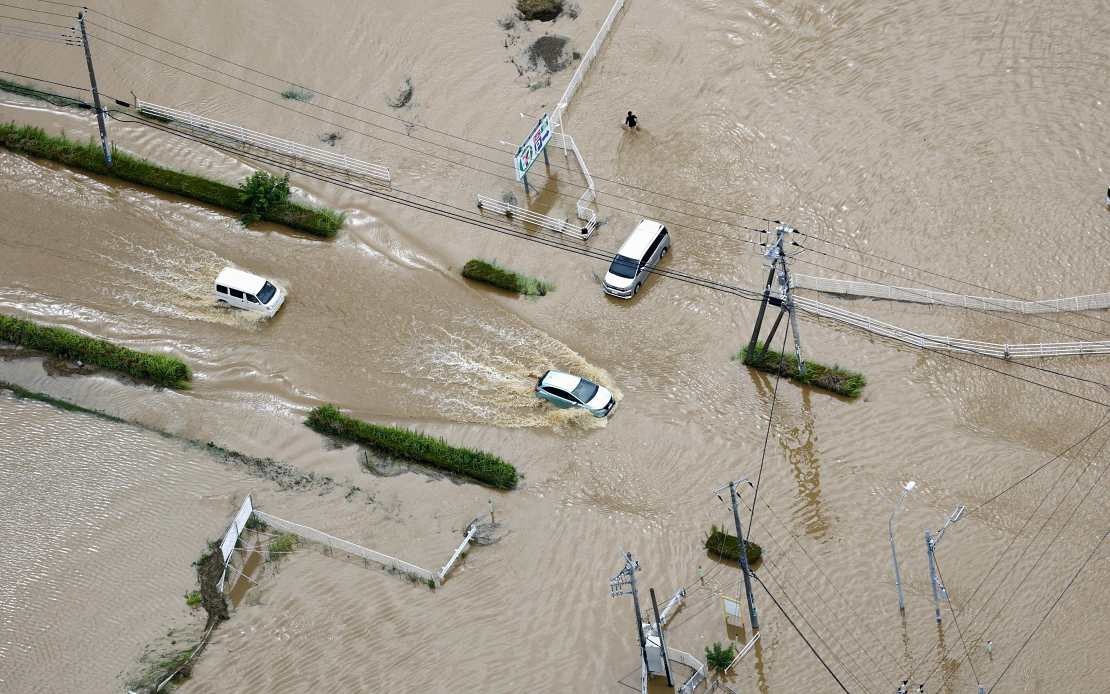
Eight residents of Chiba Prefecture have lost their lives following an intense downpour that saturated eastern Japan through the early hours of Friday, bringing some of the region's heaviest rainfall on record. The Japan Meteorological Agency confirmed that Chiba City received 348 millimetres of rain within a twelve-hour window ending at 1.40 am local time, shattering historical precipitation benchmarks for the area. According to the Chiba Prefectural Government, fatalities were reported across multiple municipalities including Chiba, Kashiwa, Ichikawa, Sakura and Yachiyo, while an additional four individuals sustained minor injuries during the extreme weather event.
The volume of rainfall that fell in just half a day represented approximately three times the typical precipitation expected for the entire month of August in Chiba City, underscoring the exceptional nature of the meteorological phenomenon. Such concentrated downpours pose substantial risks to both urban and rural communities across Japan, where mountainous terrain and dense development patterns can amplify flood risks. The scale of this event serves as a sobering reminder of the increasing intensity of weather systems impacting the Asia-Pacific region, a trend that has become more pronounced in recent years and carries implications for disaster preparedness across Southeast Asia.
In recognition of the scale of the emergency, the Japan Meteorological Agency initially issued its maximum Level 5 alert for heavy rainfall and potential landslides across portions of Chiba Prefecture early in the crisis. This classification represents the agency's most serious warning category, reserved for scenarios posing imminent threats to public safety. As conditions began to stabilise on Friday morning, meteorologists downgraded these warnings to Level 4 or lower, though officials cautioned that additional precipitation remained possible and advised residents to remain prepared for further deterioration.
The human cost of the disaster extended beyond fatalities and injuries. Local authorities maintained evacuation orders affecting approximately 102,600 people across Chiba Prefecture as of late Friday morning, with these residents displaced from their homes due to immediate dangers from flooding and potential geological instability. This represents a significant logistical challenge for municipal governments responsible for providing shelter, sustenance, and medical care to such large displaced populations during the immediate aftermath of the disaster.
The impact on transportation infrastructure proved severe and wide-ranging. Narita International Airport, one of Japan's principal aviation hubs serving the Tokyo metropolitan area and located within Chiba Prefecture, experienced substantial operational disruptions as the torrential rains rendered train and bus connections unusable. Approximately 7,000 passengers found themselves stranded overnight at the facility, unable to proceed to their destinations or return home. This scenario illustrates how concentrated weather events can cascade through interconnected systems, affecting not only those in the immediate impact zone but also travellers and the broader transportation network.
For readers in Malaysia and across Southeast Asia, this Japanese incident offers pertinent lessons regarding climate resilience and infrastructure vulnerability. The region's own susceptibility to extreme monsoon rains, flash flooding, and landslides—particularly given Malaysia's topography and monsoon exposure—demands careful consideration of similar emergency management protocols. The speed with which such precipitation events can develop and the magnitude of disruption they generate warrant ongoing investment in early warning systems, evacuation planning, and infrastructure hardening.
Japan's experience with frequent natural disasters has produced sophisticated early warning mechanisms and public alert systems, yet even these technologically advanced frameworks struggle to prevent loss of life when precipitation reaches record-breaking levels. The disparity between initial Level 5 warnings and subsequent downgrading reflects both the dynamic nature of weather prediction and the challenges inherent in responding to events that defy historical precedent. Communities across Southeast Asia, including Malaysia, might benefit from studying how Japanese authorities managed public communication and evacuation logistics during such compressed timeframes.
The meteorological conditions that produced this event warrant deeper analysis, particularly regarding climate change implications. Increasingly, extreme precipitation events are being linked to atmospheric warming, which enhances moisture-holding capacity in the atmosphere and can intensify rainfall when weather systems stall or interact with topographical features. This trend suggests that Malaysian meteorologists and disaster management agencies should anticipate possible increases in the frequency or intensity of extreme rainfall events, necessitating periodic updates to infrastructure design standards and emergency response protocols.
Recovery efforts in Chiba Prefecture will likely extend far beyond the immediate crisis period. Debris clearance, infrastructure repair, psychological support for survivors, and reconstruction of damaged homes constitute a lengthy process that typically unfolds over months or years. The economic toll extends beyond visible physical damage to encompass indirect costs such as business interruption, agricultural losses, and healthcare expenses. For Malaysia's own disaster management planning, understanding the full scope of post-disaster recovery—not merely immediate response—should inform budgeting and institutional capacity development.

