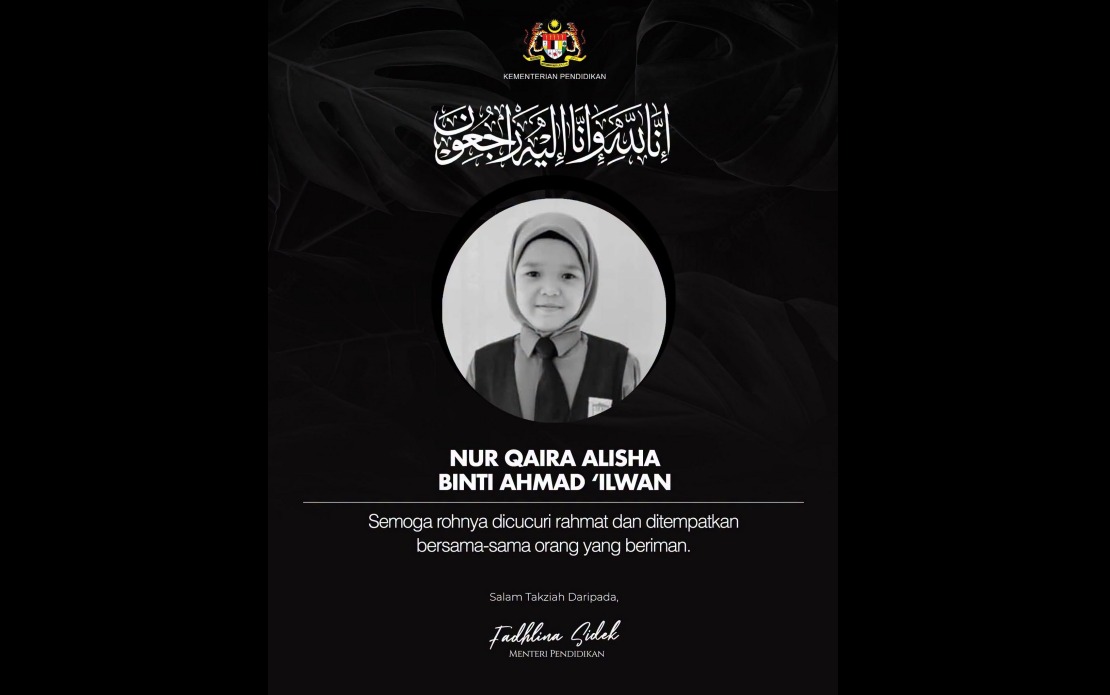
Education Minister Datuk Seri Fadhlina Sidek has instructed the Ministry of Education's Integrity Unit to pursue further investigation into circumstances surrounding the death of Year Four pupil Nur Qaira Alisha Ahmad Ilwan, following a formal complaint lodged by the child's family. The minister stated that any action taken would strictly adhere to established protocols and be governed by considerations of fairness to all parties involved. This directive comes after the Kedah State Education Department completed its preliminary inquiry into the allegations raised by the grieving family.
In a statement released today, Fadhlina emphasised that the ministry regards all matters pertaining to student safety and well-being as matters of utmost importance. She acknowledged that the department had been informed of the state-level investigation and reiterated the ministry's commitment to supporting the family during this difficult period. The minister extended her sympathies to Nur Qaira's parents and relatives, expressing hope that they would find strength and resilience in the coming months.
The eight-year-old girl had lived with a serious cardiac condition since infancy, diagnosed when she was just three months old. This longstanding health vulnerability meant she had received formal medical clearance exempting her from all competitive sports and strenuous physical activities at school. Despite this documented medical status, allegations suggest that a teacher instructed Nur Qaira to take part in a running competition held during the school's inter-house sports selection event on 15 April.
Nine days after the sports event, Nur Qaira's condition deteriorated sharply. She was rushed to Sultanah Bahiyah Hospital on 24 April experiencing severe nausea and pronounced swelling around both eyes. Medical examination revealed the underlying cause: acute heart failure resulting from decompensated dilated cardiomyopathy, a progressive weakening of the heart muscle that had worsened dramatically. The young girl's condition proved irreversible, and she subsequently died at the hospital.
The family's allegation centres on a critical failure in the duty of care owed to the child by school staff. They contend that despite the school authorities possessing a medical certificate detailing Nur Qaira's cardiac limitations, the decision was made to permit or even encourage her participation in athletic competition. For families in Malaysia with children requiring medical accommodations, this case raises serious questions about institutional safeguards and whether medical documentation translates into meaningful protection in practice.
The involvement of the ministry's Integrity Unit signals that the investigation will move beyond routine administrative review to encompass questions of professional accountability and potential systemic failures. The Integrity Unit typically examines matters involving ethical breaches and mismanagement within the education system. That this unit is now engaged suggests the ministry recognises the severity of the allegations and the need for a thorough examination of what happened and why.
This incident reflects broader concerns within Malaysia's education system regarding student welfare protocols, the implementation of medical exemptions, and lines of responsibility when such protocols appear to be breached. Schools receive medical documentation from parents specifically to ensure that children with health vulnerabilities receive appropriate protection. When such documentation exists yet the safeguards it should provide appear ineffective, it raises questions about training, supervision, and institutional culture.
The timing of the investigation also matters. In a nation where educational accountability has become an increasingly prominent public concern, how thoroughly and transparently such investigations are conducted sends powerful signals about whether systemic failures can lead to meaningful institutional change. Parents across Malaysia will be watching to see whether this case results in clearer guidelines, better training for teachers, or reformed procedures for managing students with medical conditions.
For the education sector specifically, this case underscores the importance of creating robust communication channels between medical professionals, parents, and school administrators. Medical exemptions from physical activities should never be treated as administrative paperwork to be filed and forgotten. Rather, they must be integrated into teaching practices and understood as binding constraints on what activities a child can safely undertake.
The ministry's statement that action must follow established rules reflects appropriate caution in a sensitive situation. However, it also raises the question of whether existing rules were sufficiently clear and comprehensive. Preliminary findings from state-level investigation may help clarify whether protocols were violated or whether the protocols themselves require strengthening. This distinction will be crucial as the Integrity Unit proceeds with its broader examination.
As the investigation unfolds, the focus must remain on extracting lessons that protect other vulnerable children within Malaysia's school system. The loss of Nur Qaira represents not only a family tragedy but a test of whether educational institutions can reliably implement safeguards designed to protect students with serious health conditions. The findings from this investigation may well influence how schools nationwide manage medical accommodations going forward, making it a case with implications extending far beyond Kedah.

