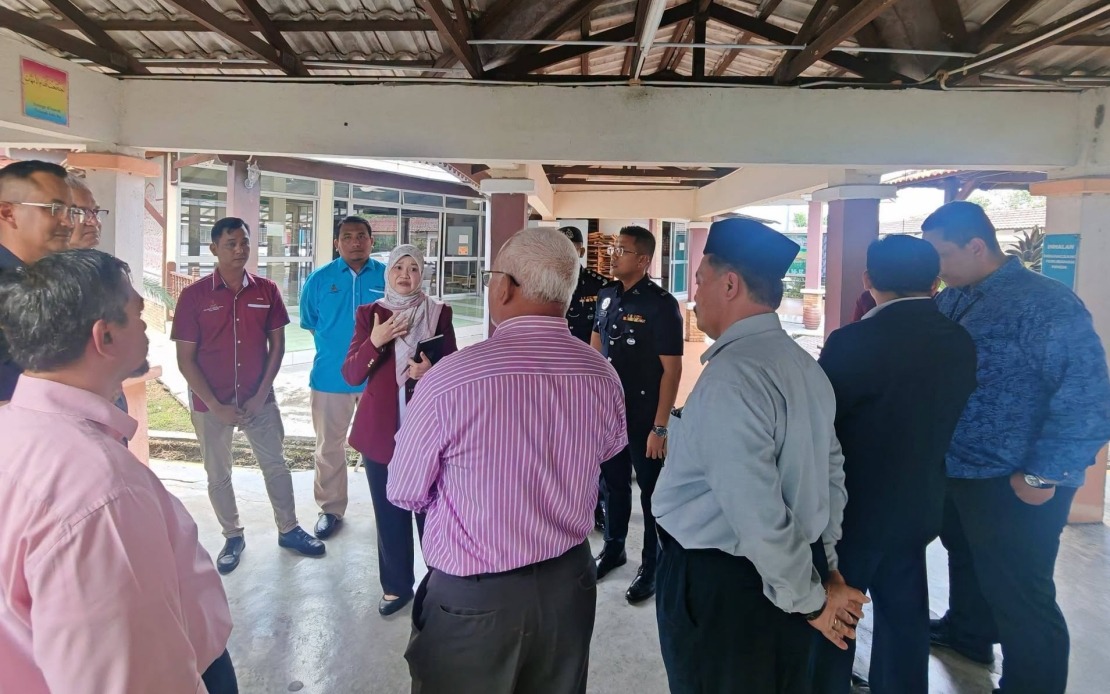
Education Minister Fadhlina Sidek made an unscheduled visit to a secondary school in Banting, Kuala Langat on July 6 following a violent incident that left a Form Three student with stab wounds inflicted by a fellow pupil. The minister arrived at the campus at 1.20 pm to assess the situation firsthand and gather details from school administrators about how the shocking attack unfolded during the morning hours.
The stabbing occurred early that day, with police receiving notification of the incident at 9.50 am according to Kuala Langat district police chief Supt Mohd Akmalrizal Radzi. What began as an apparent altercation between two young students escalated into a physical assault when one girl produced a knife and used it against the other. The injured student was immediately transported to Banting Hospital, where medical staff assessed the injuries and confirmed the victim's condition as stable despite the severity of the attack.
Authorities responded swiftly, apprehending the suspect within hours of the incident's discovery. Police now have the alleged attacker in custody for questioning as they work to establish the circumstances leading up to the violence. Investigators are attempting to determine whether there was a premeditated element to the assault or if it resulted from a spontaneous disagreement that spiralled into physical confrontation. The investigation remains ongoing, with authorities cautioning the public against speculation while evidence is being gathered.
Fadhlina's statement following her school visit prioritized the immediate wellbeing of those affected by the trauma. She emphasized that securing proper medical care for the injured student remained the top concern, alongside providing mental health support to the broader school community. Many students and staff members would have witnessed or heard about the incident, potentially leaving psychological scars that require professional intervention. The minister acknowledged that schools serve as environments where young people should feel protected and secure, making such violent incidents particularly damaging to the sense of safety that educational institutions must maintain.
In her social media post, Fadhlina appealed to the public to avoid spreading unverified information about the incident, recognizing how rumors and speculation could compound the trauma and distract from the investigation. She requested that citizens demonstrate restraint and patience as police conduct their inquiry, allowing authorities to work without interference from unfounded claims or sensationalized accounts. Her appeal underscored the importance of responsible public discourse during crisis situations, particularly those involving minors in school settings.
Selangor Human Resources and Poverty Eradication Committee chairman V. Paparaidu, who represents Banting as a state assemblyman, used the incident to renew calls for strengthened security protocols across educational institutions. He commended the State Education Department for mobilizing psychological support teams to counsel the victim, her family, and traumatized students within hours of the stabbing. However, Paparaidu went further than acknowledging the response, using the platform to advocate for comprehensive security improvements at school gates and throughout campus premises.
Paraidu's concerns centered on the need for security personnel to maintain constant vigilance, particularly during peak arrival and departure times when schools become vulnerable to unauthorized access. He stressed that monitoring systems must be strengthened to prevent strangers from entering school grounds unimpeded. The assemblyman framed school safety not merely as a procedural matter but as a fundamental responsibility that must supersede other institutional priorities. His comments reflected growing public anxiety about student security following similar incidents in the region.
The stabbing in Banting represents a troubling incident in what has become an increasingly concerning trend of violence within educational institutions across Malaysia. Schools have traditionally been regarded as sanctuaries where learning can occur free from fear, yet recent years have seen sporadic incidents that challenge this perception. The involvement of another student as the assailant adds a particular dimension of concern, raising questions about conflict resolution, mental health resources, and early intervention systems within schools.
The incident has broader implications for how Malaysian schools approach student welfare and interpersonal conflict management. Educational administrators face mounting pressure to balance maintaining open, welcoming environments with implementing security measures that some worry might create fortress-like atmospheres counter to learning. The challenge lies in identifying and supporting troubled students before minor disagreements escalate into violence, while simultaneously ensuring physical infrastructure and human resources devoted to security do not compromise the fundamental mission of education.
The rapid deployment of psychosocial support following the Banting incident demonstrates that at least the response mechanisms are functioning effectively. However, the incident itself raises systemic questions about prevention. School counselors, teachers, and administrators require training to recognize warning signs among students who may be planning violence. Peer reporting systems and mental health screening could identify struggling students before crises occur. The investigation into what motivated the stabbing will likely inform discussions about how schools can better support student mental wellbeing and conflict resolution.
As the police investigation proceeds, the focus will eventually shift toward understanding the relationship between the two students and the precipitating factors for the attack. Whether bullying, social exclusion, or other interpersonal tensions contributed to the violence will matter both for supporting the individuals involved and for identifying systemic improvements needed across schools. The broader Selangor community will watch how authorities handle the case and what lessons emerge regarding student safety protocols and mental health support systems in educational institutions.

