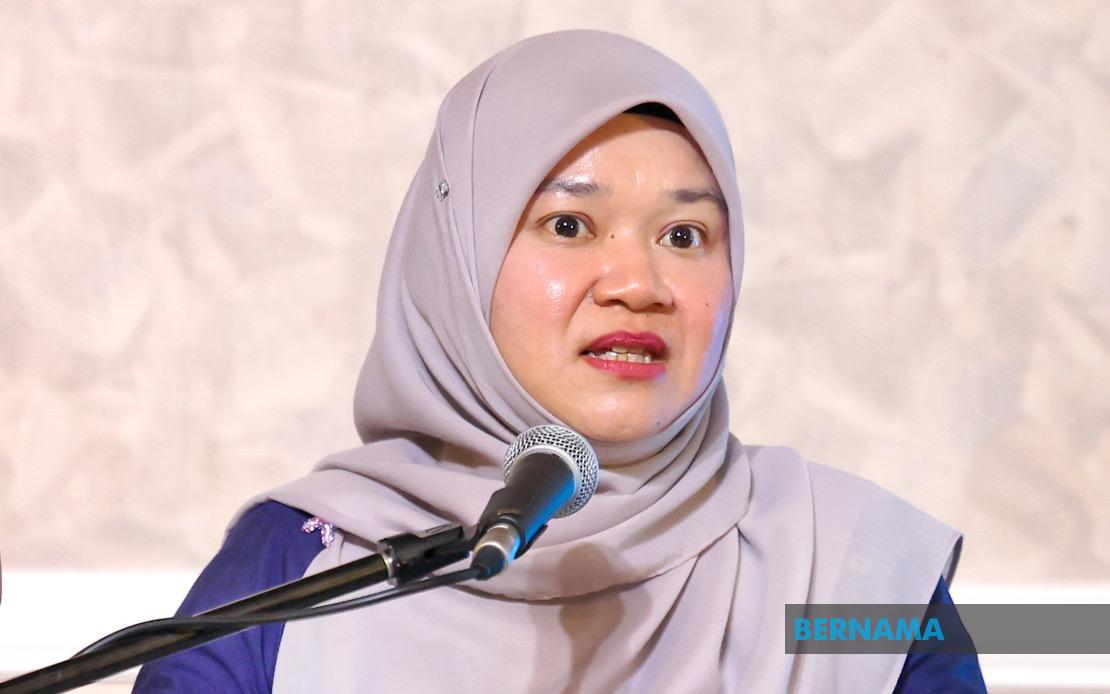
Education Minister Fadhlina Sidek, who leads the PKR Wanita division, has escalated concerns about artificial intelligence-generated disinformation by lodging a formal police report in connection with a fabricated video that has been circulating online. The video, created using AI technology, contains false allegations designed to damage her reputation and character, prompting her to seek law enforcement intervention and calling public attention to the growing threat of digitally-manipulated content in Malaysian politics.
In a statement released on June 24, Fadhlina expressed her dismay at the nature and extent of the malicious content, characterising the distribution strategy as a deliberate campaign to undermine her standing. She emphasised that the video's circulation represented not merely a personal attack but a systematic attempt to discredit her through fabricated claims, highlighting how emerging technologies are being weaponised against public figures, particularly women holding high office. The minister did not elaborate on the specific nature of the false allegations contained in the video, though she stressed that the entire undertaking was deliberately designed to inflict reputational harm.
The decision to file a formal police report signals the government's serious approach to combating digitally-manipulated content and defamatory material, even as the prevalence of such deepfakes and AI-generated videos poses significant challenges for law enforcement and verification. By invoking established legal mechanisms, Fadhlina has set in motion an investigation process that could yield important precedents for how Malaysian authorities handle technologically sophisticated disinformation campaigns. The move reflects broader concerns within government about the ease with which artificial intelligence tools can now be deployed to create convincing yet entirely fabricated evidence against public figures.
In her statement, Fadhlina explicitly called upon police authorities to conduct a thorough investigation and pursue appropriate legal action consistent with Malaysia's applicable laws. This appeal underscores the urgency she places on the matter and signals her confidence in the police's capacity to trace the origins of the video, identify those responsible for its creation and distribution, and potentially establish criminal liability under relevant statutes. Her invocation of legal action demonstrates a willingness to engage the full weight of the judicial system in defending her reputation and establishing consequences for those engaged in such activity.
Beyond her personal case, Fadhlina has used this incident as a platform to address a systemic problem affecting women in Malaysian politics more broadly. She issued a forceful call for all stakeholders—including political parties, civil society organisations, media institutions, and the public at large—to adopt an uncompromising stance against slander, character assassination, and sexual harassment targeting women politicians. This framing elevates the issue from a single defamatory video into a wider conversation about the gendered nature of online abuse and the particular vulnerabilities that female political figures face in the digital information ecosystem.
The targeting of women politicians through AI-generated content represents a particularly insidious form of disinformation, as such videos can be virtually indistinguishable from authentic footage to untrained observers. Unlike traditional rumour or written defamation, deepfakes leverage visual and auditory elements to create a false sense of authenticity that makes them especially persuasive and damaging. This technological dimension adds a layer of complexity to enforcement and verification, and Fadhlina's willingness to confront the issue head-on may encourage other victims to similarly seek legal remedies rather than allowing such content to spread unchecked.
The incident also occurs within a broader context of increasing concerns globally about AI-generated disinformation and its potential to destabilise democratic processes. As such technology becomes more accessible and easier to use, the risk of its deployment in political campaigns and personal attacks continues to escalate. Malaysia, like many Southeast Asian democracies, faces the challenge of developing adequate legal frameworks and enforcement mechanisms to address these novel forms of harm while remaining sensitive to free speech considerations and avoiding overreach that could stifle legitimate discourse.
Fadhlina's position as Education Minister adds particular weight to her statement, as she occupies a portfolio with significant influence over digital literacy and media education policies. Her experience with defamatory AI-generated content could inform the ministry's approach to curriculum development, particularly regarding how young Malaysians are educated about verifying information sources and recognising manipulated media. This intersection between personal experience and policy responsibility creates an opportunity for institutional learning and potential improvements in how society addresses emerging threats from artificial intelligence.
The case also highlights the inadequacy of relying solely on technological solutions or social media platform moderation to combat such content. While various platforms have implemented tools to flag AI-generated content or manipulated media, the effectiveness of these mechanisms remains variable, and malicious actors frequently find ways to circumvent them. Legal accountability and criminal investigation represent critical complementary approaches that can establish deterrents and hold bad actors responsible in ways that platform policies alone cannot achieve.
As the investigation proceeds, the outcome could have significant implications for how Malaysian law addresses AI-generated defamatory content. If prosecuted successfully, the case could establish important precedents regarding criminal liability, evidentiary standards, and the applicability of existing defamation and cybercrime statutes to technologically sophisticated forms of disinformation. For Malaysian women in politics and public life more broadly, Fadhlina's proactive response sends a message that such attacks need not go unchallenged and that institutional mechanisms exist to pursue accountability.

