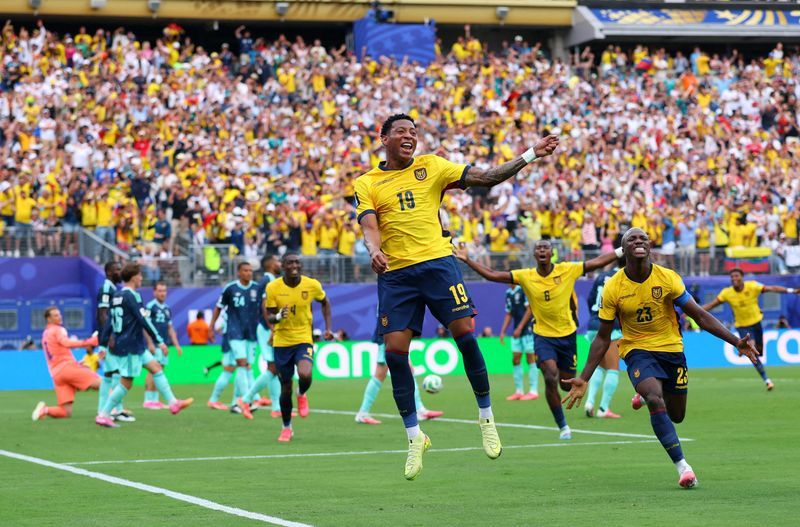
Ecuador pulled off one of the tournament's most improbable escapes by defeating Germany 2-1 in their decisive Group E encounter at the New York/New Jersey stadium on Thursday. The South American side, whose World Cup campaign had teetered on the brink of collapse, conjured a remarkable turnaround to advance as one of the best eight third-placed teams and reach the last 32.
The script appeared written for disaster when Ecuador, desperate for a positive result, conceded within seconds of kickoff. Germany, already assured of progression as group leaders, struck in the second minute through Leroy Sane, who capitalized on a clever assist from Florian Wirtz following a quick throw-in. Sane's finish marked his maiden goal at a major international tournament in his 15th competitive appearance at this level. The early setback seemed to confirm Ecuador's nightmare scenario after they had previously mustered 39 shots without finding the back of the net.
Ecuador's situation had grown increasingly precarious after consecutive disappointing results against Ivory Coast and Curacao. However, the team displayed remarkable resilience by responding immediately to Germany's opening blow. Nilson Angulo restored parity in the ninth minute with a curled strike from the edge of the penalty area, finally ending Ecuador's goalless drought in the tournament. The goal sparked jubilation among the yellow-shirted supporters who filled the sold-out stadium.
Controversy punctuated both sides of the match. Ecuador initially protested that Aleksandar Pavlovic had caught Pedro Vite in the head with a raised foot during the buildup to Sane's opener, yet referee Tori Penso allowed the goal to stand. The second half brought fresh drama when Penso awarded Germany a penalty after Felix Nmecha played Kai Havertz through on goal. Havertz appeared to be tripped by Joel Ordonez in the challenge, but a VAR review revealed a preceding foul by Germany in possession, prompting the referee to overturn the decision.
Gonzalo Plata proved the decisive figure, capitalizing on substitute Kevin Rodriguez's near-post flick from a corner to fire past Manuel Neuer in the 78th minute. The goal sent the stadium into pandemonium as Ecuador completed an extraordinary turnaround. For context, Ecuador's journey mirrored the high stakes of World Cup football where fortune and desperation often collide; arriving as genuine underdogs, they departed as legitimate knockout contenders.
Germany's outcome illustrated the precarious nature of tournament football even for favoured sides. Despite securing top spot in Group E with six points, the Germans exhibited defensive frailties throughout their campaign. They conceded in all three group matches—an unusual vulnerability for a side of their pedigree. The three-time World Cup winners had aimed for a third consecutive victory and a 12th successive win, yet Ecuador's intensity and determination proved insurmountable.
Ivory Coast claimed the second qualification spot after defeating Curacao 2-0, finishing ahead of Germany on goal difference despite both teams accumulating six points. This outcome demonstrated how tightly contested the group had become, with Ecuador's late heroics reshaping the entire hierarchy. Germany's status as group winners offered little consolation given their defensive displays throughout the competition.
For Malaysian and Southeast Asian observers, Ecuador's comeback carries broader resonance about tournament unpredictability and the importance of sustained effort. The match showcased how established powerhouses can be vulnerable when facing organized, determined opposition—lessons relevant to regional football development. Ecuador's qualification also expanded the diversity of World Cup progression, as smaller nations demonstrated capacity to overcome seemingly insurmountable obstacles through collective will and tactical adjustments.
The victory cemented Ecuador's presence in the knockout rounds, where they would face stiffer competition from seeded teams. However, their display against Germany suggested they possessed sufficient quality and resilience to compete credibly at this elevated level. For a nation with limited World Cup pedigree, reaching the round of 32 represented genuine achievement and vindication of their tactical approach throughout the group stage.

