The East Coast Rail Link (ECRL), Malaysia's flagship RM50.27 billion national infrastructure initiative, is positioned to generate approximately 2,000 job opportunities within Selangor's locomotive manufacturing and related sectors. This projection underscores the transformative potential of mega-infrastructure projects in stimulating regional employment, particularly in industrial heartlands like Selangor where automotive, semiconductor and manufacturing clusters already thrive.
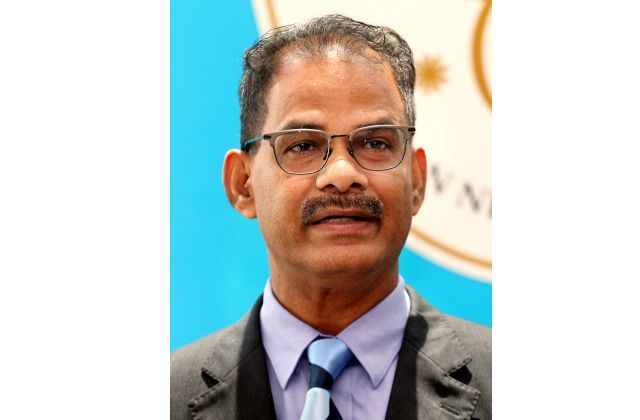
State human resources and poverty eradication committee chairman V. Papparaidu disclosed during the state assembly sitting in Shah Alam that roughly 80 percent of positions created by the ECRL require local manpower, a significant commitment to domestic workforce development. This emphasis on local hiring reflects both deliberate policy design and practical necessity, as the project demands sustained, skilled labour throughout its construction and operational phases. The preference for regional workers aligns with broader government objectives to build sustainable employment within the state while reducing import of foreign labour into sectors where domestic talent can be cultivated.
Recognising that job creation without corresponding skill development would be merely symbolic, the Selangor government has positioned Technical and Vocational Education and Training (TVET) as central to its employment strategy. Papparaidu articulated a commitment to equipping youths with competencies directly aligned to locomotive industry requirements, signalling a deliberate bridge between education systems and employer demands. This approach acknowledges a persistent challenge across Southeast Asia: skills mismatches that leave graduates underemployed despite labour shortages in technical fields.
The state has mobilised several institutional mechanisms to translate this intent into action. Kerjaya Selangor, a collaborative initiative with the Social Security Organisation (PERKESO) operating through the MyFuture Jobs platform, functions as a sophisticated matching mechanism. Rather than passive job boards, the platform evaluates applicants across qualifications, demonstrated skills and sector requirements, theoretically reducing friction in the hiring process. Such platforms address a fundamental challenge in emerging labour markets where information asymmetries between job-seekers and employers create inefficiencies.
Beyond digital platforms, the state has invested in tangible hiring events. JobCare Selangor represents an effort to demystify recruitment by facilitating direct employer-candidate interactions, with integrated interview opportunities that compress the hiring timeline. For TVET graduates particularly, such events can catalyse employment transitions that might otherwise be delayed by networking deficits or unfamiliarity with corporate recruitment practices. The accumulated effect of Kerjaya Selangor and JobCare initiatives aims to accelerate workforce absorption during the critical period when graduates enter the labour market.
Statistics illustrate the scale of Selangor's TVET pipeline. Between January and July 2024, the state produced 10,111 TVET graduates, demonstrating substantial output from vocational education channels. Simultaneously, during the same period, 78,030 vacancies requiring diploma-level qualifications or above emerged across Selangor's economy, indicating robust demand for skilled workers. Within this broader employment landscape, 3,965 positions in high-skill sectors such as automotive, semiconductor and manufacturing remained unfilled, spanning roles from automotive engineers to data scientists and software developers.
These figures reveal both opportunity and challenge. The existence of tens of thousands of vacancies coupled with thousands of TVET graduates annually suggests potential for substantial employment matching. Yet the persistence of unfilled positions hints that graduate competencies may not precisely align with employer specifications, or that geographic mismatches, salary expectations, or job characteristics create friction. The ECRL project's anticipated labour demand could serve as catalyst to refine this alignment, creating concentrated demand that incentivises both education providers and workers to bridge identified gaps.
Recognising these complexities, Papparaidu acknowledged a critical need for district-level workforce mapping. Selangor's geography is economically heterogeneous, with Shah Alam, Pelabuhan Klang, and other regions performing distinct industrial functions. A young person trained in semiconductor assembly in Cyberjaya faces different employment prospects than one in Klang Valley's port logistics sector. Effective skills matching therefore requires granular understanding of how graduate profiles align with specific regional economic structures and trajectories.
Implementing such mapping presents logistical complexity. The state government would need to aggregate data from universities, polytechnics, technical institutes and vocational centres to understand graduate distributions across disciplines and geography. Cross-referencing this supply data with employer surveys, sectoral growth projections and the ECRL's specific labour requirements would yield actionable intelligence. This exercise, while administratively demanding, could yield significant efficiency gains by preventing skills over-production in saturated fields while identifying emerging shortfalls.
The ECRL context elevates the stakes of this mapping exercise. Unlike dispersed labour demand across diverse sectors, the ECRL concentrates employer recruitment around specific technical competencies—locomotive maintenance, rail engineering, supply chain management—creating identifiable training targets. Educational institutions could adjust curricula and capacity planning based on transparent ECRL recruitment timelines and specifications. This project-based demand clarity offers an exceptional opportunity to test whether purposeful alignment between education and employment can reduce youth unemployment and underemployment across Selangor.
Beyond immediate employment generation, the ECRL's locomotive sector development holds structural significance for Selangor's economic positioning. As rail transport gains prominence in Southeast Asia's regional connectivity architecture, locomotive manufacturing and maintenance capabilities represent valuable long-term competitive advantages. Building a domestic supply chain reduces infrastructure project costs while creating exportable expertise that neighbouring countries may eventually require. Selangor's proactive investment in workforce development thus positions the state not merely as a consumer of infrastructure but as a potential supplier of transport-related technical services across the region.
The convergence of infrastructure investment, skills development and employment opportunity evident in Selangor's ECRL response offers a model potentially applicable across Malaysia. As additional mega-projects advance—in renewable energy, semiconductor manufacturing, or digital infrastructure—similar frameworks coupling labour demand with deliberate workforce preparation could amplify employment and social benefits. The success of Selangor's approach in translating ECRL-driven job creation into sustained, quality employment for graduates will offer crucial lessons for how Malaysia optimises the human capital dimensions of national development priorities.

