The Ministry of Economy has moved to secure continued funding for the People's Income Initiative – Food Entrepreneur Initiative (IPR-INSAN), a targeted programme designed to uplift low-income entrepreneurs through an innovative vending machine distribution model. Economy Minister Akmal Nasrullah Mohd Nasir announced the ministry's intention to formally petition the Ministry of Finance for programme extension, citing substantial evidence that the scheme delivers tangible benefits across multiple stakeholder groups. The decision comes after field assessments confirmed the initiative's effectiveness in simultaneously improving entrepreneur livelihoods while maintaining consumer food security at the grassroots level.
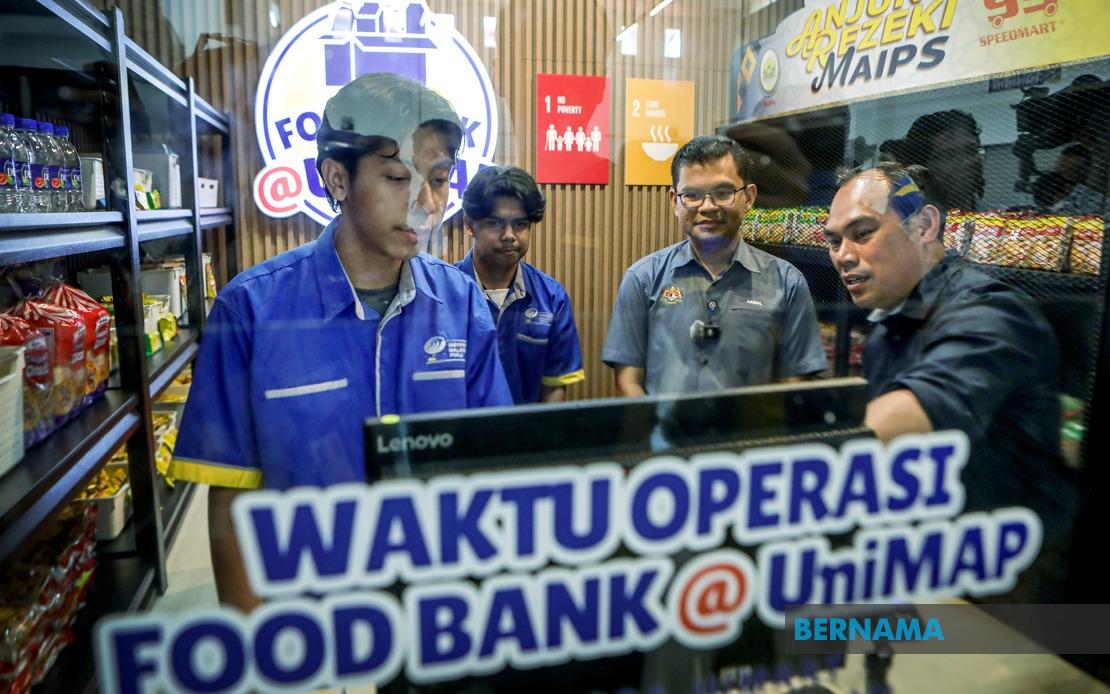
During an inspection tour of Universiti Malaysia Perlis (UniMAP) in Arau, Akmal Nasrullah conducted an on-site evaluation of two vending machine installations operating within university residential colleges. These machines serve as the operational backbone of IPR-INSAN on campus, facilitating direct transactions between B40 food entrepreneurs and the student population. The minister's visit underscored the government's commitment to evidence-based policy expansion, moving beyond theoretical frameworks to assess real-world programme outcomes and identify opportunities for scaling successful interventions.
The vending machine model addresses a critical gap in entrepreneurial access for low-income food vendors. Traditionally, such entrepreneurs face significant barriers to market entry—including high rental costs for physical storefronts, complex licensing requirements, and limited customer reach. By leveraging campus infrastructure and technology-enabled sales platforms, IPR-INSAN substantially reduces these barriers while creating systematic pathways for income generation. This approach represents a departure from conventional welfare provision toward empowerment-oriented economic engagement that builds sustainable livelihoods rather than fostering dependency.
Financial performance data from participating entrepreneurs demonstrates the programme's material impact. At the Tuanku Abdul Rahman Residential College, participant Norleyana Nordin achieved average monthly sales of RM2,178.80 through her homemade food business, with peak monthly revenues reaching RM4,905 in January. Across campus at the Tuanku Tengku Fauziah Residential College, entrepreneur Noor Hasfalela Mohd Noor recorded substantially higher sales figures, averaging RM4,595 monthly with maximum monthly turnover of RM10,012 in January, sustained at RM5,049 in February and RM4,868 in April. These earnings trajectories, while modest in absolute terms, represent meaningful income supplementation for participants from the bottom 40 percent income bracket.
Beyond direct entrepreneur benefits, IPR-INSAN generates positive spillover effects for university students, particularly those from economically vulnerable backgrounds. The vending machines provide convenient access to nutritious, affordably-priced meals throughout campus facilities, addressing food security concerns that can undermine academic performance and student wellbeing. By integrating food provision with income generation, the programme simultaneously tackles two interconnected development challenges—entrepreneurial marginalisation and student food insecurity—through a single, coherent intervention framework.
The programme's integration with complementary initiatives such as the Food Bank and MADANI Dapur Siswa (student kitchen) reflects a holistic approach to campus welfare. These interconnected schemes create a supportive ecosystem addressing student nutrition from multiple angles, reducing the likelihood that financial constraints will force students to abandon tertiary education. Akmal Nasrullah's acknowledgement of contributions from university administration, student volunteers, and private sector partners highlighted the collaborative governance model underlying programme success, emphasising that effective social enterprise requires coordination across institutional boundaries.
From a broader policy perspective, IPR-INSAN exemplifies how targeted public investment can catalyse inclusive economic growth by removing structural constraints faced by marginalised entrepreneurs. Rather than providing direct cash transfers or subsidies that create dependency, the scheme equips participants with platform access, technology infrastructure, and institutional legitimacy—recognising that low-income entrepreneurs often possess business acumen but lack market connectivity. This asset-based approach aligns with emerging development thinking that emphasises capability building over consumption support.
The government's push for funding extension carries particular significance given Malaysia's development agenda. With income inequality remaining a persistent challenge despite sustained economic growth, programmes demonstrating concrete results in lifting low-income earners merit sustained investment and scaling consideration. IPR-INSAN's university-based model also provides valuable experimentation grounds for testing scalability to other institutional settings—hospitals, airports, corporate facilities—where large consumer concentrations offer similarly attractive entrepreneurial opportunities.
The vending machine innovation itself deserves analytical attention as a governance tool. By automating transactions and removing human intermediaries, the platform reduces opportunities for exploitation while enhancing operational transparency and data collection. Entrepreneurs can track sales patterns and customer preferences systematically, enabling evidence-driven business decisions. Meanwhile, administrators can monitor programme effectiveness through transparent sales metrics, ensuring accountability and identifying performance variations across participants—critical information for targeted support delivery.
Looking forward, extension approval would signal sustained government commitment to inclusive economic models beyond traditional sectors. As Malaysia navigates post-pandemic economic recovery and digital transformation, inclusive entrepreneurship programmes become increasingly vital for ensuring prosperity is widely distributed. IPR-INSAN's demonstrated success provides empirical justification for ministry petitioning, moving the debate beyond ideological preferences toward pragmatic assessment of what interventions genuinely improve participant livelihoods while maintaining fiscal sustainability.
The financing decision rests with the Ministry of Finance, whose deliberations will likely weigh IPR-INSAN's performance metrics against competing budgetary priorities. The quantifiable income improvements documented at UniMAP suggest the programme delivers value-for-money relative to alternative poverty-reduction approaches. Should extension be approved, opportunities emerge for geographic expansion and institutional diversification, potentially multiplying impact across Malaysia's diverse institutional landscape.

