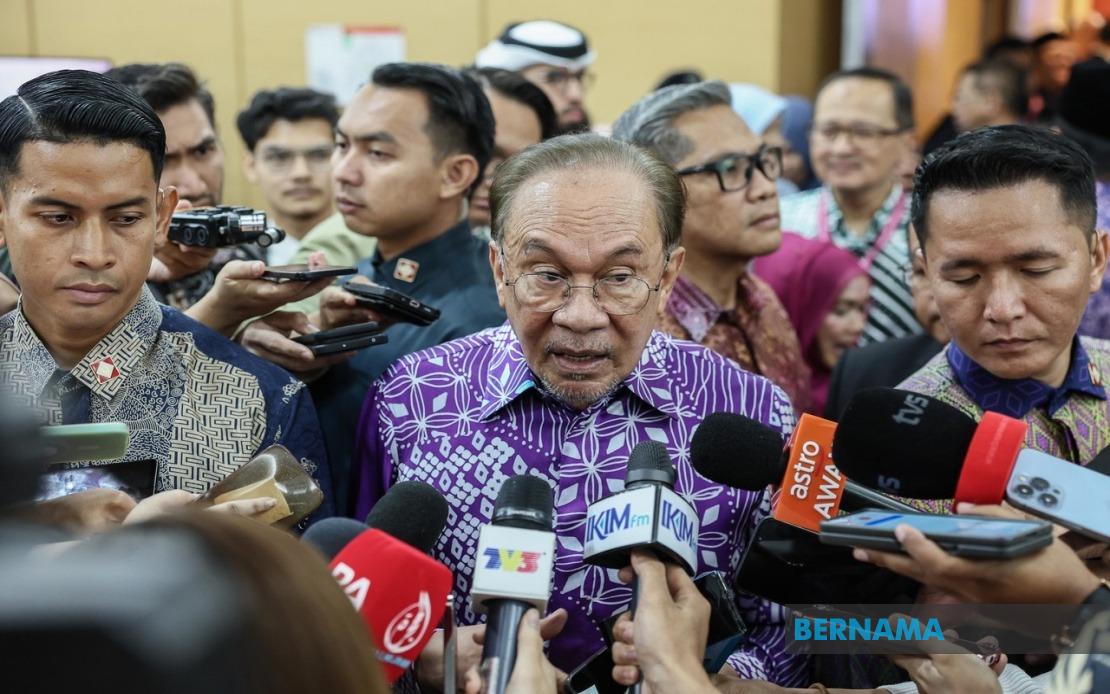
Prime Minister Datuk Seri Anwar Ibrahim has made a forceful case for rebalancing Malaysia's approach to economic development, insisting that pursuit of growth, innovation and investment must be grounded in ethical principles and concern for human welfare. Speaking at the Humane Economy Global Discourse in Kuala Lumpur, Anwar outlined a vision where prosperity serves people's dignity and quality of life rather than becoming an end unto itself—a philosophical stance that resonates against decades of development models focused primarily on expanding gross domestic product and attracting foreign capital.
The Prime Minister's intervention comes as the world accelerates through transformative technological upheaval. Artificial intelligence, renewable energy systems, advanced manufacturing and biotechnology are reshaping economies globally, creating both unprecedented opportunities and profound disruptions. Against this backdrop, Anwar's emphasis on anchoring these changes to human values represents a deliberate counterweight to purely technocratic or market-driven approaches that often neglect social consequences and individual flourishing.
For Malaysia specifically, the remarks signal an intention to chart a different course from the typical development trajectory. Maintaining competitiveness, sustaining productivity and remaining open to international investment remain essential, Anwar stressed, but these objectives should no longer be decoupled from considerations of equity, dignity and social cohesion. This framing suggests the government is grappling with tensions that most developing nations face: how to modernise rapidly without sacrificing cultural values or widening inequality.
The concept Anwar articulated—that "the economy is a means, not an end in itself"—directly challenges prevailing wisdom in technocratic circles where efficiency, returns and growth metrics often dominate policy deliberation. By recovering what he termed "humanity" as a guiding principle, the Prime Minister implies that previous decision-making frameworks have been insufficient or even misdirected. This critique extends implicitly to how public policies are formulated, evaluated and implemented across government agencies.
The presence of Minister in the Prime Minister's Department (Religious Affairs) Dr Zulkifli Hasan at the forum underscores the administration's intention to integrate moral and spiritual dimensions into governance discussions. Religious Affairs involvement signals that the government views ethical frameworks rooted in faith traditions as resources for policy-making, not peripheral concerns. This positioning reflects Malaysia's particular context as a Muslim-majority nation where Islamic values theoretically inform state direction, yet practical governance often prioritises secular economic metrics.
Prof Datuk Dr Saadiah Mohamad, who chairs both Forum Ekonomi Manusiawi and directed the Humane Economy Global Discourse, represents the intellectual infrastructure supporting this pivot. The existence of dedicated platforms for discussing humane economic models indicates growing dissatisfaction among policy thinkers with conventional paradigms. The forum itself—bringing together academics, officials and other stakeholders—demonstrates appetite for alternative frameworks that genuinely integrate human wellbeing into economic planning rather than treating it as an afterthought.
For Malaysian workers and households, Anwar's rhetoric carries practical implications. An economy genuinely oriented toward human flourishing would presumably generate employment that provides dignity and fair compensation, invest in education and healthcare that benefit ordinary citizens, and distribute gains from technological change more broadly rather than concentrating them among capital owners and privileged segments. Whether rhetoric translates into policy remains the critical test, as many governments profess commitment to inclusive growth while implementing measures that concentrate wealth and opportunity.
The Malaysian context adds particular urgency to these concerns. The nation has experienced sustained development over decades, yet inequality has persisted and in some measures grown. Technological disruption through automation and AI threatens traditional employment pathways just as rapid digital transformation reshapes work itself. Without deliberate policies embedding human welfare into economic strategy, Malaysia risks following trajectories where growth coexists with stagnant wages, precarious employment and social fragmentation—precisely the problems Anwar's rhetoric appears to identify.
Regionally, the Prime Minister's emphasis on moral economy also carries significance for Southeast Asia's broader development conversation. As the region pursues technological leapfrogging and positions itself within global value chains, questions about who benefits from growth and how development should be defined become increasingly salient. Malaysia's articulation of an alternative model—one centred on human dignity—potentially influences neighbouring governments and private sector actors operating across the region.
Implementing such principles requires moving beyond rhetoric toward concrete institutional mechanisms. This might involve reorienting metrics by which government performance is evaluated, embedding human welfare considerations into cost-benefit analyses of major projects, or restructuring regulatory frameworks to prioritise stakeholder interests beyond shareholders. Whether the administration possesses political will and bureaucratic capacity for such fundamental reorientation remains uncertain, particularly given entrenched interests benefiting from existing arrangements.
The challenge ahead for Anwar's government involves translating philosophical commitment into measurable outcomes that ordinary Malaysians experience in their daily lives. High-minded principles about moral economy gain credibility only through visible improvements in living standards, workplace conditions, access to opportunity, and distribution of prosperity across society. The forums and discourse provide important intellectual grounding, but ultimately impact depends on whether these ideas reshape budget allocation, regulatory decisions, and institutional incentives throughout government and the broader economy.

