The European Central Bank has achieved a significant milestone in its campaign to introduce a digital euro, winning backing from the economic committee of the European Parliament on Tuesday. The approval represents a pivotal moment for the continent's most ambitious fintech initiative in decades, one designed to give eurozone citizens direct access to central bank-backed digital currency and insulate Europe from external financial pressures.
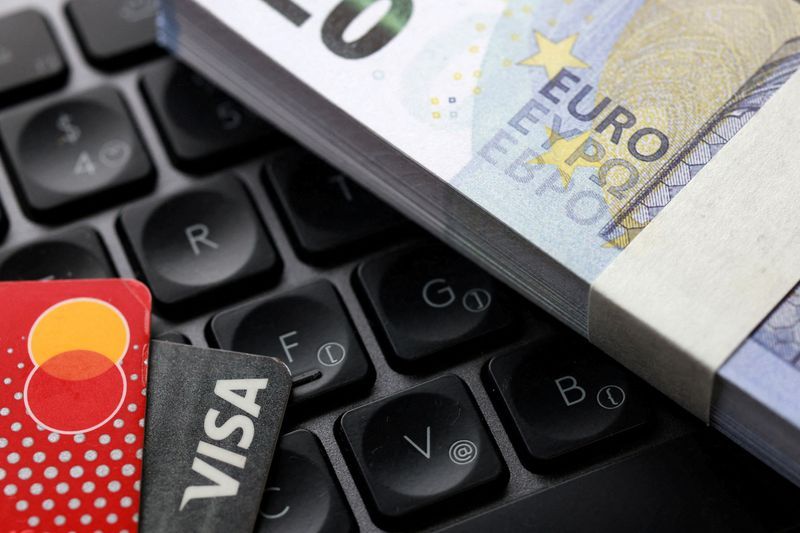
The timing of this parliamentary endorsement carries particular weight in the current geopolitical climate. As the Trump administration implements tariffs on longstanding trading partners including the European Union and signals willingness to leverage American control of international payment networks, European policymakers have grown increasingly anxious about their reliance on U.S.-dominated systems. The digital euro would function as an alternative infrastructure, allowing residents across the nineteen-member eurozone to conduct transactions online and in physical locations without depending on private American credit card companies like Visa and Mastercard. This strategic consideration has elevated the digital euro from a technical modernisation project to a matter of economic sovereignty.
The proposed digital currency would operate as an electronic wallet backed by the ECB's balance sheet but distributed and promoted through commercial banks and fintech firms. This hybrid model attempts to balance the need for a robust public digital payment option with the interests of the private banking sector. The distinction matters for Southeast Asian observers as well, since several regional economies are exploring similar central bank digital currency frameworks. Malaysia's own exploration of digital ringgit infrastructure could benefit from studying how European authorities navigate the tensions between central bank innovation and commercial bank profitability.
Development of the digital euro has stretched across six years, but recent geopolitical shifts have accelerated its momentum considerably. The return of Donald Trump to the White House and his subsequent protectionist trade measures have crystalised European concerns about systemic vulnerability. Policymakers now view the project not merely as technological progress but as essential insurance against potential American weaponisation of payment networks, a risk that once seemed theoretical but now appears uncomfortably plausible.
The legislative journey has proven contentious, particularly between the ECB and the banking sector. European financial institutions have lobbied intensively to constrain the project's scope, fearing that easy access to central bank digital money could trigger deposit withdrawals and erode their traditional revenue streams from payment processing. Three years of negotiations between the central bank and commercial banks preceded Tuesday's parliamentary vote, reflecting deep disagreement over how aggressively to pursue this innovation. The compromise ultimately reached appears to have satisfied enough political factions to secure committee approval, though opponents on the political right remained unconvinced.
Parliamentary proceedings revealed lingering resistance to the initiative. Siegbert Frank Droese, representing the far-right Europe of Sovereign Nations group, announced his faction's opposition to the draft regulation. This dissent suggests that a plenary vote in the full European Parliament may still be required, introducing an element of uncertainty into what otherwise appears to be a coordinated push toward implementation. If the committee approval stands unchallenged, however, negotiations between lawmakers, EU member state governments, and the European Commission could commence as early as next month.
The regulatory framework governing the digital euro aims to position the currency as Europe's answer to the dominance of foreign payment providers. The draft regulation's language emphasises that introduction would "reduce overreliance on non-European providers by becoming a pan-European means of payment" while simultaneously modernising the euro itself for the digital age. This framing reflects a deliberate strategy to present the initiative not as defensive protectionism but as progressive financial evolution, an important rhetorical distinction in winning broader public and political support.
The implementation timeline suggests a measured approach to deployment. The ECB intends to launch a twelve-month pilot programme during the second half of next year, allowing extensive testing of technical systems, user interfaces, and economic impacts before full rollout. A complete launch is targeted for 2029, providing sufficient runway for refinement based on pilot experience. This gradual rollout contrasts with more aggressive timelines some nations have pursued with their own central bank digital currencies, reflecting European preference for comprehensive testing over rapid deployment.
For observers in Southeast Asia, the European digital euro project offers important lessons about central bank strategy in an era of shifting geopolitical alignments. Malaysia and other ASEAN nations may find themselves in similar positions regarding payment system sovereignty as regional economies deepen their ties with multiple external powers. The ECB's experience negotiating between innovation imperatives, financial sector interests, and political feasibility could illuminate pathways for regional central banks contemplating their own digital currency frameworks. The institutional mechanisms for mediating these competing interests may prove as valuable as the ultimate technological solution.
The final approval timeline remains ambitious but achievable. Assuming the plenary vote proceeds as expected, negotiators from three separate bodies—the European Parliament, EU national governments, and the European Commission—will undertake the complex work of finalising technical standards, legal protections, and implementation protocols. Success by year-end would position the digital euro as operational infrastructure by the end of the decade, fundamentally reshaping how European citizens and businesses interact with money in their daily lives.

