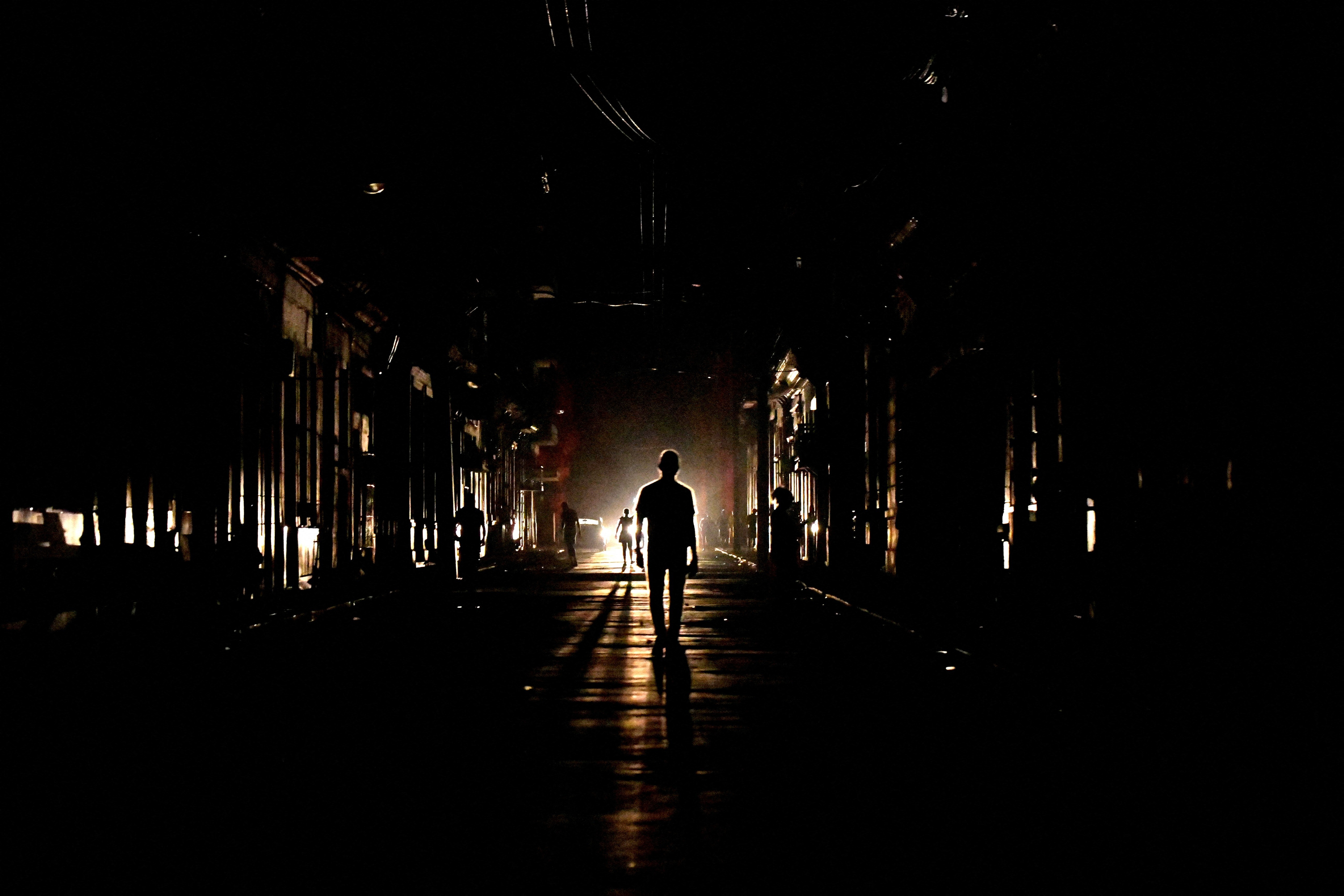
Eastern Libya experienced a significant electricity crisis late Thursday when a widespread blackout plunged major population centres into darkness, highlighting the nation's deepening infrastructure problems. Extensive areas of Benghazi, the country's second-largest city, lost power along with the nearby town of Marj and numerous other communities across the eastern region, according to local media reports and visual evidence from the affected areas.
The scale of the outage demonstrated the vulnerability of Libya's power generation system at a time when the nation is already struggling with multiple security and governance challenges. Benghazi, home to over one million residents and serving as the administrative headquarters of one of Libya's two rival governments, was among the hardest hit by the blackout, with streets and neighbourhoods left without electricity for several hours.
The Electricity Ministry affiliated with Libya's eastern-based government, which operates under appointment by the House of Representatives, announced that several generation units had been brought back online following the outage. This recovery effort enabled electricity supplies to commence their gradual return to affected communities, though the process was undertaken cautiously to maintain grid stability.
Priority restoration efforts focused initially on critical infrastructure, with power supplies being restored to Benghazi's main 1,200-bed hospital and to several residential neighbourhoods in the southern section of the city. These targeted interventions reflected the immediate need to reinstate services to essential facilities and densely populated areas where the outage posed the greatest humanitarian risk. The ministry's decision to restore hospital power first underscored the potential danger posed by extended blackouts to patients and medical operations.
Technical teams were deployed across generation, transmission, and distribution networks to systematically address the remaining affected areas. The ministry cautioned that power loads would be reintroduced gradually rather than simultaneously, a standard protocol designed to prevent fresh destabilization of the electrical grid. Such incremental restoration, while ensuring system integrity, necessarily extended the timeline for full recovery across the region.
Investigations into the root cause of the blackout began immediately, with technical personnel examining generation facilities and transmission infrastructure to identify what triggered the failure. The specifics of what precipitated the outage remained unclear in initial reports, though Libya's aging and inadequately maintained power infrastructure has been a chronic vulnerability for years.
The blackout represents merely the latest manifestation of Libya's accelerating infrastructure deterioration. The nation has been buffeted in recent weeks by intensifying security incidents, including armed clashes in the western cities of Zawiya and Sorman, drone strikes targeting petroleum production facilities in Zawiya, and a cascading electricity crisis that has undermined public services across the country. These compounding challenges paint a picture of a state increasingly unable to deliver basic services to its population.
Libya's electricity crisis cannot be divorced from the nation's underlying political fragmentation. Since the 2011 overthrow of Muammar Gaddafi, Libya has descended into competing power structures and armed factions, a condition that has only worsened since 2014. The internationally recognised Government of National Unity, headed by Prime Minister Abdul Hamid Dbeibah, maintains control of Tripoli and western Libya. Simultaneously, a rival administration appointed by the House of Representatives and led by Osama Hammad operates from Benghazi and eastern Libya, creating a de facto partition that obstructs unified governance and coordinated infrastructure management.
This political division has proven catastrophic for essential services. When power generation facilities, transmission networks, and distribution systems span territory controlled by competing governments with little coordination mechanisms, effective maintenance, emergency response, and capital investment become extremely difficult. The blackout illustrated how Libya's political dysfunction translates directly into deteriorating living conditions for ordinary citizens.
The United Nations Support Mission in Libya (UNSMIL) has persistently sought to broker political agreements between the rival administrations, recognising that only genuine national reconciliation and unified governance can address underlying state capacity problems. Long-delayed national elections remain the theoretical pathway toward resolving Libya's political divisions, yet repeated postponements have dashed hopes that elections will soon materialise. Libyan civilians harbour expectations that elections might finally establish a legitimate, unified government capable of concentrating resources on reconstruction and service delivery.
For observers across the Middle East and North Africa, Libya's trajectory offers a cautionary example of how political fragmentation cascades into infrastructure collapse and humanitarian deterioration. The eastern blackout, though temporary in its immediate impact, symbolises deeper state failure that extends far beyond electricity supply. Without progress toward political settlement and government consolidation, Libya's citizens face a future of episodic crises and chronically inadequate services. The challenge confronting international mediators and Libyan stakeholders alike remains formidable: establishing sufficient political consensus to enable reconstruction of state institutions that can deliver basic services to a population exhausted by more than a decade of conflict.

