The Subsidised Diesel Control System (SKDS) expansion into new commercial vehicle categories has delivered disproportionate benefits to East Malaysian businesses, with Domestic Trade and Cost of Living Minister Datuk Armizan Mohd Ali confirming that 67.9 per cent of participating companies are headquartered in Sabah, Sarawak and the Federal Territory of Labuan. This concentration reflects how targeted subsidy programmes can reshape regional economic dynamics, particularly in areas where transport costs significantly impact operational expenses for small and medium enterprises.
Since the scheme opened to new sectors on July 3, a total of 10,453 companies across Sabah, Sarawak and Labuan have registered 18,538 vehicles for the jeep and pickup categories. These figures form part of a nationwide total of 15,388 companies operating 25,781 vehicles across all eligible categories. The pattern underscores both the acute dependence of East Malaysian businesses on subsidised fuel and the relative saturation of the programme in Peninsular Malaysia, where alternative subsidy mechanisms and lower transportation distances may reduce reliance on such schemes.
The scheme's expansion to include sole proprietorships and partnerships using jeeps and pickups registered under the company's private use classification represents a significant policy shift. These business operators can now access a RM300 diesel subsidy through the SKDS mechanism, effectively reducing operational costs for businesses that depend heavily on these vehicles for commercial purposes. For many small transport operators and trading companies in Sabah and Sarawak, this subsidy injection directly improves profit margins in an operating environment where fuel costs consume a substantial portion of revenue.
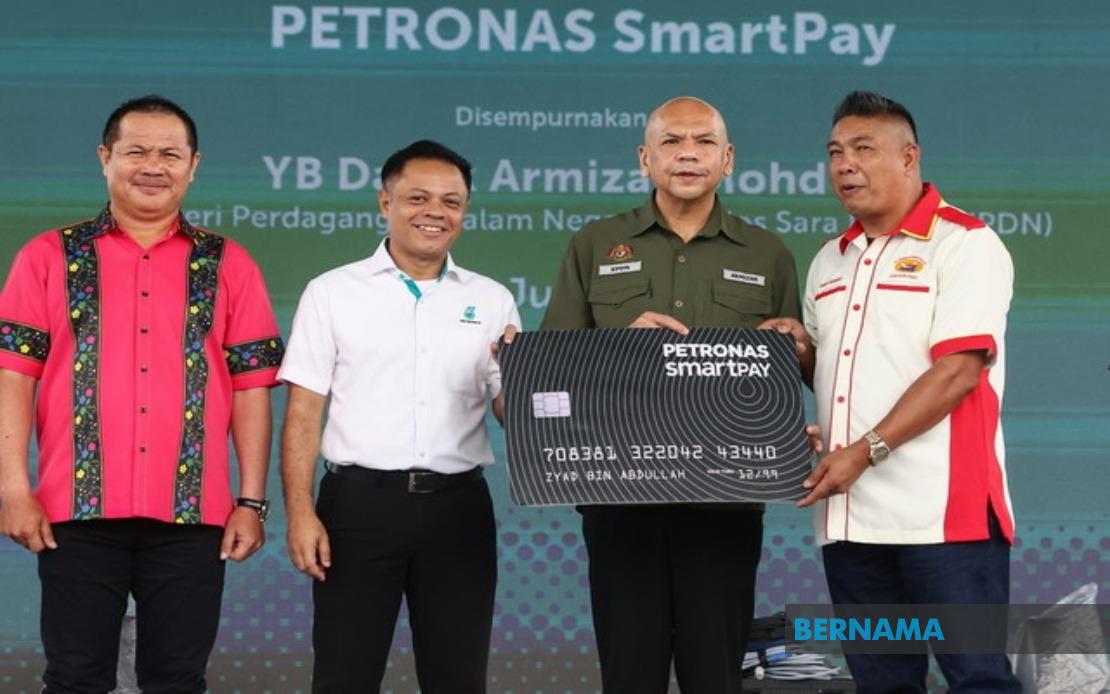
Armizan clarified the ministerial structure governing Malaysia's subsidy architecture during remarks at a fleet card handover ceremony for 15 companies in Sandakan. The Domestic Trade ministry oversees SKDS distribution for 35 varieties of commercial vehicles, while the Ministry of Finance manages individual consumption subsidies through the Budi Diesel and Budi Agri-Komoditi programmes. This bifurcated approach creates administrative complexity but reflects different policy objectives: supporting commercial operators' viability versus protecting household purchasing power.
Three distinct sectors now operate under SKDS framework: public land transport, land transport for consumer goods, and the newly expanded jeep and pickup categories. Companies gaining SKDS approval can obtain fleet cards from participating petroleum companies, enabling bulk purchases of subsidised diesel. This mechanism replaces pump-to-pump purchases with institutional arrangements that simplify administration and improve tracking. For Malaysian businesses managing fleets across multiple vehicles, the fleet card system provides operational efficiency alongside financial benefit.
The minister encouraged companies meeting eligibility criteria but not yet registered to apply immediately through the MySubsidi portal. This appeal suggests that uptake remains incomplete despite the scheme's apparent generosity, indicating either awareness gaps among potential beneficiaries or concerns about application complexity. East Malaysian companies may face particular barriers given geographic remoteness and less developed digital infrastructure in some areas, suggesting the government may need to intensify outreach efforts beyond the online platform.
During his Sandakan visit, Armizan engaged with regional stakeholders regarding subsidy standardisation issues. Sabah representatives raised concerns about inconsistency between diesel and petrol subsidy conditions for non-commercial categories, advocating for simplified eligibility criteria based solely on driving licence possession. These suggestions address real frustrations among citizens navigating overlapping subsidy schemes with divergent rules, where the regulatory burden sometimes exceeds the financial benefit for marginal cases.
Further complexity emerged around vehicle registration requirements. The Ministry of Finance's criteria for subsidy eligibility when vehicles are registered to individuals diverge from broader policy expectations, prompting requests for harmonisation. Armizan committed to channelling these concerns through existing coordination platforms between state governments and federal ministries, acknowledging that East Malaysia's devolved governance structures require careful consultation. This consultative approach reflects recognition that subsidy policy cannot be implemented uniformly across regions with distinct economic structures and bureaucratic arrangements.
The minister emphasised ongoing collaboration with the Ministry of Finance, state governments in Sabah and Sarawak, petroleum companies and other stakeholders to strengthen SKDS implementation progressively. This multi-stakeholder approach acknowledges that subsidy schemes succeed only when numerous actors—government agencies, private companies, and beneficiary businesses—align around shared objectives. In Malaysia's context, where subsidies command enormous budget allocations and political attention, continuous refinement becomes essential for maintaining fiscal sustainability while protecting vulnerable business sectors.
The outsized concentration of SKDS participants in East Malaysia reflects genuine structural conditions: greater geographic distances, smaller business scales, and limited alternative transport infrastructure compared to Peninsular Malaysia. However, it also raises questions about whether subsidies represent the most efficient mechanism for addressing regional economic disparities. Policymakers increasingly recognise that continuous subsidy dependence can inhibit productivity improvements and innovation, suggesting that complementary investments in infrastructure, skills and technology may yield longer-term development benefits than perpetual programme expansion.
For Malaysian businesses operating across regions, the SKDS expansion signals government commitment to reducing operational costs in commercial transport. However, navigating multiple overlapping subsidy schemes with inconsistent eligibility criteria imposes compliance costs that smaller operators struggle to manage. Streamlining these programmes and creating unified digital platforms could improve uptake while reducing administrative burden for both beneficiaries and enforcement agencies, ultimately enhancing the return on substantial government expenditure.

