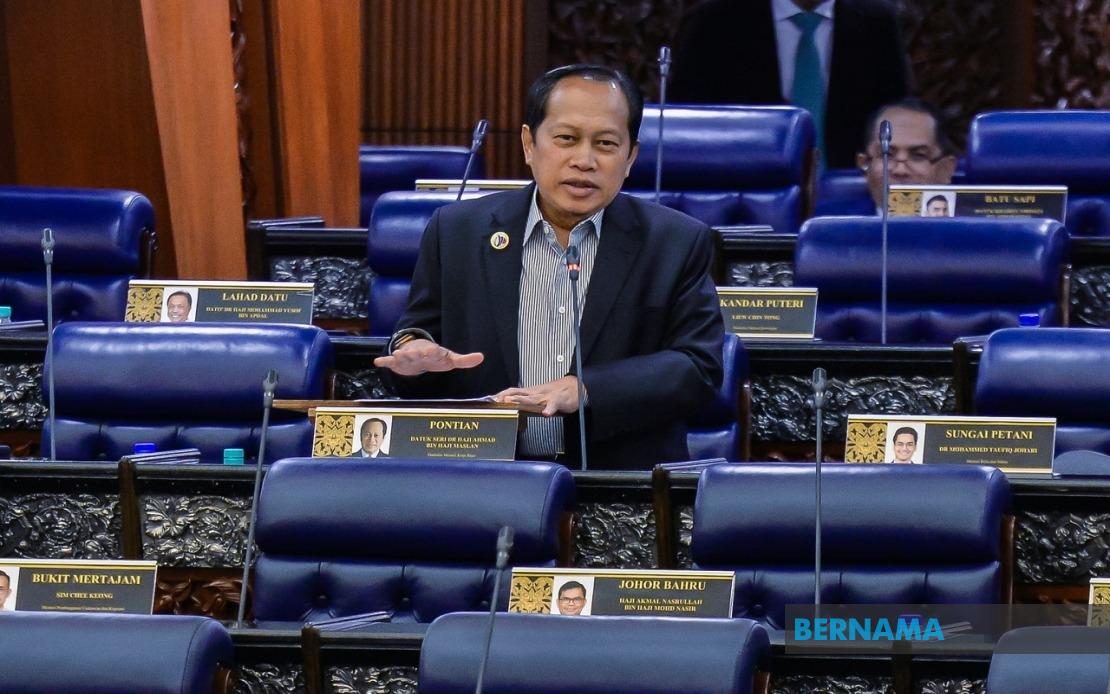
The Malaysian government has decided to develop the East Coast Expressway Phase 3 (LPT3) through a public-private partnership arrangement, citing budget limitations that prevent direct government financing of the major infrastructure project. Deputy Works Minister Datuk Seri Dr Ahmad Maslan made the announcement during parliamentary proceedings, explaining that the financial constraints facing the Federal Government necessitated shifting the project to the private sector through a competitive bidding process.
Under the planned Request for Proposal mechanism, private firms will compete to win the concession rights, with the successful bidder absorbing all development expenditure. This approach represents a significant departure from traditional government-funded infrastructure models and reflects the broader fiscal pressures that have shaped Malaysia's infrastructure policy in recent years. The shift to PPP arrangements has become increasingly common across Southeast Asia as governments balance developmental ambitions against budgetary constraints, though such models introduce questions about long-term affordability for end-users through toll mechanisms.
The proposed expressway represents an ambitious connectivity initiative for Malaysia's East Coast region. Stretching 122 kilometres from Kampung Gemuruh in Kuala Terengganu to Tunjung in Kota Bharu, the dual two-lane facility will feature five interchanges along its alignment. Based on cost assessments conducted in 2022, the development budget has been pegged at RM9.8 billion, though this figure may require revision given construction inflation and supply chain dynamics since the valuation period. This price tag underscores why government financing proved unfeasible during the current budgetary environment.
Ahmad Maslan emphasised that the LPT3 initiative should be understood within a broader transportation ecosystem taking shape across the East Coast corridor. The imminent completion of the East Coast Rail Link will provide rail-based alternatives for passengers travelling to the Klang Valley, while the Kota Bharu-Kuala Krai Expressway and Lingkaran Tengah Utama Expressway will offer additional road networks upon finalisation. Rather than cannibalising traffic from these competing projects, the LPT3 is positioned as a complementary option that expands user choice and distributes traffic across multiple corridors, potentially enhancing overall regional connectivity and economic integration between East Coast states and the developed western corridor.
Currently, the existing routes serving the East Coast experience congestion primarily during peak travel periods such as Hari Raya festivities and public holidays, when residents and travellers from that region attempt to reach the Klang Valley simultaneously. This seasonal demand pattern has informed transport planning across the region, with authorities recognising that capacity-building projects should be calibrated to accommodate these foreseeable surge periods while providing baseline service improvements during ordinary traffic conditions. The availability of multiple route options through LPT3, KBKK, and LTU should distribute this peak-period demand more evenly across the network.
The specific toll rate structure for LPT3 remains undetermined at this stage, as Ahmad Maslan acknowledged in his parliamentary response. Multiple technical and financial variables will influence final toll pricing, including the actual construction costs incurred by the successful bidder, the financing structure and associated borrowing costs, anticipated operational and maintenance expenses across the concession period, projections of traffic volumes and revenue generation, and the length of the concession award. These interdependent variables create a complex calculation that typically emerges through the competitive bidding process, as private operators present their financial models and proposed toll rates to government evaluators.
Equally unresolved are the operational parameters for the expressway, specifically the concession duration, toll collection methodology, and the configuration of toll gantries and collection points. These decisions carry significant implications for both operator profitability and user experience. A longer concession period might permit lower annual toll charges but extends private control over the facility, whereas shorter terms increase annual toll pressures while accelerating the eventual transfer of the asset back to public hands. The choice between conventional toll plazas, open-road tolling via automatic number-plate recognition, or hybrid systems will affect traffic flow and operational efficiency.
The reliance on PPP structures for major infrastructure projects reflects a global trend that Malaysia has progressively embraced, particularly across transportation networks. This model transfers capital risk and operational responsibility to the private sector while allowing government to preserve budgetary capacity for other priorities. However, PPP arrangements also introduce considerations around transparency in bidding processes, regulatory oversight of toll rates, and the balance between private profit requirements and public accessibility concerns. For Malaysian citizens, the practical consequence will be toll payments for using a privately-operated facility, with rates calibrated to ensure the operator achieves acceptable returns on their RM9.8 billion investment.
The LPT3 project represents one component of Malaysia's broader infrastructure modernisation agenda, which has been constrained by fiscal realities following elevated government expenditure during pandemic-response periods. By channelling major transportation projects through private financing mechanisms, policymakers attempt to advance developmental objectives without imposing immediate strain on the federal budget. This approach has merit in expanding capacity and connectivity, yet it also reflects underlying budgetary pressures that warrant examination regarding the sustainability of Malaysia's longer-term infrastructure investment model and the cumulative toll burden on users across multiple privately-financed facilities.
The parliamentary question from Wan Hassan Mohd Ramli, representing Dungun, highlighted legitimate concerns about the criteria and timeline for LPT3 implementation through the PPP route. The deputy minister's response indicated that detailed parameters remain subject to further technical refinement and stakeholder consultation. The Request for Proposal process will presumably establish clearer timelines, though infrastructure projects of this magnitude typically experience implementation delays beyond initial projections, particularly given the complexity of land acquisition, environmental assessments, and engineering coordination across 122 kilometres of terrain. Malaysian observers should anticipate that the actual construction timeline will likely extend beyond whatever preliminary schedule emerges from the bidding documentation.
For the East Coast region specifically, the LPT3 represents an opportunity to enhance connectivity and reduce travel times for residents and businesses seeking to access the more developed Klang Valley markets. However, the toll-based financing model means that these connectivity gains will entail user costs, which warrant consideration by east coast stakeholders regarding whether the benefits justify the pricing. The successful private operator will bear development risk, but users will ultimately finance the investment through toll payments spanning the concession period, making this fundamentally a deferred-cost arrangement rather than a cost-reduction initiative.
The government's decision to proceed with LPT3 under a PPP framework demonstrates pragmatic acknowledgement of fiscal constraints while simultaneously advancing infrastructure ambitions. Yet it underscores the importance of ensuring competitive, transparent bidding processes and effective regulatory oversight to protect public interests. As the Request for Proposal develops and private bidders submit proposals, scrutiny of how government balances operator profitability with user affordability will become essential, particularly given the RM9.8 billion investment scale and the geographic significance of the East Coast corridor for Malaysian economic development and regional connectivity objectives.

