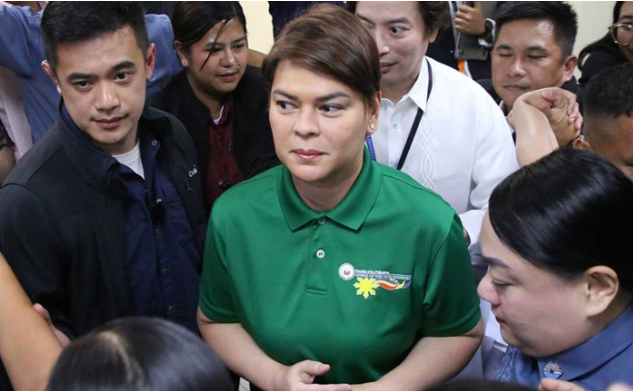
The impeachment trial of Vice President Sara Duterte entered a critical phase on Tuesday as her defence team mounted a vigorous challenge to the prosecution's case, with Duterte herself issuing a stark assertion that the entire complaint rests on a foundation of fiction rather than fact. Speaking before proceedings resumed on the fourth day of hearings, Duterte characterised the allegations against her—involving an alleged plot to assassinate President Ferdinand R. Marcos Jr., First Lady Liza Marcos, and former Speaker Martin Romualdez—as fundamentally unsubstantiated by credible documentary or testimonial evidence.
The timing of Duterte's public statement proved strategically significant, arriving just as the prosecution prepared to call Zuleika Lopez, her chief of staff, as its third witness in what has become an increasingly contentious constitutional proceeding. The statement represented a deliberate effort to shape the narrative around Day 4 proceedings and respond to developments that had begun surfacing within the chamber itself, particularly through the cross-examination strategy executed by Duterte's legal counsel.
Central to the defence's emerging challenge are procedural inconsistencies that legal representatives highlighted during the interrogation of Jeremy Lotoc, the NBI-Bangsamoro Autonomous Region in Muslim Mindanao Regional Director and the prosecution's second witness. Attorney Mark Vinluan drew attention to discrepancies between the dates recorded in affidavits and corresponding docket numbers maintained within National Bureau of Investigation files, suggesting potential administrative irregularities or documentation errors that could undermine the investigative foundation supporting the prosecution's narrative.
Duterte's statement escalated the rhetorical intensity of her defence, moving beyond technical objections to launch a broader philosophical critique of the impeachment process itself. She characterised the prosecution's approach as involving three distinct elements: the repetition of unsubstantiated threat claims, the invention of a fictional assassin without corroborating evidence, and the fabrication of supporting materials designed to lend credibility to what she termed an inherently false narrative. This framing positioned the proceedings not merely as a legal dispute but as a fundamental challenge to institutional integrity and public trust.
The substantive claim that Duterte has emphasised throughout the trial process—that the rule of law must rest exclusively upon verifiable facts rather than speculation, manufactured narratives, or unsupported allegations—carries particular weight within the Philippine constitutional context. The impeachment mechanism represents one of the most serious checks against executive authority, and its misuse carries profound implications for democratic governance and the separation of powers.
Currently, the Senate impeachment court is examining Article IV of the formal complaints, which specifically addresses what the prosecution characterises as a kill plot initiated by Duterte herself against the president, first lady, and congressional figure. This article's focus on security threats represents one of the more immediately grave allegations within the broader impeachment framework, dealing directly with personal safety and potential criminal conduct rather than abstract policy disagreements or administrative impropriety.
Progress in the trial has proceeded at a measured pace that contrasts sharply with the ultimate scope of the proceeding. The prosecution has thus far presented only two witnesses despite having been allocated eleven days to address Article IV comprehensively. This measured presentation pattern suggests either a deliberate prosecutorial strategy of careful documentation or practical constraints in witness availability and examination preparation. With barely half of the designated time consumed and only two witnesses presented, significant testimony remains to be introduced before the prosecution completes its case on this particular charge.
The temporal dimensions of the impeachment process itself warrant attention from observers seeking to understand its potential political consequences. The entire trial framework encompasses 92 days of proceedings, a timeline that would stretch the constitutional process well into early 2027 if followed as currently scheduled. Such an extended timeline potentially keeps the vice president's political fate in limbo during a critical period of the Marcos administration, affecting her governance capacity, political positioning, and public standing throughout what could be a transformative phase in Philippine domestic and regional affairs.
Duterte's continued absence from the chamber has also become a notable feature of the trial's physical reality, even as her legal team aggressively contests the prosecution's evidence. This absence contrasts with historical impeachment proceedings where the accused has maintained courtroom presence, raising questions about strategic calculations regarding visibility, engagement, and the management of public perception. Her reliance on written statements and legal representatives suggests a deliberate choice to maintain distance from the proceedings while simultaneously participating through counsel and public messaging.
For Malaysian and Southeast Asian observers, the Duterte impeachment case illuminates broader patterns regarding executive accountability, institutional stability, and the use of constitutional mechanisms within regional democracies. The trial demonstrates how formal legal processes can become vehicles for high-stakes political competition, with evidentiary standards and procedural integrity serving as contested terrain reflecting deeper disagreements about leadership legitimacy and governing authority. The specific focus on alleged security threats and assassination plots also connects to regional concerns about political violence and the proper boundaries between security operations and democratic norms.
The case raises significant questions about how Southeast Asian democracies handle disputes between executive officials and whether constitutional mechanisms can function effectively when substantial political opposition exists between key institutions. The Philippine impeachment process, as manifested in the Duterte trial, demonstrates both the potential strength and vulnerability of constitutional checks on executive power when such mechanisms become entangled with partisan divisions and competing institutional interests seeking to influence trial outcomes.
Looking ahead, the trial's evolution will depend substantially on the quality and consistency of evidence presented by remaining prosecution witnesses, the effectiveness of Duterte's cross-examination strategy in highlighting evidentiary gaps or procedural irregularities, and the ultimate impact of such technical and substantive challenges on the Senate's determination regarding guilt or innocence on the charges specified in Article IV and beyond.

