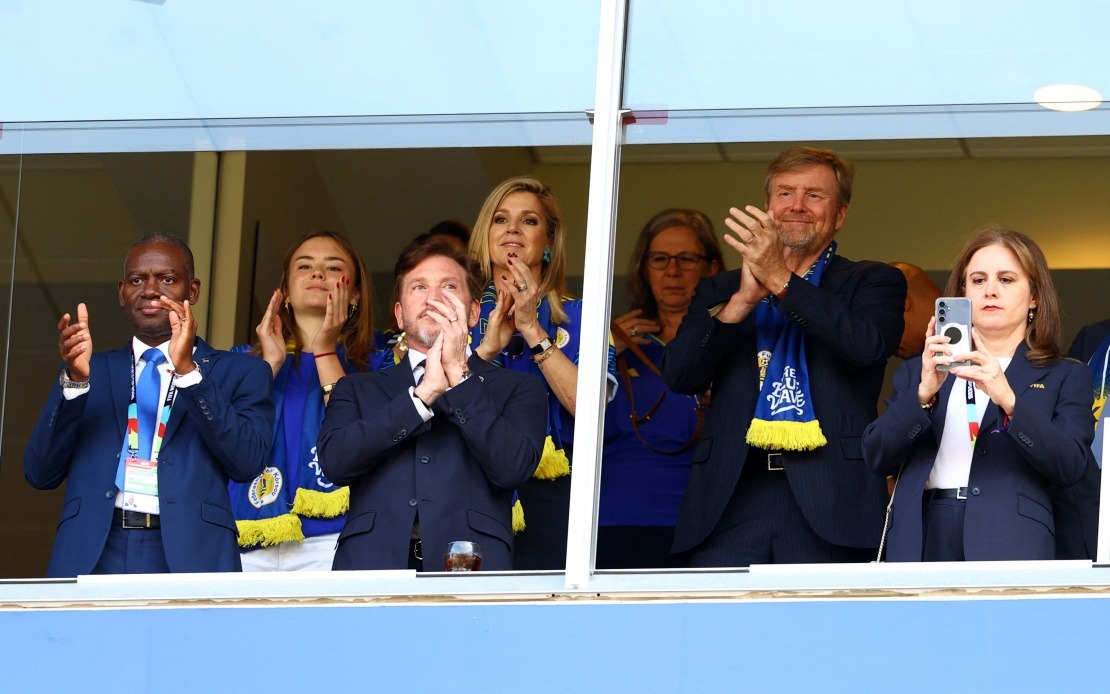
King Willem-Alexander and Queen Máxima of the Netherlands demonstrated a unique commitment to their constitutional responsibilities by attending World Cup matches for two nations in a single day on Saturday, June 21. The royal couple began their sporting marathon in Houston, where they witnessed the Netherlands demolish Sweden 5-1 in the group stage, before traveling to Kansas City just hours later to support Curaçao in their goalless stalemate against Ecuador. Their presence at both fixtures underscored the complex constitutional arrangement that binds these territories under Dutch sovereignty, with the monarchs maintaining visible support for the football aspirations of their broader realm.
The logistics of attending matches separated by considerable distance and time highlighted the practical complexities of royal duty in an era of global sport. The midday Houston encounter allowed the Netherlands to make a commanding statement early in their campaign, establishing a platform for advancement beyond the group stage. The swift transition to Kansas City thereafter required coordination and dedication, yet the royals fulfilled what they evidently viewed as an important symbolic obligation. Such dual attendance is relatively uncommon at major tournaments, where leaders typically concentrate their patronage on a single national team, making this outing noteworthy within royal sporting traditions.
King Willem-Alexander's constitutional position as head of state for Curaçao and other constituent territories of the Kingdom of the Netherlands provided the formal basis for his presence at both contests. Unlike purely ceremonial roles, this relationship carries genuine governmental significance, with the king serving as the formal head of state for these Caribbean and Pacific islands. The World Cup therefore presented an unusual opportunity for the monarch to visibly acknowledge both the Dutch heartland and its far-flung territories during football's greatest celebration. For Curaçao in particular, the royal presence carried additional weight, as the small island nation, with a population of around 150,000, rarely commands such elevated international attention.
The visual element of the royals' attire reinforced their balanced commitment to both nations. Queen Máxima and King Willem-Alexander wore the traditional orange of the Netherlands for the Houston encounter, a colour steeped in Dutch national identity and historical significance. Upon arriving in Kansas City, they switched to Curaçao's blue, a gesture that acknowledged the distinct identity and pride of the island nation. Such sartorial choices, while seemingly minor, carry considerable symbolic weight in ceremonial contexts and demonstrate respect for the separate national identities within the wider kingdom structure.
The conclusion of the Curaçao match provided the most memorable moment of the day, when footage released by the Curaçao Football Association captured the royal couple dancing and celebrating with team members in the dressing room. This informal interaction conveyed genuine enthusiasm rather than the stilted formality sometimes associated with royal patronage. Their willingness to engage so directly with the players suggested a personal investment in the team's campaign beyond constitutional obligation. Such candid moments humanise monarchy and create lasting impressions that resonate far more powerfully than formal state visits or official ceremonies.
The Netherlands' commanding 5-1 victory over Sweden represented a decisive statement in Group H, positioning the Dutch well for their subsequent encounter against Tunisia. With four points from two matches and a substantial goal difference advantage, the Netherlands had effectively secured passage to the knockout stages barring an catastrophic collapse. This strong position meant that by the time King Willem-Alexander arrived in Houston for the midday kickoff, the national team had already seized control of their destiny in the tournament. The comfortable nature of the victory perhaps added to the celebratory mood that carried through to the subsequent Curaçao engagement.
Curaçao's goalless draw against Ecuador proved more consequential for the island's advancement prospects, as the result kept alive their slim hopes of progressing from a competitive group. The team faced Ecuador, a far more established footballing nation, and securing even a point represented a notable achievement. For a nation competing on the world's grandest stage, such results carry immense national pride, and the royal family's presence underscored the significance of these matches for Caribbean sporting aspirations. The subsequent requirement that Curaçao overcome Ivory Coast to advance would prove a stern test, but the point garnered against Ecuador provided a fighting chance.
Weeks earlier, King Willem-Alexander and Queen Máxima had watched the Netherlands' opening match against Japan from Amsterdam, where they were accompanied by Japan's imperial couple, Emperor Naruhito and Empress Masako, who were undertaking a state visit to the Netherlands. That encounter, which ended in a 2-2 draw, had established the royal family's active engagement with the World Cup campaign. The subsequent commitment to attend multiple matches across two continents demonstrated that this was no casual interest but rather a structured programme of royal patronage for the tournament's duration.
The king articulated the special character of having multiple nations under his crown competing simultaneously in the same tournament. Speaking to broadcasters, Willem-Alexander noted the remarkable opportunity that arose from this constitutional arrangement, acknowledging that most world leaders could only champion a single team. The ability to support both the Netherlands and Curaçao meant that the kingdom's collective interests in the tournament were effectively doubled, allowing the monarchy to spread goodwill across the entire realm. His expressed hope that both teams would advance far suggested genuine investment in their respective campaigns rather than perfunctory support.
For Malaysian observers, the Dutch royal family's approach offers an intriguing counterpoint to how Commonwealth nations manage sporting patriotism during international tournaments. While Malaysia participates in World Cup qualifying independently, the royal family's embrace of multilayered national identity through football demonstrates how constitutional frameworks can shape sporting allegiances and royal duties. The Caribbean context of Curaçao adds particular relevance for Southeast Asian readers, as both regions grapple with island-based identities, tourism economies, and the outsized cultural significance of football within relatively small populations.
The World Cup encounter between disparate populations and nations under a single constitutional umbrella remains relatively unusual in contemporary international sport. The Netherlands' arrangement with Curaçao and other constituent kingdoms differs markedly from postcolonial relationships elsewhere, yet the shared royal patronage creates genuine ceremonial moments of unity. The images of the king and queen celebrating with Curaçao's players captured something authentic about the potential for sport to transcend geographical and demographic boundaries, even within formally structured constitutional relationships. As tournaments continue to evolve and adapt to global connectivity, such moments may become increasingly central to understanding how tradition and modernity intersect in international football.

