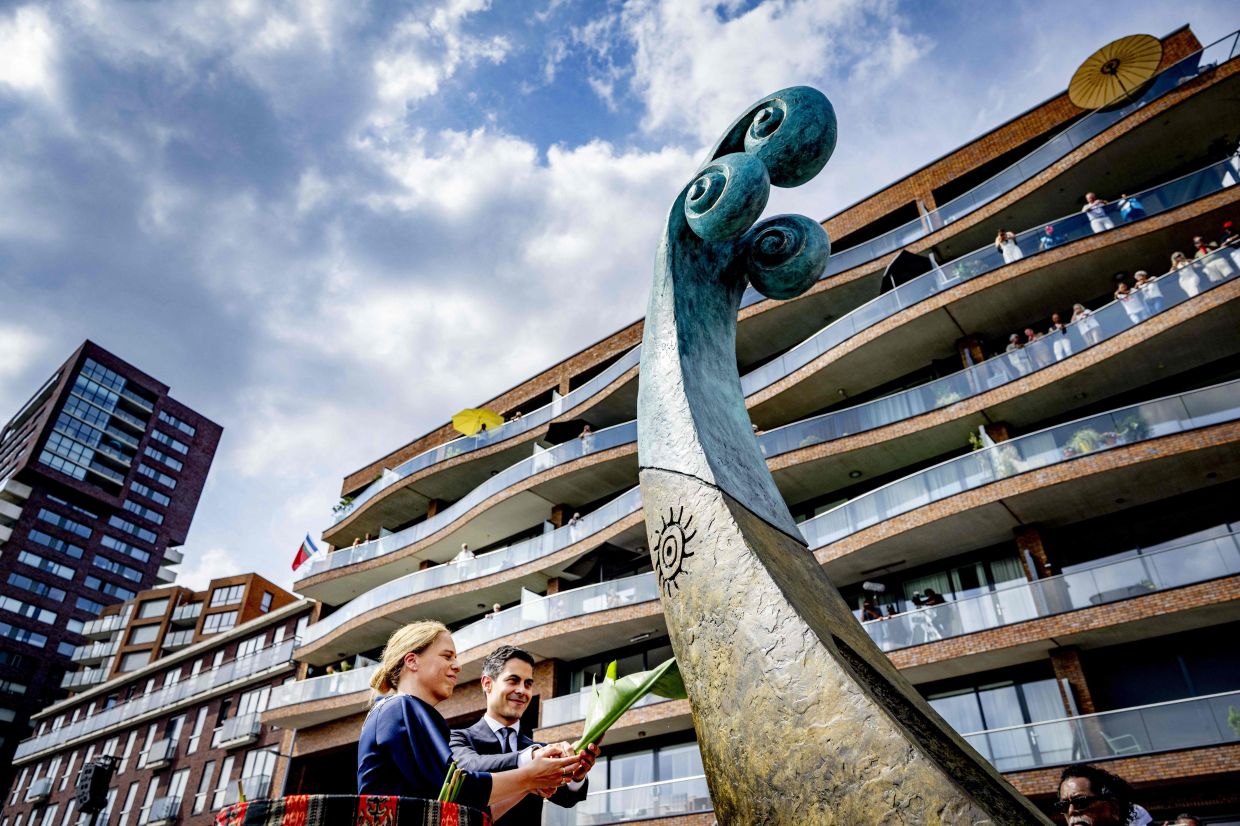
Dutch Prime Minister Rob Jetten has formally apologised to the Moluccan community on behalf of the Dutch government for their systematic mistreatment spanning seven decades. The apology was delivered in Rotterdam on Sunday at the unveiling of the Ulu Kora monument, which commemorates one of the most overlooked chapters in post-war European history involving an Asian diaspora. Jetten's address came before hundreds of Moluccans gathered at the Lloydkade, the very Rotterdam port where the first ships carrying displaced Moluccans arrived in the late 1940s, transforming their temporary refuge into a permanent, unwilling exile.
The Moluccans, indigenous to Indonesia's spice islands in the eastern archipelago, found themselves in an impossible position following Indonesia's hard-won independence from Dutch colonial rule in 1949. Many had served in the Royal Netherlands East Indies Army during the post-World War II independence struggle, fighting alongside Dutch forces against Indonesian nationalist forces. When the conflict ended and Indonesia emerged as a sovereign nation, these Moluccan soldiers faced a grim prospect: potential reprisals from newly independent Indonesia for their collaboration with the colonial power. The Dutch government, recognising this vulnerability, orchestrated a state-sponsored transfer that would bring approximately 12,500 Moluccans to the Netherlands, framing the relocation as a temporary measure until conditions in Indonesia stabilised.
What was presented as a humanitarian evacuation became, over time, a broken promise of staggering proportions. The Dutch government committed to repatriating the Moluccan population once an independent Moluccan state could be established, a commitment that formed part of broader negotiations with Indonesia at the time. However, this agreement proved merely words on paper. The promised return never materialised, and Moluccans found themselves abandoned in a country that showed little willingness to welcome them. Their housing arrangements reflected this abandonment starkly: the Dutch relocated many former soldiers to repurposed concentration camps, the very facilities that had housed Jewish prisoners during Nazi occupation. This cruel irony underscored the depth of official indifference to their plight.
The conditions Moluccans endured in the Netherlands were far removed from the temporary haven they had anticipated. They were housed inadequately, with minimal provision made for their integration into Dutch society or assistance in securing employment. Many remained isolated and invisible within Dutch communities, their presence an uncomfortable reminder of a colonial past that the Netherlands wished to move beyond. This systematic neglect extended to psychological and social dimensions: families were separated, cultural connections to home were severed, and the possibility of return—the one hope that sustained them—receded further with each passing year. For many Moluccans, this period represented a double betrayal: first by the circumstances of Indonesia's independence, and second by the nation that promised sanctuary but delivered abandonment.
The anger and frustration accumulated over decades, erupting violently in the 1970s when a second generation of Moluccans, born or raised in the Netherlands, came of age. These younger Moluccans, who had never known the spice islands except through family stories and fading memories, felt profoundly betrayed by Dutch authorities for failing to secure their independence or facilitate their return home. A series of violent incidents marked this period, reflecting the desperation of a community watching their homeland fade from possibility into myth. These acts of rebellion, while shocking to Dutch society, reflected the accumulated anguish of communities whose futures had been indefinitely suspended.
Prime Minister Jetten's apology, delivered with visible emotion, acknowledged the scope of this historical injustice across multiple dimensions. He specifically referenced the inadequate reception, the poor housing conditions, the systematic invisibility imposed upon the community, and the collective abandonment that characterised official policy. Yet Jetten also demonstrated careful awareness of apology's limitations. He recognised that words alone cannot undo seven decades of broken promises, cannot restore lost time or reunite families fractured by forced separation, and cannot reverse the reality that most first-generation Moluccans have already passed away. Many of those gathered at Rotterdam clutched photographs of deceased relatives, physical embodiments of this irreversible loss.
The unveiling of the Ulu Kora monument represents an attempt to memorialise and formally recognise an injustice that had previously existed in the margins of Dutch historical consciousness. For Malaysian and Southeast Asian observers, this moment carries particular resonance. It reflects a reckoning with colonialism's aftermath and the obligations colonial powers bear toward those displaced or harmed by their rule and its dissolution. The Moluccan experience demonstrates how the ripple effects of decolonisation extended far beyond the immediate post-independence period, creating communities suspended between nations and histories.
This apology also illuminates the different pace at which former colonial powers acknowledge historical wrongs. Unlike Germany's systematic confrontation with Nazi crimes, the Netherlands had largely sidestepped formal reckoning with the Moluccan situation for decades. Jetten's statement, while important symbolically, comes generations late—a timing that underscores how uncomfortable truths about national histories often remain unspoken until overwhelming evidence and sustained advocacy force acknowledgement. For Indonesia, the apology also carries meaning, as it implicitly recognises the legitimacy of Indonesian independence and suggests that historical justice requires accounting for those caught in the violent transitions between empires and nations.
Moving forward, the question remains whether formal apology will translate into material support or policy changes for remaining Moluccans in the Netherlands. Many community members continue facing economic and social challenges rooted in that original abandonment. The monument and apology represent cultural and psychological recognition, yet the practical dimensions of historical justice—reparations, targeted support, educational initiatives—remain under-addressed. For the Malaysian context, the Moluccan experience offers instructive lessons about the long-term consequences of displacement, the importance of honouring commitments to vulnerable populations, and the necessity of proactive integration policies that prevent communities from being systematically marginalised within larger societies.

