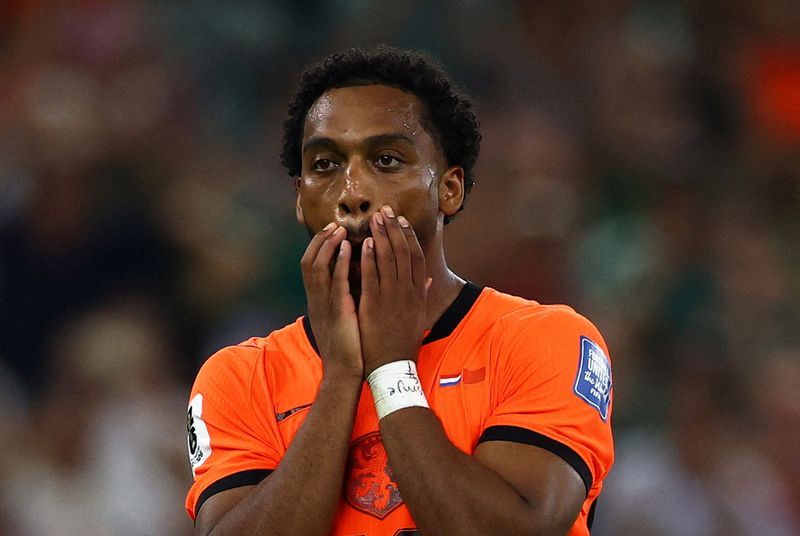
The Netherlands football association has condemned a wave of discriminatory attacks directed at its players following the team's dramatic elimination from the World Cup at the hands of Morocco. The incident occurred after Monday's last-32 encounter in Monterrey, where the Dutch side suffered heartbreak in a penalty shootout, losing 3-2 after their regular and extra-time contest finished locked at 1-1. The three players who failed to convert their spot-kicks—Justin Kluivert, Quinten Timber, and Crysencio Summerville—became targets for abuse across social media platforms in the aftermath of the defeat.
The racist and hateful messages that flooded their online accounts represent a troubling phenomenon in modern football, where the anonymity of digital spaces has emboldened individuals to direct vicious personal attacks at athletes at their most vulnerable moments. The KNVB responded swiftly and firmly, declaring the behaviour appalling and signalling its intention to escalate the matter beyond public condemnation. The association announced it would file a report with Meld Online Discriminatie, a Dutch organisation specifically established to document and combat online discrimination.
The reporting mechanism serves as a critical first step in the Dutch legal system's response to such cases. Once Meld Online Discriminatie receives a submission, their legal team undertakes a thorough assessment to determine whether the flagged content meets the threshold for constituting a punishable offence under Dutch law. Should the evaluation determine that criminal conduct has occurred, the organisation can lodge a formal complaint with the Public Prosecution Service, thereby triggering the possibility of a criminal investigation and potential prosecution.
This incident reflects a distressing pattern that has become increasingly evident at major international tournaments over the past several years. The problem gained particular prominence at the 2020 European Championship, when England's squad faced a coordinated campaign of racial abuse following their loss to Italy in the final. Three England players—Marcus Rashford, Bukayo Saka, and Jadon Sancho—all experienced severe online harassment after their missed penalties in the shootout. The English case demonstrated that authorities could take decisive action when mobilised appropriately.
In the aftermath of the Euro 2020 tournament, British law enforcement agencies initiated a significant crackdown on the perpetrators. Police arrested multiple individuals across the country as part of a comprehensive investigation into the coordinated hate speech targeting the players. The legal consequences proved substantive: two individuals received custodial sentences while another received a suspended prison term, sending a message that online racial abuse carries real legal jeopardy. Those prosecutions established an important precedent that social media does not provide immunity from criminal liability for racist conduct.
The KNVB's decision to pursue formal legal channels follows this established precedent and signals that football organisations and law enforcement agencies increasingly recognise the need for coordinated responses to online abuse. The Dutch association framed its action not merely as a defence of three individual players, but as a fundamental matter affecting the sport's core values and inclusive principles. The KNVB stated that football inherently brings together millions of diverse people from different backgrounds, ethnicities, and cultures, creating a universal community united by their passion for the game.
This inclusive essence stands in direct opposition to discriminatory behaviour, which by its nature seeks to divide, exclude, and demean people on the basis of immutable characteristics. When individuals target footballers with racist abuse, they attack not merely the athletes themselves but the foundational principles that make football a unifying global force. The contradiction between football's role as a bridge across social divisions and the poison of racism propagated by those claiming to represent the sport creates an inherent tension that governing bodies must actively resolve.
For Malaysian and Southeast Asian readers, this incident carries particular resonance given the region's own experiences with both online harassment and racial tensions. The emergence of sophisticated tactics for coordinated online abuse has parallels in various Asian contexts where social media has occasionally been weaponised to target athletes and public figures along ethnic or religious lines. The Dutch response demonstrates how legal frameworks and institutional accountability can provide meaningful deterrents when properly deployed, offering a model that regional authorities might consider emulating.
The broader implications extend to questions about platform responsibility and digital governance. While Meld Online Discriminatie and similar organisations work within existing criminal law frameworks, the role of social media companies themselves remains contested. These platforms profit from engagement and reach, yet often lack sufficient internal mechanisms to prevent coordinated harassment campaigns. The Dutch case will inevitably prompt discussions about whether platforms should face greater obligations to prevent their services from being weaponised against vulnerable users, particularly high-profile athletes whose visibility makes them targets.
The timing of this incident—occurring just days before the World Cup quarterfinals—ensures it will remain a focal point of international football conversation throughout the remainder of the tournament. Other national associations and football bodies will watch closely to see whether the Dutch legal approach produces concrete results and meaningful consequences for the perpetrators. The precedent established through both England's Euro 2020 prosecutions and potentially through this Dutch case could establish an evolving norm that societies will not tolerate racist abuse, regardless of the digital medium through which it occurs.
Beyond the immediate legal proceedings, the incident underscores the psychological toll that online harassment inflicts on elite athletes. Missing penalties in high-pressure situations represents an occupational hazard for footballers, and the blame should rest with tactical choices or fortune rather than becoming the occasion for coordinated personal attacks. As football continues to globalise and digital connectivity intensifies, protecting players from abuse while preserving legitimate criticism and passionate fan expression represents an ongoing challenge for the sport's governance structures worldwide.

