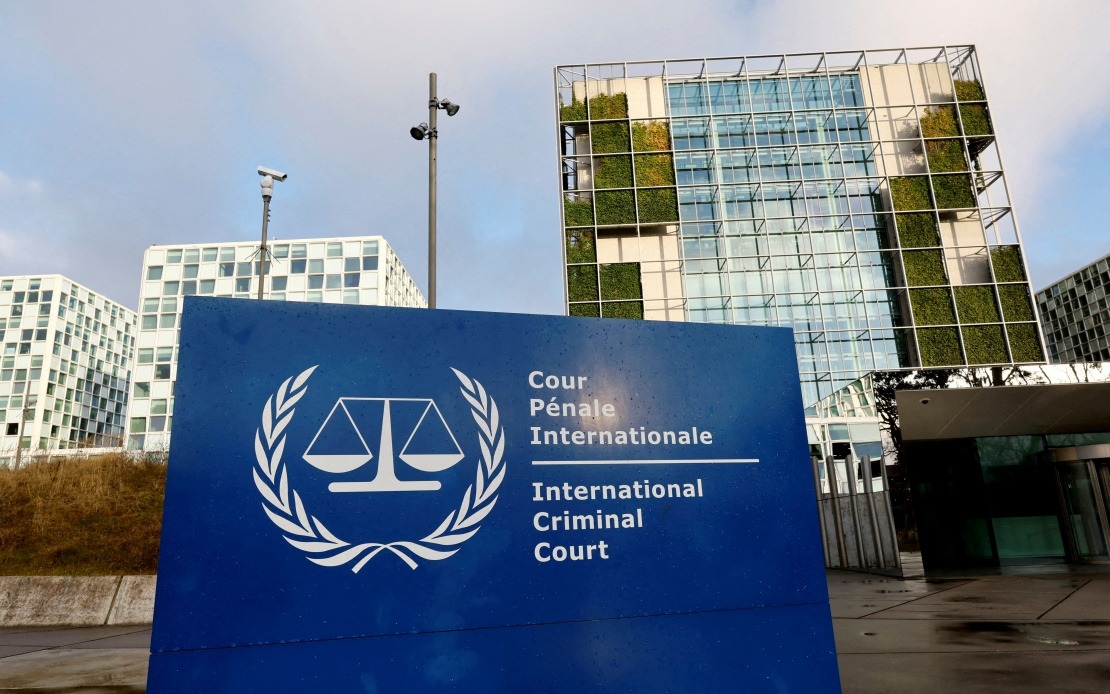
The Netherlands' leading legal scholars have publicly condemned what they characterise as an aggressive American campaign to undermine the International Criminal Court, raising concerns that such efforts could fundamentally destabilise the international legal architecture that has underpinned global governance for decades. The criticism from The Hague's academic community reflects growing alarm among European institutions about Washington's escalating confrontation with the Hague-based court, which represents one of the world's few mechanisms for prosecuting crimes against humanity on a multilateral basis.
On July 13, the United States Department of State announced a comprehensive initiative explicitly framed as countering what American officials describe as an existential threat to national sovereignty. The department's statement characterised the ICC as posing "an intolerable threat" through its claimed authority to investigate, prosecute and potentially imprison American military personnel and government officials whose actions the United States government deems to be in the nation's interests. This framing reveals the fundamental tension between American exceptionalism doctrine and the universal jurisdiction principles upon which the ICC operates.
Alette Smeulers, a leading authority on international criminal law at the University of Groningen, articulated the most sweeping concern about Washington's strategy during recent remarks. She warned that if the United States successfully dismantles or substantially weakens such multilateral institutions, the global order would inevitably transition from a system grounded in legal principles applicable to all nations toward one governed exclusively by raw power dynamics. This represents not merely a technical legal dispute, but rather a profound philosophical disagreement about how the international community should resolve questions of accountability and justice.
Smeulers provided detailed technical clarification about the ICC's actual jurisdictional limitations, noting that the court can only prosecute the most severe crimes and only under specific circumstances: either when such crimes occur within the territory of member states to the Rome Statute, or when perpetrators are nationals of Rome Statute signatories. This technical precision matters significantly for Malaysian and Southeast Asian readers, as it demonstrates that the ICC's reach is considerably more constrained than American rhetoric suggests, making the US campaign appear disproportionate to any actual threat.
The academic critique extends beyond Smeulers' warnings. Kyra Wigard, an international law specialist at Utrecht University, provided a particularly sharp assessment of American tactics. She characterised the December sanctions that Washington imposed on two ICC judges as "absurd," emphasising that such punitive measures traditionally target alleged terrorists or belligerent nations, not judicial officers engaged in their professional duties. This comparison underscores how the United States' approach represents an unprecedented violation of diplomatic norms surrounding judicial independence.
The sanctions against the two judges that Wigard referenced were justified by the State Department as a response to what American officials characterised as "politicised actions" specifically targeting Israel. This aspect of the dispute reveals how the American campaign intertwines genuine sovereignty concerns with support for particular geopolitical allies, complicating the question of whether Washington's opposition to the ICC stems from principled constitutional objections or from strategic interests in protecting specific nations from international scrutiny.
Smeulers warned that Washington's anti-ICC campaign carries implications far exceeding bilateral United States-ICC relations. She indicated that the American government has signalled intentions to pressure other nations to withdraw from the Rome Statute entirely, thereby dismantling the ICC's membership base and rendering the institution ineffective. Such pressure campaigns would place smaller and medium-sized nations—potentially including those in Southeast Asia—in an extremely difficult position, forced to choose between supporting global legal institutions or yielding to American strategic pressure.
For Malaysian policymakers and regional observers, this dispute carries particular significance. Malaysia itself has not ratified the Rome Statute, meaning the ICC currently lacks jurisdiction over crimes committed within Malaysian territory. However, the broader question of whether multilateral legal institutions can operate independently from great-power pressure remains consequential for all Southeast Asian nations that depend on rules-based international order to constrain the behaviour of larger powers. The American campaign against the ICC potentially signals a broader willingness to undermine institutions that might constrain American freedom of action.
The timing of this escalation matters as well. The previous December's sanctions on ICC judges represented an earlier intensification of tensions, but July's announcement of a comprehensive campaign suggests the United States is moving from sporadic opposition toward systematic institutional pressure. This progression indicates that the confrontation between Washington and the ICC will likely intensify rather than resolve, creating ongoing instability within the international legal framework.
The Dutch scholars' warnings also reflect historical experience. Europeans lived through periods when power rather than law determined international relations, and many continental scholars view the ICC as a hard-won achievement that prevents regression toward such conditions. Their alarm about American efforts to weaken the court stems partly from this historical consciousness—the sense that institutions embodying the rule of law represent fragile achievements that require constant defence against those who would substitute coercive power for legal principle.
The substantive disagreement between the United States and the ICC rests on competing constitutional visions. Washington maintains that no international institution can constrain American actions, particularly those undertaken by military and security forces. The ICC and its supporters contend that no nation stands above international law, and that universal jurisdiction for crimes against humanity serves the collective interest of all states in preventing atrocities. These positions prove difficult to reconcile through negotiation.
Looking forward, the outcome of this confrontation will likely shape global governance patterns for decades. If the United States succeeds in substantially weakening or dismantling the ICC, other nations may draw conclusions about the futility of investing in multilateral institutions that great powers can unilaterally undermine. Conversely, if the ICC survives American pressure and maintains the support of sufficient state parties, it could establish a significant precedent that international institutions can operate independently from individual great-power preferences. For Southeast Asian nations watching this dispute unfold, the stakes extend well beyond the specific question of ICC jurisdiction to encompass broader questions about whether a rules-based international order can endure.

