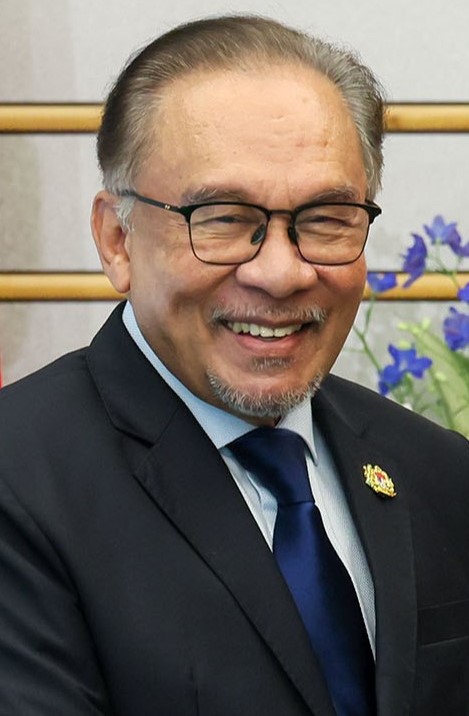
Datuk Seri Dr Adham Baba, the former Health Minister, has been formally nominated as the Barisan Nasional candidate for the Pasir Raja state seat in the forthcoming 16th Johor State Election. Expressing confidence in his prospects, Dr Adham highlighted his decade of prior service representing the constituency as a key advantage in securing voter support. His announcement in Johor Bahru on June 24 marks a significant move by BN to field an experienced candidate in a seat where the party hopes to consolidate its hold ahead of the electoral contest.
Dr Adham's candidacy rests substantially on his personal credentials and enduring ties within the Pasir Raja electorate. He served two consecutive terms as the state assemblyman between 2008 and 2018, establishing what he describes as deep and lasting relationships with local residents. Beyond his constituency-level work, he progressed to parliamentary representation, securing victory in the Tenggara seat during both the 14th and 15th General Elections. His ministerial portfolio—including stints as Health Minister and Minister of Science, Technology and Innovation—adds national profile to his local credentials, a combination BN appears confident will resonate with voters seeking both stability and development.
When explaining his strategy for the campaign, Dr Adham emphasised the fundamental importance of grassroots engagement. He articulated a straightforward assessment of electoral success: whichever candidate and party machinery achieve the most extensive direct contact with voters stand to gain the strongest advantage. This pragmatic observation reflects broader trends in Malaysian state elections, where intensive door-to-door campaigns and community gatherings have become decisive factors in determining outcomes. His willingness to stress the mechanics of campaigning suggests awareness that incumbency alone no longer guarantees victory in increasingly competitive electoral environments.
The former minister's vision for Pasir Raja, should voters grant him a fresh mandate, centres on education and workforce development. He identified higher education infrastructure and vocational skills training as priority areas deserving focused investment and attention. This policy focus aligns with broader national concerns about preparing younger generations for a rapidly evolving job market, particularly as automation and digitalisation reshape employment landscapes across Malaysia. For a Johor constituency, such emphasis on education and training holds particular resonance given the state's position as an economic hub attracting diverse employment opportunities.
Dr Adham's track record in ministerial roles offers insight into his governing approach. His tenure overseeing Malaysia's health portfolio during a critical period provides experience in managing large institutional frameworks and navigating policy complexity. Similarly, his responsibility for the science and technology portfolio suggests exposure to innovation-driven governance, an increasingly important dimension of state-level administration. These experiences, combined with his local assemblyman background, position him as a candidate attempting to bridge township concerns with broader economic and social policy frameworks.
The Pasir Raja constituency itself warrants examination in assessing his campaign prospects. As a Johor state seat, it forms part of a political landscape where BN has historically maintained significant strength, though recent election cycles have shown erosion in some traditional strongholds. The decision to field Dr Adham represents BN's calculation that a figure with substantial personal connections and proven electoral appeal offers the strongest defensive position. His previous two victories in the constituency suggest he possesses an established political machine and voter base, valuable assets in mobilising support during the campaign period.
However, Dr Adham faces the inherent challenge confronting all BN candidates in the current political climate: demonstrating that the coalition remains responsive to local concerns and capable of effective governance. Opposition parties typically contest BN incumbents by highlighting service delivery gaps, developmental delays, or perceived disconnection from grassroots needs. Dr Adham's long experience in the seat means he can cite specific accomplishments and improvements, yet it also creates exposure to criticism regarding unfulfilled promises or overlooked issues. His ability to credibly address such challenges will significantly influence his electoral prospects.
The nomination of candidates across multiple Johor constituencies during this election cycle has generated considerable political interest throughout the state and beyond. Johor, as Malaysia's second-most populous state and a crucial economic region, carries significant implications for national political trajectories. Electoral outcomes here influence broader perceptions of BN strength and opposition viability heading into potential future general elections. Dr Adham's candidacy thus carries importance extending beyond the Pasir Raja constituency itself.
Campaign intensity in Johor state elections has historically matched or exceeded federal election vigour, with parties committing substantial resources to securing victory. The landscape for the 16th state election appears similarly competitive. Dr Adham's emphasis on campaigning extensively and meeting voters directly reflects recognition that modern election outcomes hinge substantially on candidate visibility and direct voter engagement. In this context, his established presence in Pasir Raja and personal networks provide tangible advantages relative to candidates entering constituencies without prior electoral experience or community connections.
Looking forward, Dr Adham's campaign will likely emphasise continuity, development achievements, and his demonstrated capacity to navigate both state and national political spheres. The extent to which he can convince Pasir Raja voters that his return represents beneficial progression rather than mere repetition of established patterns will prove decisive. His message of leveraging experience and relationships, while conventional, carries legitimacy given his actual tenure in office and documented work within the constituency.