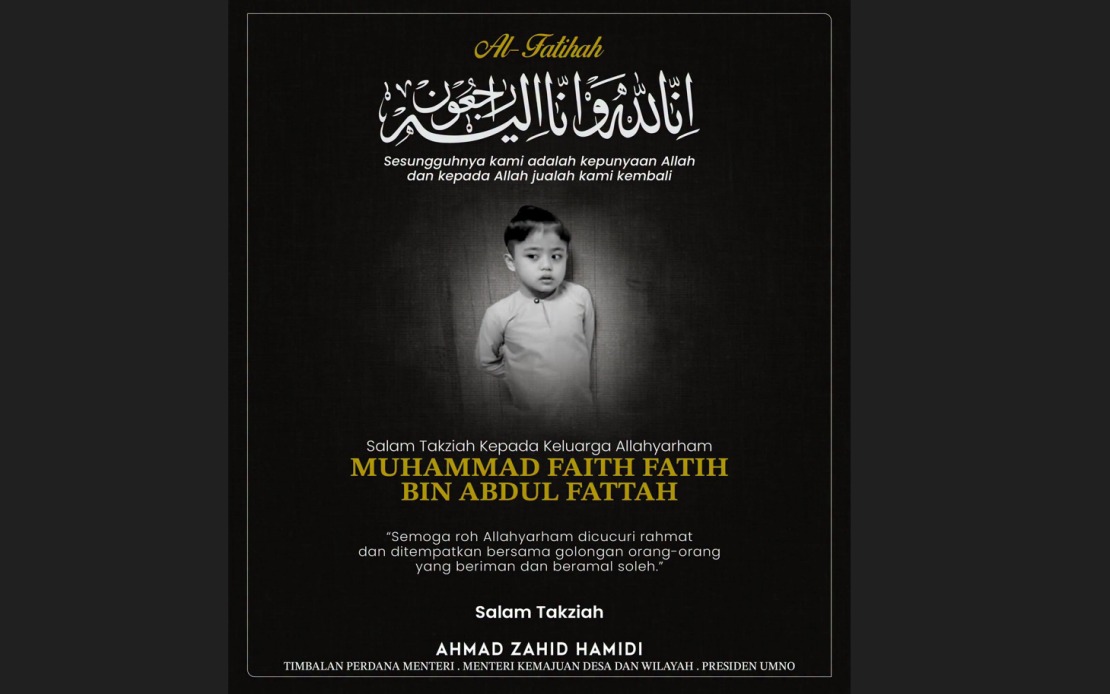
A tragic incident in Perak has prompted Malaysia's Deputy Prime Minister to express his sympathies toward a grieving family after a six-year-old boy with autism was found dead in an oil palm plantation. Muhammad Faith Fatih Abdullah Fattah went missing from his home in Kampung Baru near Sungai Sumun, Hutan Melintang, before being discovered in a drainage channel within the plantation area at approximately 10:08 pm during a search and rescue operation.
Deputy Prime Minister Datuk Seri Dr Ahmad Zahid Hamidi, who represents Bagan Datuk in Parliament, conveyed his heartfelt condolences through a Facebook statement, acknowledging the particular anguish of losing a young child with special needs. The expression of sympathy underscores the emotional weight of such incidents, especially when they involve vulnerable children facing additional developmental challenges. In his message, Ahmad Zahid reflected on the profound sorrow experienced by parents confronted with the loss of their child, describing it as among life's most severe trials.
According to Bagan Datuk police chief Supt Mohammad Ali Mohd Jali, the family reported the child missing around 4:54 pm after observing his absence from the living room of their residence. The search operation that followed mobilised resources to locate the young boy, ultimately resulting in the discovery of his body in the plantation drain several hours later. The circumstances surrounding how the child came to be in the oil palm plantation area remained part of the ongoing investigation into the incident.
The Deputy Prime Minister's public acknowledgment of the tragedy reflects broader concerns within Malaysia regarding child safety and the particular vulnerabilities facing children with autism and other developmental conditions. Such incidents have periodically drawn attention to gaps in safeguarding mechanisms and the need for enhanced community awareness about protecting children with special needs. Autism spectrum disorder, which affects social communication and behavioral patterns, can present specific challenges for caregivers and may require tailored safety measures within home environments.
In his statement, Ahmad Zahid invoked religious compassion, calling upon others to recite Al-Fatihah and pray for the deceased child's soul, drawing on Islamic traditions to offer spiritual solace to the bereaved family. The invocation of faith during moments of tragedy reflects cultural and religious practices common in Malaysian society, where such expressions often serve to unite communities in shared grief. The gesture also underscores the role of public figures in acknowledging human suffering and reinforcing collective values during periods of loss.
The loss of a child, regardless of circumstances, represents a profound disruption to family life and community stability. For families managing a child's autism spectrum condition, the added complexity of grief extends to the loss of future milestones and the particular attachment that develops through the intensive care and support these children require. The incident serves as a sobering reminder of the vulnerability of young children and the critical importance of sustained vigilance within domestic settings.
Police investigations into the circumstances of the child's death would typically examine all aspects of the timeline from the initial observation of his absence through the discovery and recovery efforts. Such investigations are essential not only for determining causation but also for identifying any systemic or situational factors that might prevent similar tragedies. The cooperation between family, law enforcement, and search and rescue personnel in locating the child demonstrates the community mobilisation that occurs when a young person goes missing.
The public expression of sympathy from high-level government figures carries particular significance in Malaysia's political culture, where such statements often set a tone for broader public discourse around sensitive social issues. Ahmad Zahid's acknowledgment of the special challenges faced by families raising children with autism may also serve to elevate awareness about the support systems required for such families within Malaysian communities. Access to counselling, respite care, and safety equipment tailored for children with developmental conditions remains an area where advocacy groups have consistently called for enhanced government and community investment.
As the investigation proceeds, the tragedy underscores ongoing discussions within Malaysia about balancing child independence with protection, particularly for children whose developmental conditions may affect their ability to assess danger or communicate distress. The incident may prompt renewed conversations among parents, educators, and policymakers regarding best practices in child supervision, home safety for children with autism, and the role of wider community networks in supporting vulnerable families during periods of heightened risk.

