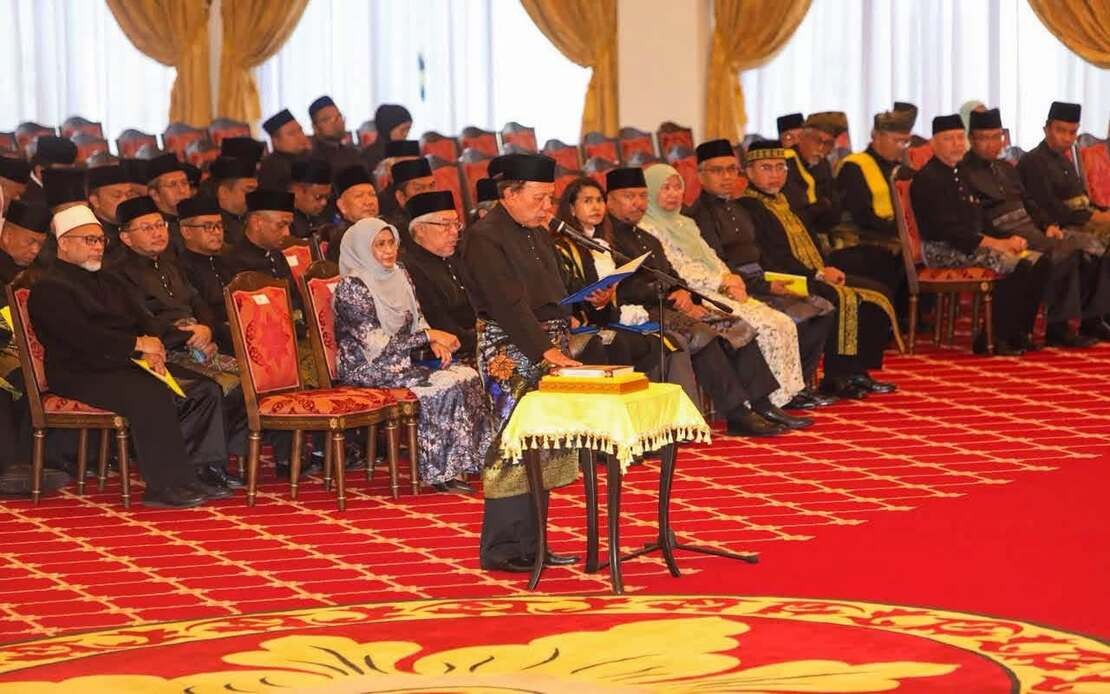
Senior members of Malaysia's federal government have publicly backed Datuk Ismail Lasim following his formal appointment as Negeri Sembilan's new Menteri Besar, with a wave of congratulations from cabinet ministers underscoring the national significance of the leadership transition in the central state. Ismail, the Juasseh assemblyman, was sworn in before Tuanku Muhriz Tuanku Munawir, the Yang Dipertuan Besar of Negeri Sembilan, at the Balairong Seri of Istana Besar Seri Menanti on the morning of the appointment ceremony.
Deputy Prime Minister Datuk Seri Dr Ahmad Zahid Hamidi, who also holds the Rural and Regional Development portfolio, led federal well-wishes by describing Ismail's elevation as reflecting the considerable confidence reposed in his leadership capabilities. Through a Facebook statement, Ahmad Zahid characterised the responsibility ahead as substantial and pledged his conviction that Ismail would fulfil his duties with dedication to advance both the state's interests and the welfare of its residents. The DPM's public endorsement carries particular weight given his standing within the ruling coalition and his responsibilities across rural development, areas often closely linked to state-level governance in Malaysia's federal system.
Defence Minister Datuk Seri Mohamed Khaled Nordin similarly used social media to convey his backing, framing the appointment as a mandate requiring serious commitment to sustaining Negeri Sembilan's trajectory of development and stability. Mohamed Khaled's remarks reflected a broader emphasis within the cabinet on continuity and progress, suggesting that federal leadership views Ismail's appointment as an opportunity to maintain the state's ongoing economic and social advancement without disruption. The minister's invocation of religious blessing in his message typified the formal tone of cabinet congratulations, mixing institutional support with personal well-wishes.
Plantation and Commodities Minister Datuk Seri Dr Noraini Ahmad rounded out the senior-level congratulatory remarks by positioning Ismail's appointment as a defining moment for Negeri Sembilan's future direction. Noraini's statement emphasised the significance of the leadership change as marking a new chapter for the state, suggesting that federal ministers view the transition with a sense of broader institutional importance beyond routine succession. Her emphasis on prayer and divine guidance, consistent with the tone adopted by fellow ministers, reflected Malaysia's convention of interweaving Islamic sentiment with official government messaging.
Ismail brings to the position seven years of state assembly experience and substantial depth in regional politics, having first entered elected office in 1999 when he won his seat in the state legislature. His political journey spans nearly three decades of engagement with Negeri Sembilan's governance structures, providing him with long-standing familiarity with the state's administrative systems, political networks, and local priorities. This extensive background distinguishes him as a figure with deep institutional knowledge rather than an outsider to the state's political machinery.
Between 2004 and 2018, Ismail served consecutively on Negeri Sembilan's state executive council, the chief decision-making body within state government after the Menteri Besar himself. During this period spanning multiple electoral cycles, he carried responsibility for the education portfolio, positioning him to influence human capital development and educational policy implementation across the state. His tenure in this role would have given him exposure to the complex interplay between federal education initiatives and state-level implementation, a critical competency for leading a state government in Malaysia's federal framework.
The education portfolio Ismail previously managed relates directly to human capital development, an area increasingly central to Malaysian states' competitive positioning as the country pursues higher-income economy ambitions. His experience formulating and implementing education-related policies in Negeri Sembilan suggests familiarity with challenges including teacher recruitment, infrastructure development, and alignment with national education standards. These administrative competencies often prove essential for state leaders managing complex portfolios that intersect federal and state responsibilities.
Ismail's appointment at age 67 represents a selection of experienced leadership at a time when several Malaysian states have undergone recent political transitions. The appointment reflects confidence from the state's constitutional monarch in Ismail's suitability to lead the state government, a crucial element of Malaysia's constitutional monarchy system where the ruler retains formal appointment authority over the chief minister. The public backing from federal cabinet ministers reinforces the legitimacy of this selection within the broader context of Malaysia's centralised political structures and inter-governmental coordination.
The congratulatory messages from multiple cabinet ministers, rather than remaining limited to federal-state protocol, suggest deeper federal investment in Ismail's success as Negeri Sembilan's chief executive. This heightened profile may reflect recognition of Negeri Sembilan's strategic location within the Klang Valley region, its administrative importance as a state encompassing multiple federal territories, or broader coalition-building priorities within Malaysia's complex multi-party government structure. The public visibility of federal support also serves to establish early momentum for the new administration's engagement with federal-level initiatives and budgeting processes.
For Malaysian observers and Southeast Asian regional watchers, the transition illustrates the continued importance of institutional continuity and factional balance within Malaysia's UMNO-dominated governance frameworks. Ismail's appointment through conventional constitutional channels, coupled with swift federal acknowledgement, demonstrates the routine functioning of Malaysia's established succession mechanisms despite periodic speculation about political instability at state or federal levels. The episode underscores how state-level politics, while nominally separate from federal governance, remain deeply integrated within national coalition dynamics and federal-state resource allocation.

