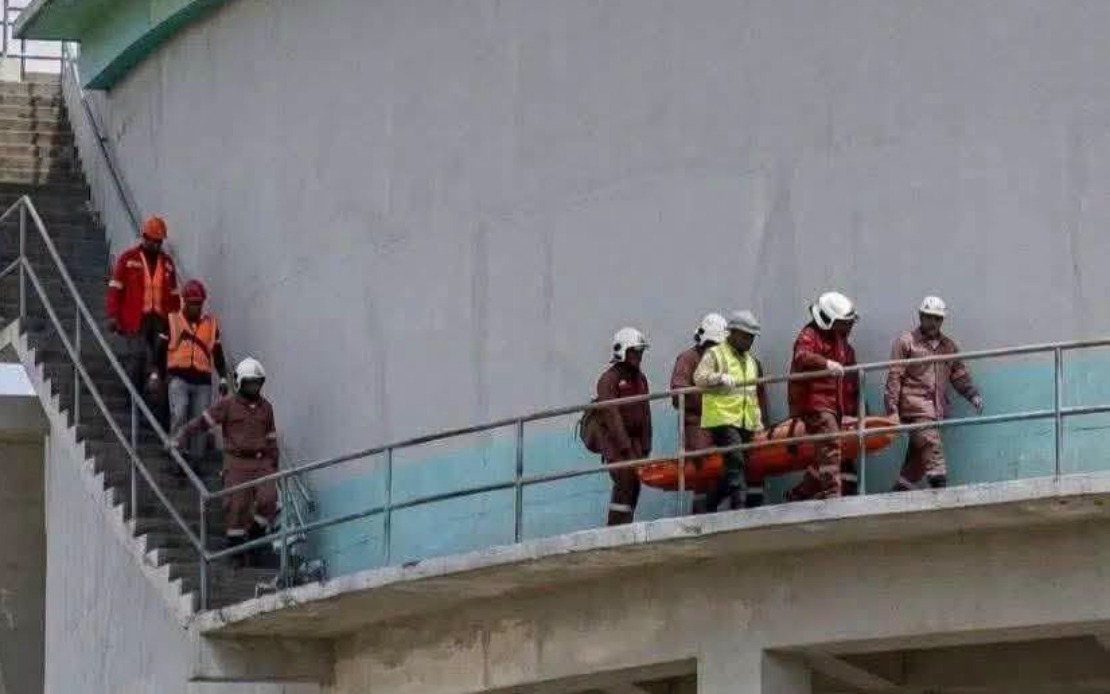
Malaysia's Department of Occupational Safety and Health has launched a formal investigation into a workplace fatality that occurred on June 16 at Menara Saujana Perdana 1 in Sungai Buloh, Selangor, where an industrial trainee died during water tank cleaning operations. The incident has reignited concerns about safety standards in confined space work, a persistently high-risk activity across the region's industrial and commercial sectors.
According to DOSH director-general Hazlina Yon, investigators from the Selangor office have already visited the location and cordoned off the site to preserve evidence. The agency has issued formal notices preventing any unauthorised disturbance to the accident scene, a standard procedure that underscores the seriousness with which authorities are treating the matter. Witness statements are currently being recorded as part of the broader investigative process, with officials prepared to pursue enforcement actions should the preliminary examination reveal breaches of applicable legislation.
The investigation is proceeding under Sections 15, 17 and 18 of the Occupational Safety and Health Act 1994, which establish binding obligations for employers, independent contractors, and other parties responsible for work sites. These provisions require duty holders to ensure that workers and other persons who may be exposed to workplace hazards receive appropriate protection. The legal framework demands that entities in charge of operations maintain systems designed to prevent injury and safeguard wellbeing across all occupational settings.
Hazlina's statement emphasised that confined space operations represent a particularly acute danger, demanding rigorous adherence to established protocols. She stressed that organisations must obtain proper work permits, implement documented control measures, and only permit authorised personnel to access these environments once precautions are verified as being in place. This guidance reflects international best practice, as confined spaces—which by definition restrict entry and exit, limit ventilation, and may contain atmospheric hazards—consistently generate disproportionate casualty rates across workplaces globally and within Southeast Asia.
The DOSH director-general highlighted that employers bear primary responsibility for identifying and evaluating risks inherent to every scheduled operation before work commences, with particular scrutiny applied to high-hazard activities. This risk assessment obligation is not merely administrative; it forms the foundation upon which all subsequent safety measures are built. Without thorough hazard identification, organisations cannot design effective controls or allocate appropriate resources to prevent incidents.
A critical aspect of the investigation relates to the trainee's status and supervision. Industrial trainees and newly hired workers engaged in hazardous tasks require comprehensive occupational safety and health instruction tailored to their assigned roles, combined with mandatory briefing on site-specific dangers. These individuals must work under the direct oversight of competent supervisors capable of recognising unsafe conditions and intervening before harm occurs. The fatality raises questions about whether the training regime and supervisory arrangements at this particular site met these minimum standards.
Hazlina underscored that thorough induction and ongoing supervision are essential because they ensure workers understand the specific hazards they face, comprehend why procedural safeguards exist, and possess the practical skills to execute their duties without creating danger. Knowledge alone is insufficient; workers must internalise safety values and demonstrate consistent compliance through demonstrated behaviour. Competent supervision acts as a final safeguard, detecting lapses before they culminate in injury.
The tragedy also implicates the broader ecosystem of contractors and vendors operating at major commercial facilities. Hazlina stated explicitly that employers cannot diminish their duty of care by outsourcing work to external parties. All individuals on a worksite, regardless of their contractual relationship or organisational affiliation, merit protection. This expansion of responsibility acknowledges that in modern business structures, multiple companies often operate simultaneously within shared spaces, creating interdependencies and potential interface hazards that can amplify accident risks if not carefully managed.
For Malaysian employers and contractors navigating an increasingly complex regulatory landscape, this incident serves as a stark reminder that cutting corners on safety infrastructure carries catastrophic consequences. Water tank cleaning, whilst routine, remains inherently dangerous because it typically involves entry into confined spaces where oxygen depletion, toxic gas accumulation, and drowning hazards converge. The activity demands deliberate, methodical planning and execution rather than improvisation or reliance on luck or experience.
The investigation's outcome will likely influence how regulatory bodies approach enforcement priorities in coming months, particularly regarding inspection frequency and penalty structures for non-compliance. Similar operations across Selangor and other states should anticipate increased scrutiny of their safety documentation, training records, and site management practices. Organisations currently operating in confined space environments would be prudent to conduct internal audits against published DOSH guidance and remediate any identified deficiencies.
Beyond the immediate enforcement response, this fatality highlights the need for sustained investment in occupational safety culture across Malaysian workplaces. Tragedies like this are preventable through disciplined adherence to established procedures and genuine management commitment to worker protection. The cost of prevention—in terms of administrative effort, training expenses, and equipment investment—remains substantially lower than the human and financial toll of fatalities, injuries, and regulatory penalties that result from negligence or complacency.