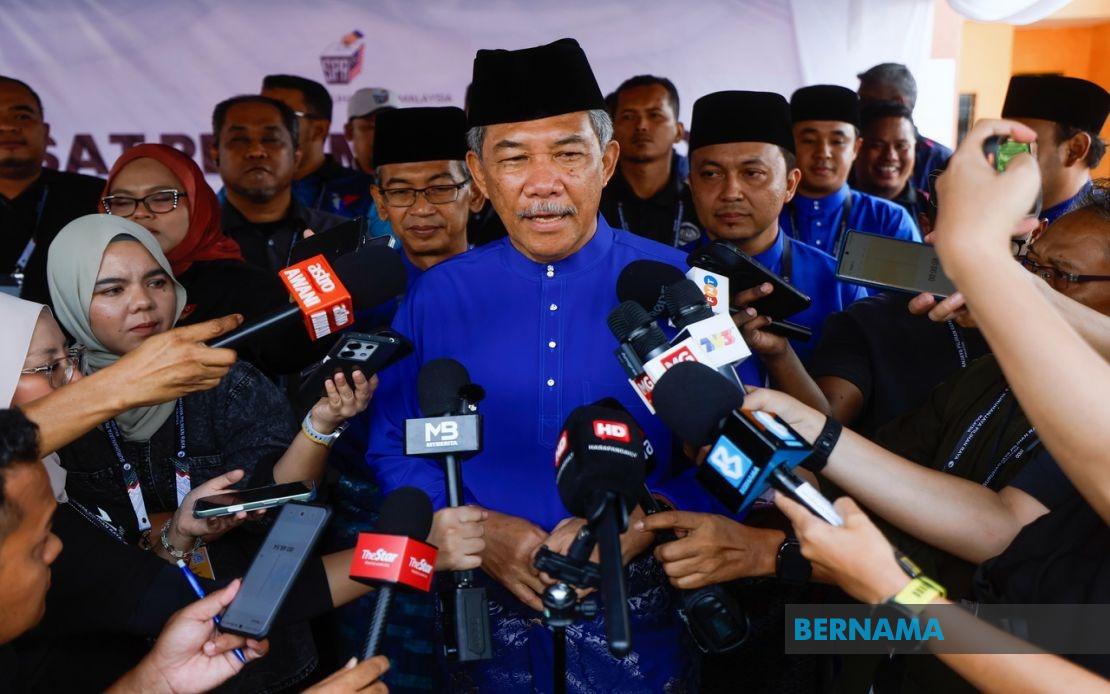
Barisan Nasional deputy chairman Datuk Seri Mohamad Hasan has drawn a firm line ahead of Negeri Sembilan's 16th state election, cautioning the party apparatus not to invoke the state's adat—its centuries-old system of traditional customs and governance—as electoral ammunition. Speaking after nomination proceedings in Rembau on Thursday, the UMNO deputy president underscored that doing so would compromise social harmony and undermine the integrity of the democratic process taking place across the 36 state constituencies.
The intervention carries weight given Mohamad's dual position within Malaysia's biggest political machinery and reflects growing concern that cultural and institutional sensitivities could become flashpoints in what is shaping as a closely contested race. Negeri Sembilan, unique among Malaysian states for its adat-based governance framework rooted in the Minangkabau heritage, has long required political actors to tread carefully around matters touching on custom, succession, and traditional authority. The timing of Mohamad's remarks suggests organisational awareness that campaign season can embolden politicians to exploit divisive narratives.
Mohamad was explicit in his messaging to BN's ground forces, stating plainly that adat matters must not be weaponised or folded into campaign material. His language—urging that such issues not be "dragged" into politics—suggests he views the risk as real rather than hypothetical. He emphasised that Negeri Sembilan's adat institution warrants respect and protection from political contamination, warning that any blurring of lines would generate avoidable tension in what should remain a straightforward electoral contest between competing visions for state governance and development.
The caution reflects a broader Malaysian political reality: traditional institutions remain deeply embedded in public sentiment across states with active sultanates and customary frameworks. Unlike purely secular political platforms, appeals grounded in adat can activate loyalty based on ancestral affiliation and cultural identity rather than policy substance. This makes them particularly potent and dangerous during campaign periods when rhetoric often outpaces reflection. By explicitly telling his own coalition to avoid this terrain, Mohamad is essentially establishing a moral floor for campaign decorum.
Beyond internal discipline, Mohamad also confirmed that Barisan Nasional maintains an electoral understanding with Perikatan Nasional, a development that shapes the tactical landscape in Negeri Sembilan. The two coalitions have agreed to coordinate their efforts across constituencies, with BN fielding candidates in some seats and PN in others, thereby avoiding three-way contests that would fragment the Malay-Muslim vote. Mohamad characterised this as a working arrangement rather than a formal coalition fusion—a distinction that matters politically, as it allows both coalitions to maintain autonomy and separate identities while cooperating tactically.
This arrangement differs from the formal merger seen during Johor's recent elections, where Perikatan Nasional and Barisan Nasional effectively integrated their campaign machinery and candidate selection processes. The Negeri Sembilan model appears more loosely structured, with each coalition fielding its own slate but pledging to direct supporters toward allied candidates in constituencies controlled by the other. Such coordination typically benefits both blocs by minimising vote-splitting and maximising their combined seat tally, though it requires discipline from candidates and activists.
The electoral calendar itself creates urgency around Mohamad's messaging. The Negeri Sembilan state assembly was dissolved on June 5, with early voting scheduled for July 28 and the main polling day set for August 1. This compressed timeframe means campaign intensity will peak within weeks, leaving limited window for course correction if politicians begin trafficking in adat-inflected rhetoric. Mohamad's preemptive intervention aims to establish expectations before such dynamics gain momentum.
Negeri Sembilan's political significance extends beyond its 36 seats. The state has long served as a bellwether for Malay-Muslim sentiment across the peninsula and the health of institutions like the adat framework matters symbolically to conservative and traditionalist constituencies nationwide. Any suggestion that these institutions are being weaponised for electoral gain could ripple into broader narratives about respect for custom and constitutional arrangements in other states. This gives Mohamad's message resonance beyond the state's borders.
The opposition coalition would face similar pressures and incentives. If Pakatan Harapan or other parties challenge BN's dominance in Negeri Sembilan, there will be temptation to exploit any perceived slights against adat or to position themselves as more faithful custodians of tradition. Mohamad's public statement serves as an early warning that such tactics, if deployed, will be framed as violations of democratic decency. It establishes a rhetorical cost for any party that chooses to violate the implicit compact.
Underlying Mohamad's intervention is a recognition that some political lines, once crossed, become difficult to retreat from. Unlike policy disagreements or personality-based conflicts, adat-centred campaigns can activate primordial loyalties and historical grievances that persist long after polling day. By urging his own party to resist this temptation, Mohamad appears to be prioritising Negeri Sembilan's social cohesion over short-term electoral advantage—a stance that, if maintained by all political contestants, could set a healthy precedent for campaigns elsewhere in Malaysia where traditional institutions remain culturally significant.
The electoral contest itself remains genuinely competitive, with multiple coalitions vying for seats and neither outcome predetermined. This genuine uncertainty makes Mohamad's call for campaign restraint more credible; he is not simply asking opponents to avoid advantageous terrain while his own side exploits it. Instead, he is unilaterally disarming—at least rhetorically—his own coalition from a set of tactics that could yield short-term gains but generate longer-term institutional damage. Whether all BN candidates and operatives heed this guidance will test the effectiveness of party discipline in the coming weeks.

