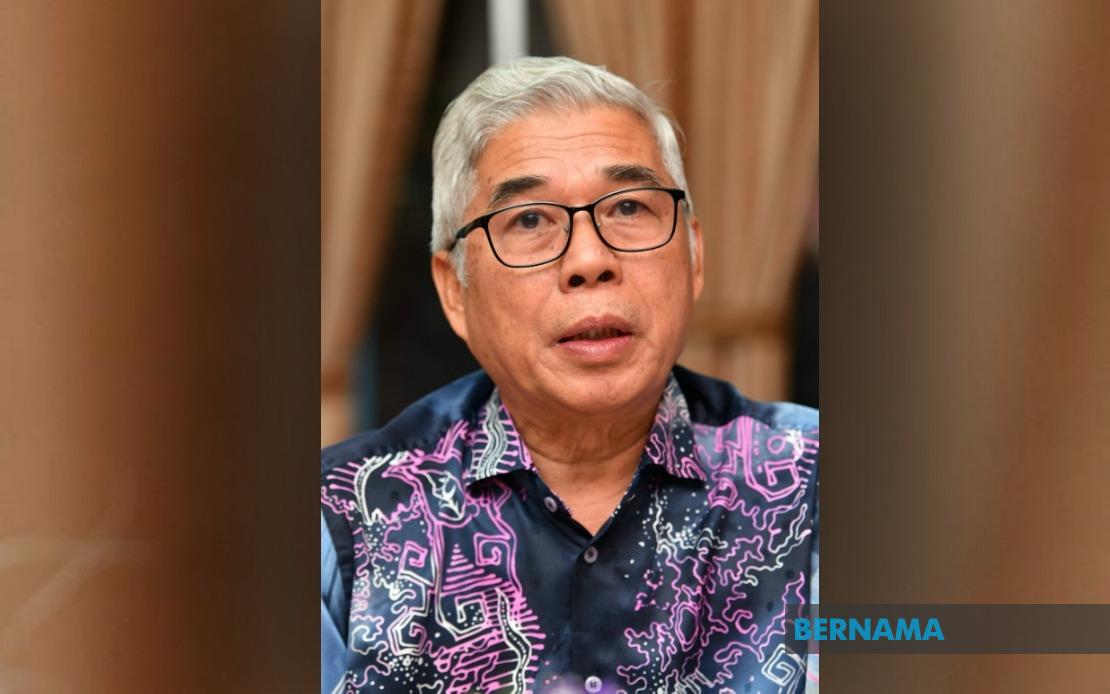
Pasir Gudang Member of Parliament Hassan Abdul Karim has cautioned the MADANI Government against an early dissolution of Parliament, urging instead that it fulfil its complete five-year mandate to demonstrate the effectiveness of its policy agenda. Speaking from Johor Bahru on August 2, Hassan emphasised that Prime Minister Datuk Seri Anwar Ibrahim should resist pressure to call the 16th General Election in the near term, particularly following PKR's mixed performance in recent state contests.
The timing of Hassan's intervention comes as the ruling coalition processes the implications of PKR's electoral setbacks in Sabah, Johor, and Negeri Sembilan. Rather than interpret these results as a signal to seek a fresh mandate, Hassan argues that such a response would be both strategically unwise and emotionally driven. His position reflects a broader conviction within elements of the government that institutional stability and policy continuity should take precedence over the political momentum generated by recent campaigning.
Hassan's appeal to the party carries practical weight. He contends that a full government term extending to late 2027 or early 2028 would provide sufficient runway for the MADANI administration's economic initiatives to produce measurable outcomes that voters can evaluate. The underlying logic is straightforward: premature elections risk being decided on sentiment and residual frustration rather than on substantive evidence of the government's stewardship of the economy and delivery of promised reforms.
The MP articulated his position through a Facebook post titled "DON'T CRY PKR, Dunia Belum Kiamat" (Don't Cry PKR, The World Has Not Ended), adopting a tone that blends encouragement with strategic reasoning. He urged PKR members and supporters to view recent state-level losses not as catastrophic setbacks but as learning opportunities. In his framing, the coming 12 to 18 months represent a critical window in which the party and coalition should focus on concrete governance achievements rather than rehearsing electoral campaigns.
Specifically, Hassan identified three policy domains that should command attention during this consolidation period: strengthening the domestic economy, attracting foreign direct investment, and rebuilding public confidence in government performance. These are not abstract objectives but represent areas where tangible progress would be visible to ordinary Malaysians in their daily lives—through job creation, business activity, and improved services. The implicit argument is that citizens who experience economic improvement and perceive government competence become more inclined to support the ruling coalition at the ballot box.
The broader context of Hassan's intervention involves the complex arithmetic of Malaysian coalition politics. The MADANI coalition encompasses multiple parties with divergent interests and electoral calendars. Maintaining cohesion across this alliance requires demonstrating that government membership brings concrete benefits to constituents. By pushing for a full term and measured governance rather than early elections, Hassan is tacitly arguing that PH's long-term electoral prospects depend less on catching opponents at a moment of perceived weakness than on building a demonstrated record of delivery.
Recent state elections in Malaysia have indeed produced mixed outcomes for PKR specifically and for the broader PH coalition. These contests served as important barometers of voter sentiment, but they are not necessarily predictive of national election outcomes. Hassan's argument implicitly challenges the notion that state-level results should automatically trigger a call for general elections. Instead, he positions the intervening period as time for the government to address the underlying concerns that produced disappointing state-level performance.
From a Southeast Asian perspective, Hassan's position aligns with a broader trend toward institutional stability in the region's democracies. Malaysia's experience with frequent political transitions and the instability that accompanied them has generated appreciation for the predictability that comes from governments completing their mandates. Citizens and investors alike have learned that excessive political churn creates uncertainty and deters long-term planning and capital deployment.
Hassan's call also reflects recognition that economic policy requires time to bear fruit. Foreign direct investment, labour retraining, infrastructure development, and institutional reform all operate on timescales that exceed electoral cycles. A government that pursues short-term political advantage often sacrifices medium-term economic progress. By urging restraint now, Hassan is advocating for a sequential approach: allow economic policy to demonstrate results first, then contest elections on that record.
The MP's emotional appeal to PKR members—reminding them that they are "fighters" capable of confronting defeat—suggests awareness that recent electoral disappointments may have dampened morale within the party. His message combines strategic guidance with motivational exhortation. The implicit argument is that parties that rush to elections in response to setbacks often perform worse than those that take time to regroup, reassess, and strengthen their organisational capacity.
Looking forward, Hassan's intervention will likely influence internal discussions within PKR and across the PH coalition about the optimal timing for GE16. While some voices may continue to advocate for earlier elections, his public statement provides a credible counter-argument rooted in both strategic calculation and practical governance logic. The coming months will reveal whether this counsel gains traction with the party leadership and Prime Minister Anwar Ibrahim.
For Malaysian voters and businesses, the stakes in this internal coalition debate are substantial. An election called prematurely, while the government still lacks a demonstrable record of delivery, risks leaving policy initiatives incomplete and economic momentum unrealised. Conversely, a government given space to complete its agenda has opportunity to prove its competence. Hassan's message, ultimately, is that patience in politics can be a strategic asset rather than a liability.

