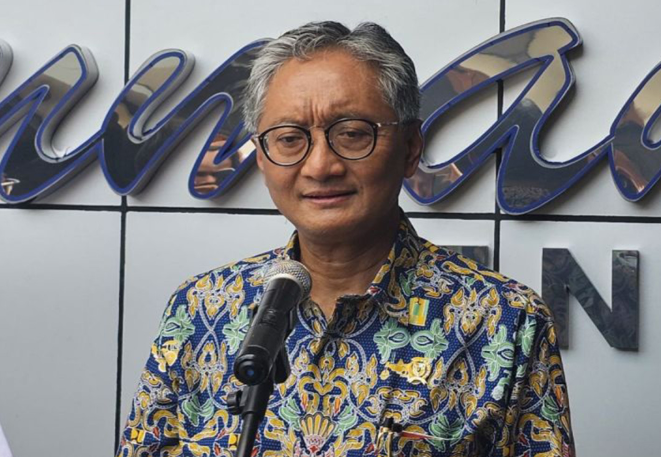
Indonesia's Public Works Ministry is grappling with significant internal disruption following the disclosure of an official travel plan that included Minister Dody Hanggodo's wife and daughter, a revelation that has ignited speculation about punitive personnel moves and exposed fractures within the sprawling bureaucracy overseeing the nation's infrastructure agenda.
The controversy began when a ministry document circulated widely across social media in early July, revealing the names of eight officials scheduled to participate in a United Nations-organised meeting in New York between July 13 and 19. Signed by secretary-general Apri Artoto on June 29, the letter identified Dody's wife Irma Hermawati and daughter Aurellia Tsabitha Meidirama as delegates for the gathering scheduled for July 16 and 17. The inclusion of immediate family members drew immediate public backlash and allegations that state resources were being deployed for personal purposes. The ministry ultimately cancelled the trip following the outcry.
The fallout from the leaked document proved substantial. Social media quickly filled with claims that Dody had orchestrated transfers of multiple officials to remote posts primarily located outside Java as punishment for the disclosure. When confronted by journalists on Wednesday, Dody acknowledged the personnel movements but rejected characterisations of them as retaliatory. In his defence, he pointed to the scale of his workforce, declaring to Kompas.com: "I have 38,600 employees, why shouldn't I be allowed to reassign them?" The deflection, however, did little to quell mounting suspicions about the true motivations behind the shuffles.
During a July 7 press briefing, Apri attempted to provide a more benign explanation for the family members' inclusion, arguing that their names were necessary to facilitate visa processing through the Foreign Ministry. He further asserted that state funds would not have covered their participation in the substantive conference activities. Despite these clarifications, Apri pledged to pursue the identity of whoever leaked the document and hinted at potential legal consequences should the responsible party be identified. The secretary-general's determination to locate the leaker underscored the ministry's defensive posture.
Dody's tenure since October 2024 has been characterised by relentless personnel restructuring that extends far beyond the current incident. The 60-year-old administrator, who brings a background in engineering and business connections to South Kalimantan entrepreneur Andi "Haji Isam" Syamsuddin Arsyad, has orchestrated multiple rounds of reassignments that have touched more than 100 employees according to social media compilations. These rotations have affected everyone from director generals occupying senior leadership positions down to junior civil servants, a breadth of movement suggesting either systematic institutional overhaul or deliberate consolidation of authority. The Democratic Party politician's latest major shuffle in May involved appointing seven senior figures to restructured positions, including Apri's promotion to secretary-general—a move that displaced predecessor Wida Nurfaida, who had served for less than a year following another upheaval in July 2025.
The pattern of constant reorganisation has triggered genuine alarm among parliamentary overseers. During a June meeting, Yasto Soepredjo Mokoagow, a representative on the House of Representatives Commission V responsible for infrastructure oversight, raised concerns that the repeated disciplinary measures, including demotions of ministry directors to positions without structural authority, were eroding employee morale and inhibiting program execution. The Indonesian Democratic Party of Struggle legislator warned on June 11 that civil servants within the ministry had become fearful of implementing their assigned duties, arguing that such a climate of anxiety would necessarily impede the implementation of critical infrastructure initiatives.
Dody has publicly attributed the constant internal turbulence to what he characterises as a "deep state" operating within the ministry—employing the metaphor of termites silently compromising the institution's structural integrity. This framing attempts to position his aggressive restructuring as necessary institutional medicine rather than personalised score-settling. However, the severity and frequency of the movements, combined with their apparent connection to the document leak, have invited legitimate questions about whether the real motivation involves consolidating his personal control rather than eliminating systemic dysfunction.
The minister's challenges extend beyond internal politics into active criminal investigations. Several senior ministry officials have become entangled in an ongoing corruption probe concerning water resources projects. In June, the Jakarta High Prosecutor's Office identified multiple suspects, including former water resources director general Dwi Purwantoro and former acting irrigation and swamp director Yosiandi Radi Wicaksono. Dody responded to these prosecutorial developments by pledging his cooperation with law enforcement and stating unequivocally that he would not shield subordinates implicated in wrongdoing. Yet his simultaneous assertion about purging a "deep state" raises uncomfortable questions about whether the personnel movements serve legitimate anticorruption objectives or provide convenient cover for consolidating institutional control under the guise of reform.
Dody's management approach has extended into his direct interactions with staff. Videos that recently resurfaced on social media captured him reprimanding an employee during an April site visit to a school construction project in East Java. In the footage, he was observed pointing at the employee while denouncing what he characterised as "dumb excuses," a confrontational style that has become synonymous with his tenure. Such public displays of rebuke, combined with the extensive personnel relocations and the ongoing corruption investigations, paint a portrait of a ministry roiled by uncertainty and struggling to maintain organisational cohesion amid competing pressures of reform, political consolidation, and criminal investigation.
For Malaysian readers and Southeast Asian observers, the Indonesian situation offers important lessons about governance challenges that transcend national borders. The intersection of family involvement in official business, opaque personnel management, and criminal investigation reflects vulnerabilities that many regional governments face. The ministry's struggles underscore how rapid, unexplained personnel movements can undermine institutional effectiveness and erode the civil service morale essential for implementing major infrastructure programs. As Dody continues navigating these challenges, his success or failure in maintaining institutional stability while addressing genuine corruption will shape not only Indonesia's infrastructure development trajectory but also provide cautionary insights into the governance dynamics affecting Southeast Asian development efforts.

