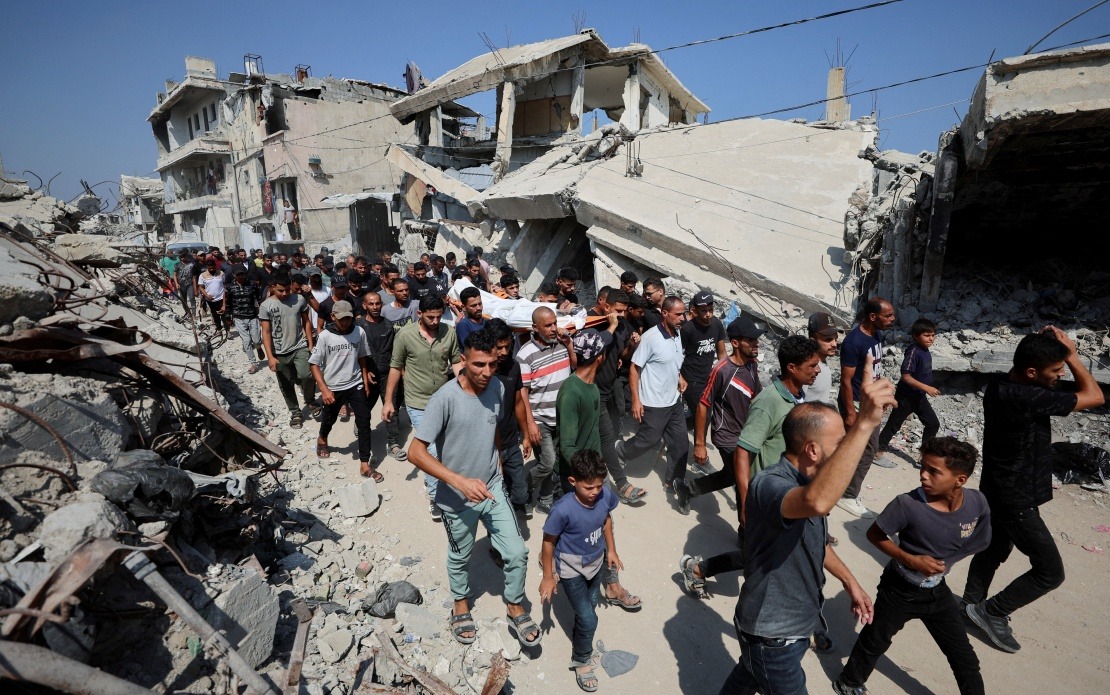
Doctors Without Borders (MSF) has mounted a fierce critique of the Israeli military's handling of cases involving the deaths of its personnel and their families in Gaza, with the organisation declaring that the closure of these files without formal criminal investigation represents a fundamental failure of justice. The condemnation, issued on Thursday, comes nearly two years after MSF initially sought accountability for the incidents and after the organisation escalated its efforts by petitioning Israel's High Court over what it described as the Military Advocate General's refusal to respond appropriately.
The humanitarian group's grievance centres on a structural problem it sees as inherent to military self-investigation: that forces investigating their own personnel cannot deliver the impartial scrutiny required when allegations potentially constitute war crimes. MSF pointed out that it had repeatedly shared identifying information about its staff members and clearly marked its vehicles with humanitarian insignia to the Israeli military, yet these precautions had not prevented the deaths it now sought to investigate.
Two specific incidents form the basis of MSF's complaint. In November 2023, an attack on an MSF convoy killed two individuals connected to the organisation's operations, including Alaa Al Shawa, who worked as a volunteer supporting medical teams at Al-Shifa Hospital. Then in February 2024, a shelter operated by MSF in Khan Younis came under attack, resulting in the deaths of an employee's wife and daughter-in-law, while six other people sustained injuries, among them five women or children.
These cases are part of a broader pattern of loss within the humanitarian sector across Gaza. Since October 2023, MSF has lost fifteen staff members to Israeli military operations. This figure sits within a vastly larger tragedy affecting the health sector generally, where approximately 1,700 health care workers have been killed throughout the conflict during the same timeframe. The cumulative toll underscores how the collapse of Gaza's medical infrastructure has compounded the humanitarian crisis.
For Malaysian readers and Southeast Asian observers, this dispute carries significant implications regarding international humanitarian law and the mechanisms through which accountability operates in active conflicts. The region has long been sensitive to questions of military accountability and the rule of law, particularly in contexts involving asymmetrical power dynamics. MSF's experience suggests that relying upon national military systems to investigate their own conduct, even in democracies with established legal frameworks, may prove inadequate when allegations involve systemic patterns of harm to protected populations.
The organisation's core argument addresses a recognised tension within international humanitarian frameworks: that genuinely impartial investigation requires external, independent bodies rather than internal military reviews, however procedurally rigorous those reviews may appear on paper. MSF contends that the Israeli legal system has now demonstrated through these case closures that it offers no viable path toward accountability for the incidents in question. This assessment, if accurate, would represent a profound challenge to the notion that domestic legal systems can adequately police violations of humanitarian law during armed conflict.
MSF has explicitly linked these case closures to what it characterises as an ongoing genocide against Palestinians within Gaza. While this language reflects the organisation's interpretive framework and remains contested by various international actors, it illustrates how humanitarian organisations increasingly situate individual incidents within broader patterns of alleged systematic harm. This framing shapes how the broader conflict is comprehended by medical professionals and civil society actors worldwide, influencing perceptions of legitimacy and accountability.
The organisation's call for impartial external investigation represents a standard recommendation within international humanitarian law mechanisms, yet remains frequently unimplemented in contemporary conflicts. The absence of such mechanisms in this case, combined with the closure of internal investigations without apparent resolution, creates a situation where allegations of serious violations remain neither proven nor addressed through established legal channels. This vacuum itself becomes newsworthy, as it demonstrates the inadequacy of existing accountability structures.
According to data released by Gaza's Health Ministry, the military operations have produced staggering casualties. Over a single twenty-four-hour period preceding MSF's statement, ten Palestinians died and twenty-five sustained injuries. The cumulative toll since October 2023 has reached 73,417 deaths, with 174,360 wounded. These figures, though subject to methodological questions and disputed by various parties, represent the scale within which MSF's investigations into individual cases must be understood.
The ministry also documented what it described as violations of agreed truces, attributing 1,283 additional Palestinian deaths and 4,248 injuries to Israeli actions during periods of supposed ceasefire. These allegations, if substantiated, would themselves suggest patterns requiring investigation and accountability mechanisms, reinforcing MSF's broader argument that the current system provides insufficient recourse for affected populations and humanitarian organisations.
For humanitarian workers and medical professionals across Southeast Asia, MSF's experience raises urgent questions about the protections afforded to those operating in conflict zones. If clearly marked humanitarian personnel and vehicles do not provide adequate protection, and if investigations into deaths lack rigour or independence, then the security assumptions underlying humanitarian operations require fundamental reassessment. This has potential implications for how international organisations structure their presence in conflict regions throughout the Asia-Pacific.
The dispute also highlights the divergence between international humanitarian principles and military doctrines regarding proportionality and civilian harm. MSF's assertion that no military objective justifies wholesale civilian casualty reflects humanitarian law doctrine, yet the apparent distance between this principle and operational outcomes raises questions about enforcement and command responsibility that extend well beyond the current Gaza situation.
Moving forward, MSF's call for truly independent investigation mechanisms represents a systemic demand rather than a narrow complaint about procedural failures. Whether such mechanisms materialise, and what form they might take, will substantially influence how humanitarian organisations approach future conflicts and what confidence they place in existing accountability structures. For Malaysia and the region, observing these developments offers instructive lessons regarding the practical implementation of international humanitarian standards and the challenge of ensuring accountability in circumstances where power asymmetries favour one party over another.

