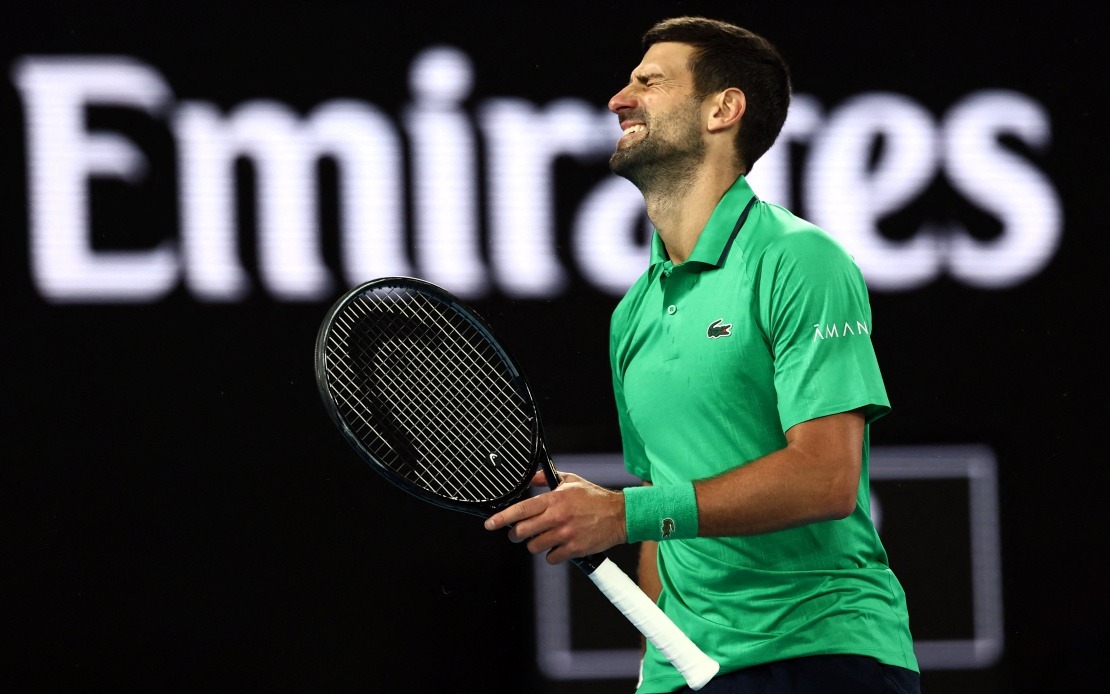
Novak Djokovic has etched himself further into tennis history by matching Roger Federer's remarkable benchmark of 105 men's singles victories at Wimbledon, a milestone achieved after the seven-time champion dispatched France's Arthur Rinderknech across four compelling sets on Friday at the All England Club. The 39-year-old Serbian won the match 7-5, 6-4, 1-6, 7-6 (7-4) in a gruelling three-hour battle on Centre Court that showcased both players' determination despite the gruelling conditions. This triumph marked Djokovic's 18th appearance in the tournament's last 16, a testament to his sustained excellence at the grass-court major over more than two decades of professional competition.
The statistical achievement carries profound significance for the sport's record books and encapsulates Djokovic's enduring dominance across Grand Slam tournaments. At 24 Grand Slam titles to his name, the Belgrade-born competitor continues to redefine what longevity and competitive excellence mean in modern tennis. During his courtside interview, Djokovic demonstrated characteristic humour whilst acknowledging the gravity of the occasion, quipping that he proposed a final match against Federer to determine who would claim the 106th victory. His remarks reflected both respect for his long-standing rival and an understanding that such records transcend individual achievement, becoming shared monuments to excellence.
Despite the historic nature of matching Federer's tally, Djokovic maintained perspective about his primary focus at the tournament. He articulated that chasing specific numerical targets remains secondary to the fundamental objective of winning each individual match presented to him. For Malaysian tennis enthusiasts and regional fans who have watched Djokovic's career unfold across three decades, this moment represents validation of his status as potentially the greatest player to ever contest the sport at the highest level. His next obstacle arrives in the form of Roman Safiullin, a Russian qualifier seeking to upset one of the tournament's most formidable competitors.
Simultaneously, defending champion Jannik Sinner continued his commanding progression through the draw by dismantling American Jenson Brooksby in straight sets, claiming a 6-4, 6-3, 6-4 victory that extended his remarkable record in third-round Grand Slam matches to an undefeated 20 consecutive wins. The Italian world number one's achievement represents an Open Era men's record, underscoring his exceptional consistency when competing in such high-stakes matches. Sinner's acknowledgement of the crowd's encouragement during his contest highlighted how the legendary Wimbledon atmosphere provides tangible assistance to competitors navigating the tournament's demanding progression.
On the women's side, world number one Aryna Sabalenka engineered a clinical performance to eliminate former French Open champion Jelena Ostapenko, prevailing 6-4, 6-4 in a contest that saw the Belarusian maintain her quest for an elusive Wimbledon title. Despite winning multiple Grand Slam trophies on hard courts, Sabalenka has never claimed victory at the All England Club, making her continued advancement this year potentially significant for her legacy. The victory positioned her for a fourth-round encounter against Naomi Osaka, a four-time Grand Slam champion whose career trajectory has encompassed periods of dominance interrupted by mental health challenges and career breaks.
Osaka's path to this matchup proved equally impressive, as the Japanese competitor overwhelmed Russia's Daria Kasatkina with a dominant 6-1, 6-3 scoreline, demonstrating the offensive firepower that has defined her game during her most successful periods. Most notably, this represents Osaka's first appearance in the fourth round at Wimbledon during her career, suggesting a potential evolution in her performance on grass courts. For Southeast Asian tennis followers, particularly Malaysian fans, Osaka's comeback to competitive success carries resonance, as her journey through personal adversity has inspired conversations about mental wellness in professional sport across the region.
The prospective Sabalenka-Osaka clash promises to deliver compelling tennis, as both competitors bring aggressive baseline games and the capacity to generate exceptional power from the back court. Sabalenka's assessment of the impending contest, characterising Osaka as another formidable opponent requiring tactical flexibility and relentless intensity, reflected the respect between two of women's tennis most accomplished contemporary players. The Belarusian's willingness to acknowledge the challenge ahead whilst expressing confidence in her ability to navigate it demonstrates the psychological resilience necessary for sustained success across multiple Grand Slam tournaments.
The broader implications of these matches extend beyond individual tournament advancement to encompass questions about generational succession in professional tennis. Djokovic's continued competitiveness at age 39, competing alongside players a decade younger, raises questions about the feasibility of competing at elite levels across extended careers. Similarly, the progress of younger challengers like Sinner and the resurgence of players like Osaka signals potential shifts in the sport's power dynamics heading toward future majors. For Malaysian sports observers interested in following tennis developments, these matches provide compelling narratives about ambition, resilience, and the pursuit of excellence within sport's most prestigious competitions.
The Wimbledon fortnight continues to produce storylines that captivate global audiences, with established champions defending their positions against emerging talents and veteran players seeking to extend their legacies. Djokovic's equalisation of Federer's record provides a symbolic moment in tennis history, prompting reflection on how two generational talents have shaped the sport's recent history through sustained excellence. As matches progress through the rounds at the All England Club, Malaysian fans can appreciate these displays of skill and determination whilst recognising how international tennis competitions unite audiences across continents through shared appreciation of athletic excellence and competitive drama.

