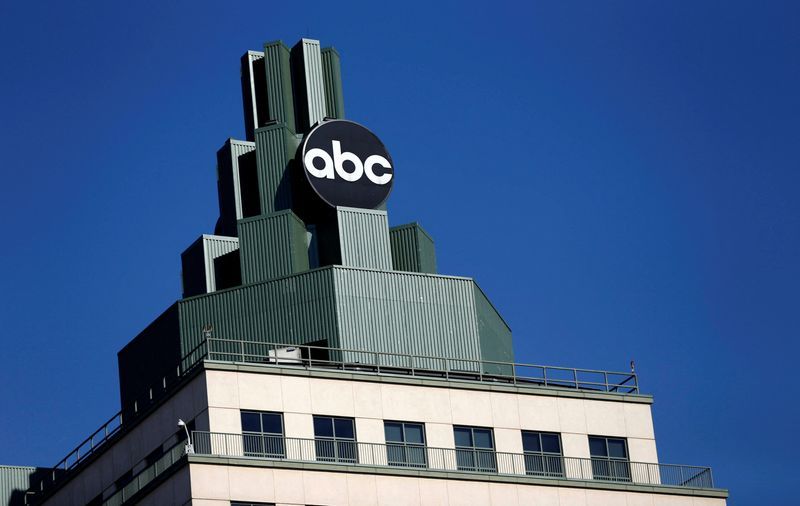
The Walt Disney Company and its ABC broadcast unit have launched a legal challenge against the Federal Communications Commission, seeking to block an accelerated review of licences for eight ABC stations. Filed in U.S. District Court in Washington on Tuesday, the lawsuit represents a pivotal moment in the ongoing tension between the Trump administration and one of America's largest media conglomerates, with implications that extend far beyond the United States to media regulation globally.
Disney characterizes the FCC's actions as an "extraordinary assault on free speech," arguing that the regulatory agency is weaponising its licensing authority to punish a network that has refused to capitulate to White House pressure. The company contends that the accelerated review process violates its First Amendment rights and represents retaliation for programming decisions the administration finds objectionable. This framing transforms what might appear to be a routine regulatory matter into a constitutional question about the limits of government power over broadcasters operating on public airways.
The conflict between Trump and the network has escalated over the past two years, with the president repeatedly demanding that ABC lose its broadcasting licences. Most recently, Trump called for licence revocation after ABC declined to broadcast a primetime speech on elections during what was characterised as prime viewing hours. His requests have grown increasingly specific, including demands that the network terminate late-night host Jimmy Kimmel, whose programme has featured commentary critical of the administration. These demands represent an unusual level of direct pressure from the executive branch on editorial decisions.
The FCC, under the leadership of Chair Brendan Carr, ordered the early review process in April, even though the stations' regular licence renewal hearings were not scheduled until October 2028. This marks the first early review initiated by the agency in more than five decades, underscoring the extraordinary nature of the action. Carr has justified the reviews by citing a year-long investigation into whether Disney's diversity policies constitute unlawful discrimination—a claim the company flatly denies. He has also invoked the FCC's longstanding public interest obligations, which he argues the agency has failed to enforce rigorously in recent decades.
The lawsuit specifically targets what Disney describes as a coordinated campaign of intimidation and coercion. The company argues that the FCC is leveraging its regulatory power to pressure the network into abandoning programming and editorial choices that displease the administration. This argument cuts to the heart of media independence in democratic systems: the notion that government should not use its regulatory authority over licensing to influence what content broadcasters choose to air. Such concerns resonate particularly in Southeast Asia, where media regulation remains contentious and questions about government influence over newsrooms are frequently debated.
Democratic FCC Commissioner Anna Gomez has publicly criticized the reviews as a "campaign of censorship and control," echoing Disney's characterisation of the process as punitive rather than legitimate regulatory oversight. Her statement reflects the partisan division that has emerged around the issue, with opponents viewing the early review as an abuse of regulatory authority and supporters arguing it represents appropriate oversight of broadcast standards. U.S. District Judge Loren AliKhan has ordered both parties to propose a schedule for considering Disney's request for a temporary restraining order, directing the FCC to notify the court if it moves toward revoking ABC's licences.
The legal challenge also encompasses scrutiny of ABC's daytime programme "The View," which has drawn FCC attention for potentially violating rules requiring broadcasters to provide equal opportunities for political candidates. Notably, Disney has voluntarily ceased inviting political candidates to appear on the show since February, a decision the company attributes to the FCC's "pressure campaign." This self-censorship, whether voluntary or compelled, illustrates how the threat of regulatory action can influence editorial decisions even before formal proceedings commence.
Broadcast licence revocations are extraordinarily rare in American history, making the FCC's threat particularly significant and alarming to the broader media industry. However, the threat itself carries considerable weight: broadcasters face existential consequences if they lose the legal right to transmit over public airways, giving government regulators substantial leverage over programming decisions. This dynamic presents a fundamental tension between the government's interest in managing the electromagnetic spectrum as a public resource and the media's interest in editorial independence.
The lawsuit represents a test case for the boundaries of First Amendment protection in the broadcast context. While networks enjoy broad constitutional protections over programming choices, the fact that broadcasters must obtain government licences to operate creates a unique regulatory relationship. The outcome of this litigation could shape how regulators approach media oversight for years to come, with ramifications for how administrations—regardless of political affiliation—can exercise authority over licensed broadcasters. For Southeast Asian media observers, the case demonstrates how even established democracies struggle with balancing regulatory authority and press freedom.
FCC Chair Carr has maintained that the agency has made no final decisions regarding Disney's licences, stating the commission will "follow the facts and the law and keep moving forward." His assertion that the investigation is continuing based on substantive concerns about diversity policies and public interest obligations reflects the administration's position that regulatory review is separate from any alleged political motivation. Yet the timing of reviews ordered immediately after Trump's public criticism of ABC programming, combined with the unprecedented nature of early reviews, lends credibility to concerns about the regulatory process being influenced by political pressure.
The broader context reveals a pattern of Trump administration actions toward media outlets critical of the president. Beyond Disney, the administration has similarly targeted other broadcasters and news organisations through various regulatory and legal mechanisms. This systematic approach suggests a coordinated strategy to exert influence over media coverage rather than isolated responses to specific incidents. For Malaysian readers and the wider Southeast Asian media landscape, the case serves as a cautionary example of how regulatory authority can be weaponised against unfavourable coverage when administrative safeguards prove insufficient.
The financial and reputational stakes for Disney are considerable. The eight ABC-affiliated stations generate significant revenue, and a loss of broadcast licences would severely damage the company's media operations and shareholder value. Beyond Disney's interests, the case carries implications for the entire broadcast television industry, which operates under constant licence renewal cycles. If administrations can threaten licence revocation based on editorial decisions, the independence of broadcast journalism becomes compromised, with networks facing pressure to avoid controversial stories or critical coverage.
As the litigation proceeds, the court's decisions will establish important precedents about the intersection of regulatory authority, free speech rights, and government accountability. Whether Judge AliKhan grants a temporary restraining order, how the FCC responds to judicial direction, and ultimately how courts interpret the constitutionality of using licensing authority as a political tool will shape media regulation in the United States for years to come. The case underscores that questions about press freedom and government power are not merely abstract constitutional matters but practical concerns affecting major institutions and the public's right to diverse information sources.

