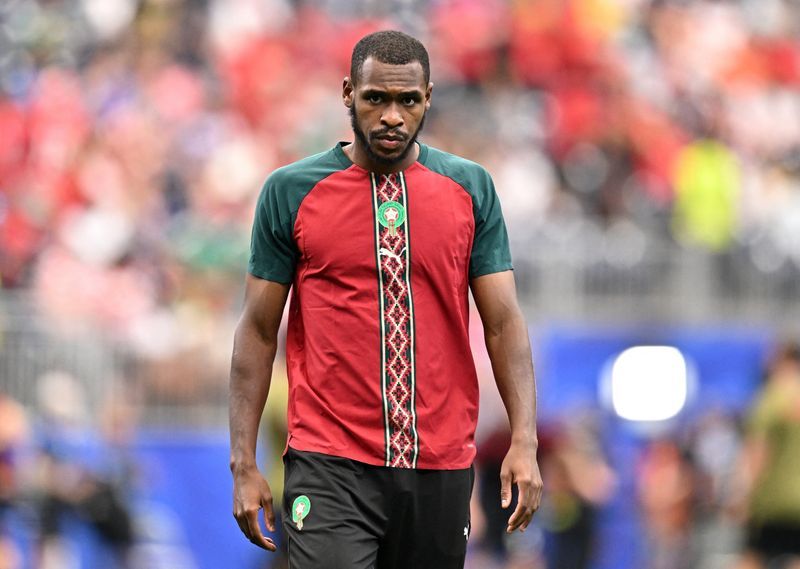
The World Cup quarter-final between Morocco and France on Thursday in Boston carries an unexpected human drama that transcends the usual narrative of two nations competing for a place in the semi-finals. At the heart of this subplot stands Issa Diop, Morocco's 29-year-old centre-back, whose defensive prowess will be tested against France's lethal attacker Kylian Mbappé—a matchup rendered peculiarly poignant by the player's contentious path to the North African nation's colours.
Diop's journey to this moment illuminates the complex nature of modern international football, where heritage, birthplace, and personal ambition intersect in ways that shape careers and test loyalties. Born in Toulouse, the son of a Senegalese father and Moroccan mother, Diop enjoyed every advantage to represent any of three nations. His grandfather's distinction as one of Senegal's earliest national team coaches meant his family carried deep roots in West African football. Yet for years, Diop remained resolute in his conviction that France alone merited his commitment, a stance he articulated with remarkable clarity when still a young player in France's Under-21 programme.
Seven years before his international debut for Morocco, Diop told Canal Plus that his decision was final. "I am French. I was born in France. France has given me everything," he declared, adding that switching allegiance merely because he had not secured selection for the senior squad would constitute both hypocrisy and a capitulation by default. These were not the words of a man hedging his options; they represented a genuine conviction about identity and gratitude. When Diop finally reversed course in March by committing to Morocco, the reversal triggered significant backlash on social media, with supporters viewing his decision as a betrayal of principles he had previously championed so publicly.
What prompted this dramatic change remains less about Diop abandoning his ideals and more about Morocco's pressing defensive needs. The North African team faced a genuine crisis at centre-back following the departure of captain Romain Saiss, who stepped away after the Africa Cup of Nations in January, and the injury suffered by Nayef Aguerd in March left the back line vulnerable heading into World Cup preparation. Morocco's coaching staff, led by Mohamed Ouahbi, identified Diop as the solution—a player with eight seasons of Premier League experience, most recently with West Ham United and Fulham, who could provide the leadership and stability required to shore up their defence during the tournament.
Ouahbi's assessment of Diop's commitment proved prescient. The coach noted that he had sensed in Diop "someone who is committed, who lives a somewhat Moroccan lifestyle and visits the country frequently," suggesting that the player's connection to Morocco transcended the superficial calculations that sometimes characterise late switches in international football. Ouahbi's pragmatic philosophy—that dwelling excessively on the past mattered less than evaluating present attitude and future contributions—helped frame Diop's integration. Rather than litigating his earlier statements, Morocco's football establishment extended a welcome that positioned him as an asset rather than a turncoat.
Diop made his competitive debut for Morocco against Ecuador in a friendly fixture during March, and since then has established himself as the first-choice centre-back alongside Crystal Palace's Chadi Riad. His performances drew minimal criticism during the group stage, but his true moment of vindication came during the knockout phase against the Netherlands. With the match heading toward elimination and Morocco seemingly destined for early exit, Diop launched forward in the 91st minute, connecting powerfully with a cross from Chemsdine Talbi to equalise and force the contest into extra time. Morocco ultimately prevailed on penalties, and in that single header, Diop crystallised his commitment to his new colours—a goal that silenced the sceptics and demonstrated tangible investment in his adopted nation's success.
The narrative arc from his emphatic declarations of French loyalty to this moment defending against Mbappé carries inherent irony that extends beyond mere sporting theatre. Mbappé represents the pinnacle of French football—a generational talent whose explosive pace and finishing precision have terrorised defences across Europe. For a player who once believed France represented the ultimate expression of his footballing identity, the prospect of thwarting Mbappé's ambitions creates an emotional complexity that few international contests generate. Yet Diop's focus must remain disciplined; the personal history between these two nations and his singular trajectory matter far less than Morocco's collective ambition to reach the semi-finals for a second consecutive World Cup.
The broader significance of Diop's selection extends beyond theatrics. His presence in Morocco's defence symbolises the evolving pragmatism of international football, where coaches prioritise current ability and tactical fit over historical narratives or perceptions of disloyalty. In Southeast Asia, where Malaysia and other nations frequently pursue late-switch international recruits, Diop's example demonstrates both the opportunities and complications inherent in this strategy. When successful, as his performances suggest, such moves strengthen national teams during critical competitions. When perceived as opportunistic, they risk fracturing supporter relationships and creating lingering scepticism about player commitment.
For Morocco's World Cup ambitions, however, only results matter. Diop has already justified Ouahbi's faith through performances that have stabilised the defence and contributed directly to the team's progression. Whether he can contain Mbappé on Thursday will determine not merely Morocco's chances of advancing but also provide the final chapter in his remarkable personal redemption arc. The player who once insisted he could never imagine representing another nation now stands as one of his adopted country's most crucial performers, tasked with shutting down the superstar from the nation he once revered above all others.

