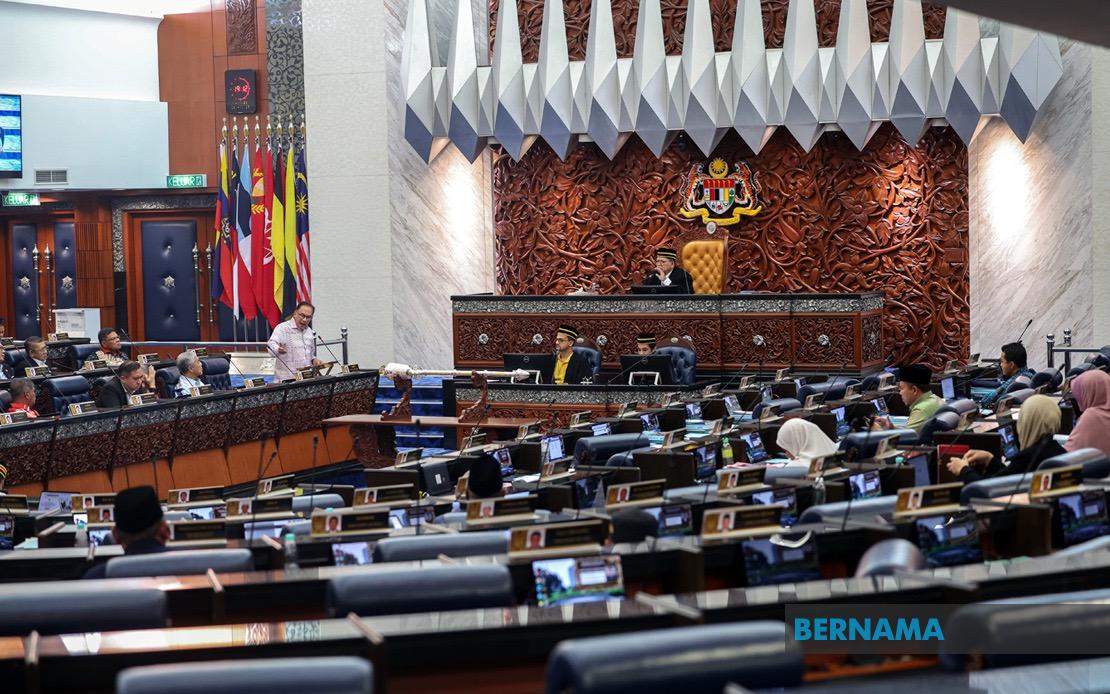
Parliament's lower house has given final approval to amendments governing employer compliance under the Employment Insurance System, establishing a tiered penalty structure designed to encourage reporting of job vacancies to Malaysia's Social Security Organisation. The Dewan Rakyat passed the Employment Insurance System (Amendment) Bill 2025 on June 30 following cross-party debate, completing the legislative journey after the Dewan Negara had endorsed the revisions in March. The new framework imposes progressively steeper financial consequences for non-compliance, beginning at RM1,000 for initial violations, escalating to RM3,000 for repeated failures, and reaching RM5,000 for subsequent transgressions.
The amendment targets a persistent gap in Malaysia's labour market infrastructure: the systematic notification of job openings to PERKESO, which operates the national employment matching system. Under the revised Clause 11 of Subsection 45F(4), employers who neglect this reporting obligation face financial penalties calibrated to encourage voluntary adherence without imposing excessive burdens on small and medium enterprises. This approach reflects a deliberate policy shift toward incentivising compliance rather than purely punitive enforcement, recognising that many businesses, particularly in rural and less industrialised sectors, may lack familiarity with notification requirements or face administrative challenges in meeting them.
Deputy Human Resources Minister Datuk Khairul Firdaus Akbar Khan underscored the government's intention to emphasise education and constructive engagement alongside enforcement mechanisms. The ministry has committed to issuing compliance notices that grant employers reasonable opportunity to rectify reporting failures before financial penalties are imposed. This grace period reflects legislative recognition that unintentional non-compliance warrants correction rather than immediate punishment, a principle that has gained traction across Southeast Asian labour policy frameworks as economies balance worker protection with business viability. The deputy minister's remarks signal that the government views the amendment not merely as a punitive tool but as part of a broader capacity-building initiative to strengthen employer participation in the formal employment ecosystem.
The pathway to these final amendments reveals substantive consultation between policymakers and the private sector. PERKESO conducted extensive engagement sessions across multiple industries nationwide, gathering practical feedback on implementation challenges. This stakeholder process yielded meaningful concessions: the government reduced the original maximum penalty from RM10,000 to RM5,000, a fifty-percent cut that meaningfully lowered the compliance cost burden. The revised first-offence penalty of RM1,000 similarly reflects industry input, setting an entry-level fine low enough to function as a corrective signal without creating disproportionate hardship for unintentional violations. These modifications demonstrate that Malaysian parliamentary practice increasingly accommodates iterative refinement of legislation through formal and informal consultation mechanisms.
Parliamentary members from both government and opposition benches engaged substantively with the amendment's practical implications during debate. Azahari Hasan from Padang Rengas emphasised that the reporting mechanism must prioritise simplicity and operational efficiency, stressing that accurate job vacancy data underpins effective labour market matching and unemployment reduction. His intervention highlights a critical Malaysian policy concern: the nation's need to optimise transitions between workers and available positions, particularly as skills mismatches persist despite notable unemployment figures. When employers systematically report openings, PERKESO gains visibility into labour demand patterns across sectors and regions, enabling more sophisticated policy responses to sectoral skills gaps and geographic employment disparities.
Concern regarding uneven awareness and implementation capacity emerged prominently in parliamentary discourse. Nurul Amin Hamid representing Padang Terap flagged particular vulnerability in rural business communities, which may operate with limited knowledge of regulatory requirements or access to digital reporting systems. This concern carries significant weight across Malaysia's diverse economy, where agricultural, small-scale manufacturing, and traditional service sectors predominate in less urbanised areas. The tiered penalty structure implicitly acknowledges this reality: the RM1,000 first-offence threshold permits businesses genuine opportunity to learn and comply without facing catastrophic financial consequence, while the escalating structure discourages repeat negligence. Yet implementation success ultimately depends on complementary initiatives: PERKESO and the Human Resources Ministry must ensure that reporting systems are genuinely accessible to small employers and those with limited digital capability, potentially through telephone-based or assisted reporting mechanisms.
Transparency in job advertising through government portals emerged as a parallel concern within parliamentary discussion. Syerleena Abdul Rashid from Bukit Bendera pressed for robust public employment databases that ensure fair and equitable access to opportunity information across Malaysian society. This intervention reflects broader equity considerations: when job vacancies remain confined to private recruitment networks or employer contacts, disadvantaged communities and less-networked workers face systematic exclusion from opportunity knowledge. Mandating PERKESO notification and establishing transparent, government-mediated job listings partially addresses this structural inequality, creating information pathways that transcend elite networks and geographic isolation. The amendment thus carries implications extending beyond employer compliance to encompass social equity in labour market access.
The legislative journey illuminates Malaysia's evolving approach to labour market governance. Rather than imposing rigid, high-penalty frameworks that invite evasion or create genuine hardship for good-faith non-compliance, the government has adopted graduated enforcement paired with engagement and guidance. This philosophy aligns with comparative experiences across ASEAN: successful compliance strategies typically combine reasonable penalties, transparent communication of requirements, technical assistance, and grace periods for correction. Malaysia's amendment reflects this maturing approach, though its ultimate effectiveness depends entirely on PERKESO's capacity to deliver user-friendly systems, sustained employer outreach, and consistent though measured enforcement.
For Malaysian businesses and workers, the amendments signal government commitment to formalising and systematising employment relationships through improved information flows. When PERKESO maintains comprehensive awareness of job vacancies, unemployed workers benefit from more comprehensive opportunity information, employers access broader talent pools, and policymakers gain data essential for labour market planning. The progressive penalty structure balances accountability with proportionality, discouraging systematic negligence while avoiding excessive punishment for isolated lapses. However, realising these benefits requires sustained commitment beyond legislative passage: ministry resources must fund awareness campaigns targeting rural and small-business sectors, PERKESO systems must genuinely simplify reporting, and enforcement must be applied consistently and fairly across sectors and enterprise sizes.
The amendment's approval concludes a legislative process that meaningfully incorporated stakeholder feedback, a development that should encourage continued business sector participation in policy consultation. When governments demonstrably adjust proposals based on practical implementation concerns—as the deputy minister's reduction of maximum penalties exemplifies—employers and industry associations gain incentive to engage constructively rather than resist regulation through evasion or circumvention. This virtuous cycle of consultation, adjustment, and compliance represents Malaysian parliamentary governance at its most effective, bridging the gap between regulatory objectives and practical business reality that so frequently undermines policy implementation across developing economies. The coming months will reveal whether complementary ministry actions match the legislative framework's ambitions.

