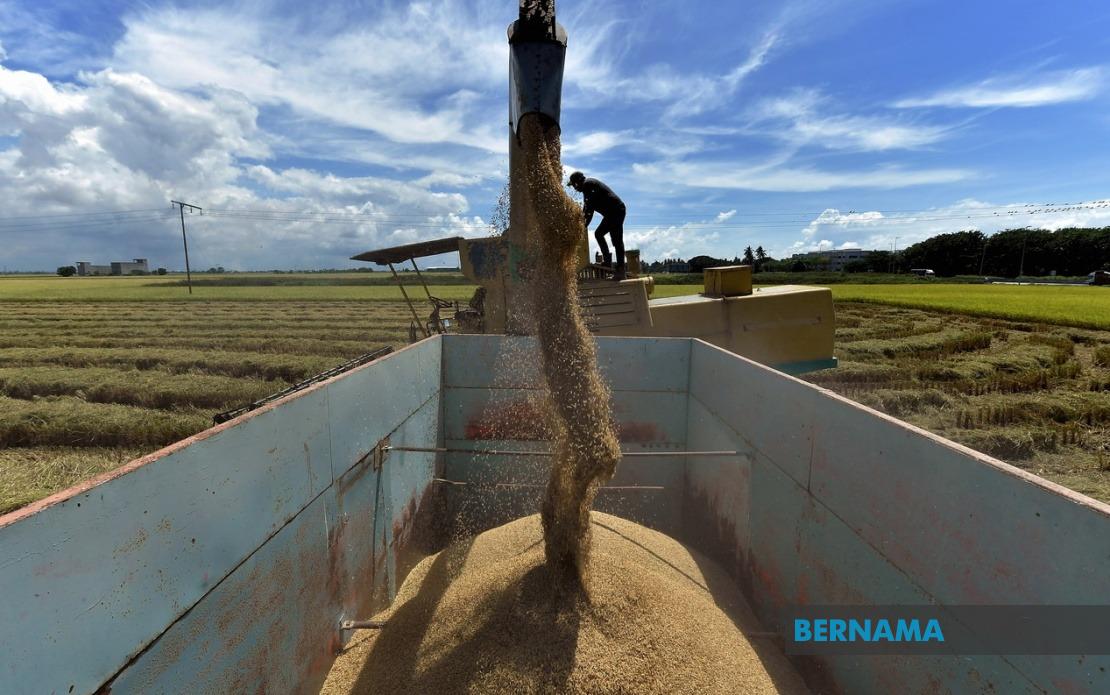
Malaysia's Parliament has endorsed the Control of Padi and Rice (Amendment) Bill 2026, marking a significant overhaul of regulatory enforcement in an industry critical to the nation's food self-sufficiency goals. The legislation received backing from both government and opposition lawmakers following substantive parliamentary debate, signalling broad recognition of the need for tougher protections in rice production and distribution. The reform addresses longstanding gaps in a regulatory framework that has remained largely unchanged for three decades, during which the padi and rice sector has expanded into a multi-billion-ringgit enterprise vulnerable to organised fraud and supply chain manipulation.
The centrepiece of the amendments involves dramatically escalating financial penalties for violations of the principal Act (Act 522). Individual offenders now face maximum fines of RM250,000, while companies and corporate entities confront potential penalties reaching RM1 million. These figures represent a radical departure from the existing penalty structure, which has never been substantively revised since the legislation's enactment in 1994. Deputy Minister of Agriculture and Food Security Datuk Chan Foong Hin justified the increases by pointing to enforcement data revealing the staggering scale of smuggling and misappropriation of local white rice, activity that generates enormous illicit profits yet previously attracted relatively modest punishments.
The disparity between penalty levels and offence seriousness has become increasingly untenable as the rice industry has grown in value and complexity. Smuggling operations and the diversion of domestically-produced white rice to unregulated channels deprive Malaysian farmers of legitimate markets while undermining price stability and supply consistency for consumers. Previous financial penalties, calibrated against an economic landscape of three decades past, failed to deter sophisticated criminal operations capable of generating millions in illegal revenue. The legislative response recognises that deterrence requires financial consequences proportionate to potential wrongdoing, a principle long established in enforcement economics but neglected in this sector until now.
Parliamentary discussion revealed nuanced concerns about implementation that extend beyond mere penalty levels. Datuk Idris Ahmad, representing Bagan Serai under the PN banner, advocated for prosecution guidelines to accompany the tougher penalties, arguing that clarity in enforcement protocols would better protect Malaysia's food supply chain integrity. He additionally proposed specialised training for prosecutors to ensure court proceedings result in sentences commensurate with offence gravity and deterrent effect. This perspective acknowledges that legislation without corresponding capacity-building among enforcement personnel risks inconsistent application and reduced effectiveness.
Other lawmakers raised structural concerns about the rice sector's governance architecture. Tan Hong Pin, representing Bakri for the PH coalition, called for comprehensive penalty assessment and suggested establishing an independent committee to evaluate Padiberas Nasional Berhad (BERNAS) performance in tackling cartel behaviour. This proposal hints at perceived deficiencies in existing market oversight mechanisms and the potential influence of concentrated market power on pricing and distribution. BERNAS, as the national rice monopoly, occupies a pivotal position in domestic supply chains, and parliamentary attention to its accountability reflects concern that regulatory penalties alone cannot address systemic vulnerabilities without parallel institutional scrutiny.
Digital innovation emerged as a recurring theme in parliamentary contributions. Azli Yusof, the PH representative for Shah Alam, emphasised implementing comprehensive traceability systems throughout padi and rice supply chains to prevent leakages and disruptions. Such infrastructure would provide transparency previously lacking in markets prone to informal transactions and grey-market activity. The proposal reflects global trends in food security, where blockchain and digital verification enhance consumer confidence and regulatory oversight simultaneously. Malaysia's diverse padi-growing regions and complex distribution networks would benefit substantially from coordinated digital tracking, reducing the operational cover available to smugglers and hoarders.
Taking this innovation concept further, Manndzri Nasib, the BN member for Tenggara, proposed equipping every rice bag with QR codes enabling real-time tracking by consumers and enforcement authorities alike. This measure would dramatically enhance visibility of stock movements across retail and wholesale channels, making it substantially more difficult to conceal mislabelling schemes or inventory hoarding. Such granular tracking creates an audit trail inherently valuable to both market regulators and law enforcement, fundamentally altering the risk calculus for operators contemplating illegal activity. The proposal reflects technological feasibility within contemporary supply chain management, where such systems are increasingly standard in high-value commodity sectors.
The amendments' passage signals parliamentary consensus that Malaysia's rice sector requires reinforced protection mechanisms reflecting current economic and operational realities. The multi-billion-ringgit scale of the industry justifies investment in enforcement infrastructure and regulatory sophistication. For Malaysian padi farmers, whose livelihoods depend on predictable markets and fair prices, stronger anti-smuggling provisions and cartel oversight offer tangible protection against manipulation. The combination of enhanced penalties, enforcement training, and digital traceability creates a more comprehensive deterrent framework than penalties alone could achieve.
For consumers, these amendments promise greater supply stability and reduced vulnerability to hoarding during periods of international price volatility. Rice, as a staple commodity and strategic food security asset, warrants regulatory intensity comparable to sectors involving critical inputs or public safety concerns. Malaysia's historical experience with rice price spikes and supply anxieties demonstrates the political salience of this commodity sector. The legislative response, therefore, addresses not merely technical regulatory gaps but fundamental concerns about food affordability and availability affecting household food security across the income spectrum.
The parliament's approval reflects broader recognition that food security cannot be maintained through passive reliance on market forces or informal enforcement. The thirty-year absence of meaningful penalty review had created a gap between regulatory intent and deterrent effect, a gap readily exploitable by criminal enterprises and corrupt operators. The amendments represent overdue recalibration of enforcement mechanisms to contemporary realities of scale, sophistication, and organised involvement in illicit rice trade. Implementation will depend substantially on the ministry's capacity to develop supporting prosecution guidelines, conduct enforcement training, and coordinate with technology providers on traceability systems. The coming months will reveal whether parliamentary intent translates into operational effectiveness in protecting Malaysia's rice supply chains and supporting domestic producers.

