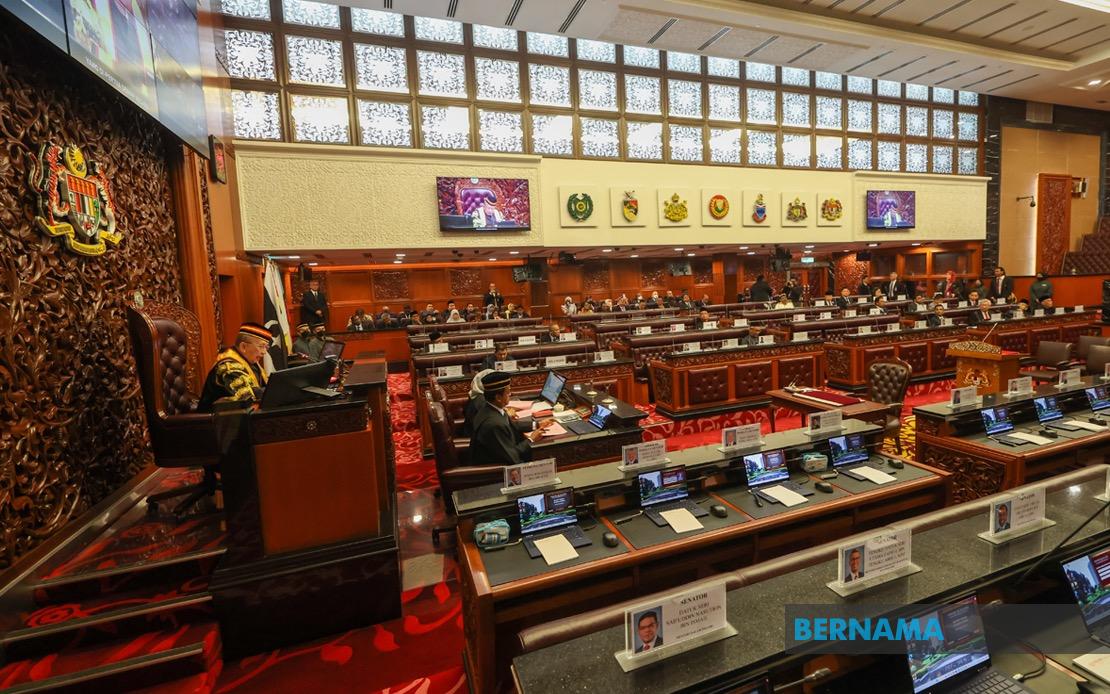
Malaysia's upper house has wrapped up a 10-day parliamentary sitting marked by the passage of two significant pieces of legislation and a sustained focus on reinforcing the country's economic foundations amid global uncertainties. The Dewan Negara concluded its Second Meeting of the Fifth Session of the 15th Parliament on August 4, having devoted considerable attention to fiscal discipline, investment promotion, energy security, and structural governance improvements that reflect Putrajaya's broader policy agenda for the remainder of the parliamentary term.
The two Bills that secured approval represent different but complementary facets of institutional modernisation. The National Trust Fund (KWAN) Bill 2026, introduced by Deputy Finance Minister Liew Chin Tong, establishes stricter oversight mechanisms and accountability standards for withdrawals from Malaysia's National Trust Fund, addressing long-standing concerns about fund governance and financial discipline. Simultaneously, the Statistics Bill 2026, presented by Deputy Economy Minister Datuk Mohd Shahar Abdullah, creates a revamped legal infrastructure for national statistical collection and analysis, positioning Malaysia to deploy more sophisticated data-gathering and evidence-based policymaking tools in an increasingly complex economic environment.
The sitting, which commenced on July 20, occurred against a backdrop of geopolitical turbulence in West Asia that government members explicitly acknowledged requires protective measures. Ministers assured the Dewan that comprehensive safeguards were being implemented to insulate Malaysia's economy from external shocks, encompassing supply chain diversification, price stabilisation efforts, sectoral support mechanisms, and broader resilience-building strategies. This framing suggests that while Malaysia maintains its integrated regional and global trade relationships, policymakers are adopting a more defensive posture toward international volatility—a stance likely to resonate with Malaysian voters concerned about inflation and economic vulnerability.
A particularly noteworthy discussion centred on the Retirement Fund (Incorporated) (KWAP), when Prime Minister Datuk Seri Anwar Ibrahim intervened to contextualise the pension fund's reported net profit of RM12.9 billion within a nuanced performance assessment. The Prime Minister's intervention appears designed to temper public expectations regarding KWAP's investment prowess whilst simultaneously extracting lessons from the fund's involvement in eFishery, a venture that evidently underperformed. This suggests senior policymakers recognise the need for more stringent due diligence in sovereign fund investment decisions—a concern that extends beyond Malaysia to other Southeast Asian nations managing comparable institutional investors.
Energy security emerged as a dominant policy theme during the sitting, particularly following discussions on July 23 regarding the strategic petroleum reserve. Ministers indicated that any decision to establish such a reserve would require exhaustive evaluation of fiscal costs, operational feasibility, institutional governance frameworks, and international precedents. The timing of this discussion aligns with Malaysia's conclusion of a 20-year fuel supply agreement with Russia covering petrol, diesel, crude oil, and gas—a commercial arrangement that the Economy Ministry characterised as complementary to the National Energy Transition Roadmap (NETR) rather than contradictory. For Malaysian readers, this positioning reflects efforts to reconcile import diversification with climate transition commitments, though the durability of this balance remains contingent on evolving geopolitical conditions and energy price dynamics.
Investment attraction constituted another cornerstone of the parliamentary discussions, with ministers highlighting Japan's substantial commitment to Malaysia's electrical and electronics sector. Approved Japanese investments totalling RM10.5 billion across 46 projects between 2021 and 2025 underscore the continuing appeal of Malaysia as a high-technology manufacturing hub, with the sector projected to generate 9,009 employment opportunities. This data point carries particular significance for Malaysians concerned about job creation and industrial upgrading, suggesting that selective foreign direct investment in advanced manufacturing remains achievable despite regional competitive pressures from Vietnam, Thailand, and Indonesia.
On competitiveness metrics, Deputy Economy Minister Mohd Shahar reported on July 27 that Malaysia maintains trajectory toward inclusion among the world's 12 most competitive economies by the conclusion of the 13th Malaysia Plan (13MP), supported by improvements in the 2026 World Competitiveness Ranking (WCR). Achieving and maintaining top-tier global competitiveness rankings carries both practical and symbolic importance for Malaysia—practical because such rankings influence multinational corporate location decisions, and symbolic because they validate the government's economic reform narrative to domestic audiences increasingly conscious of comparative regional development performance.
Financial sector governance received attention through an announcement that Bank Negara Malaysia would implement a new Performance Measurement Framework (PMF) for Development Financial Institutions (DFIs) commencing July 1, 2027. This initiative reflects global trends toward more sophisticated institutional assessment methodologies that extend beyond conventional financial metrics to encompass development impact, corporate governance, and operational efficiency—considerations particularly relevant for Malaysian DFIs tasked with supporting inclusive economic participation and regional development.
The electric vehicle sector demonstrated continued reliance on private sector dynamism, with the Ministry of Investment, Trade and Industry (MITI) confirming that Malaysia's EV ecosystem would proceed without government-imposed price controls on public charging services. The deployment of 6,416 public EV chargers nationwide as of May 31 indicates measurable progress toward charging infrastructure sufficiency, though whether this deployment trajectory satisfies anticipated EV adoption rates remains an open question for Malaysian motorists and fleet operators contemplating the transition to electric propulsion.
Fiscal management constituted a recurring theme throughout the sitting, with the Finance Ministry reporting that federal fiscal deficit reduction had now extended across five consecutive years following implementation of economic and fiscal reforms. Deputy Finance Minister Liew Chin Tong added that expenditure controls imposed during the first half of the year yielded nearly RM5 billion in spending restrictions whilst preserving the delivery of essential public services—a claim that invites scrutiny regarding whether spending discipline has disproportionately affected developmental sectors or whether restraint has genuinely been distributed across lower-priority expenditure categories. Federal debt, according to ministerial statements, remained within statutory limits, suggesting continued compliance with constitutional fiscal constraints that have anchored Malaysian fiscal policy discourse for more than a decade.
The parliamentary sitting concluded without announcement of a specific date for the resumption of proceedings, leaving the Dewan Negara's legislative calendar temporarily indeterminate. For Malaysian observers tracking parliamentary activity and policy development, this open-ended adjournment creates uncertainty regarding the timing of further legislative initiatives or extended policy discussions, though the substantive work accomplished during the 10-day session suggests that the government has secured parliamentary endorsement for a fairly comprehensive policy framework addressing immediate economic vulnerabilities and longer-term structural competitiveness challenges.

