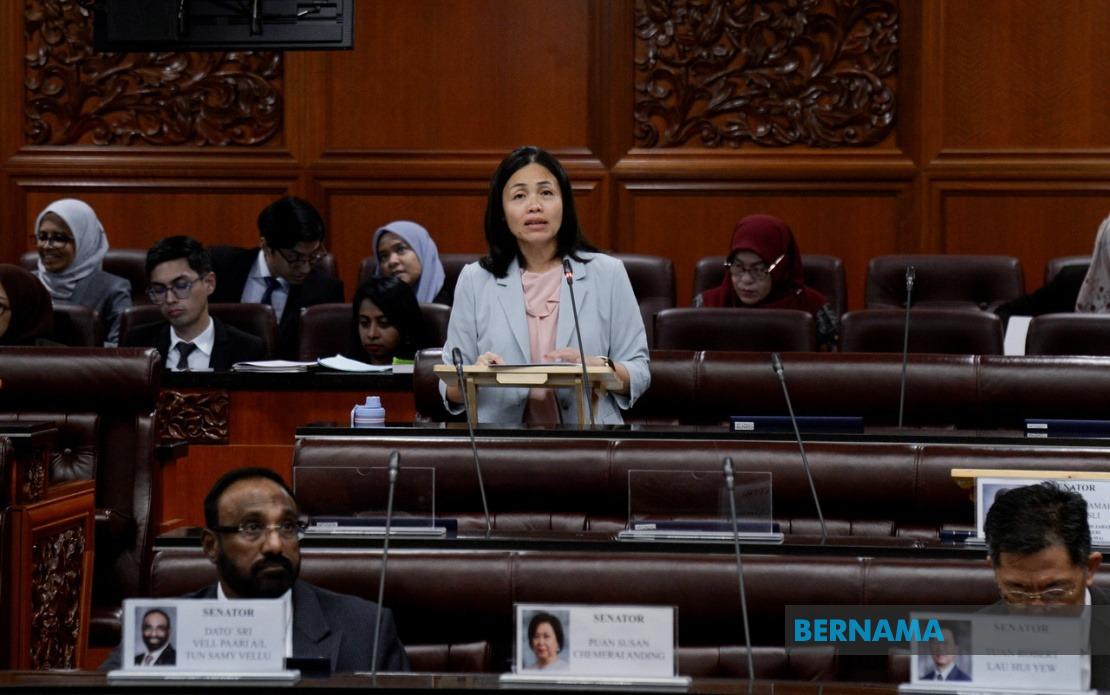
The Dewan Negara has given its approval to the Communications and Multimedia Commission (Amendment) Bill 2026, advancing a legislative framework aimed at bolstering the regulator's capacity to oversee the country's communications sector while establishing tighter controls on its internal governance. The decision, made on August 3 through majority vote following debate by 11 senators, represents a significant step in restructuring how Malaysia's digital and communications landscape will be monitored and controlled in the years ahead.
Deputy Minister of Communications Teo Nie Ching outlined the tangible results already being delivered under the MCMC's existing enforcement mandate, particularly regarding the removal of unlawful content from digital platforms. Between January and July of this year, the commission has successfully removed more than 222,000 pieces of online gambling-related content, demonstrating the escalating intensity of digital enforcement operations across Malaysian web services. This surge reflects growing sophistication in identifying and taking action against prohibited material posted by service providers themselves, following formal requests from the regulator.
The trajectory of content removal has climbed dramatically in recent years, illustrating how platform operators are becoming increasingly responsive to regulatory directives. Only two instances of content takedown occurred in 2022, a figure that ballooned to 18,814 removals during 2023, then accelerated further to 189,484 in 2024 before reaching 289,486 by the end of last year. The sharp acceleration underscores both the growing volume of illegal gambling promotion online and the expanding coordination between the MCMC and digital platforms in combating such activity. Beyond content removal, the regulator has coordinated the blocking of 6,982 gambling websites entirely since 2022 through to late July this year, a parallel enforcement strategy targeting the infrastructure supporting illegal wagering operations.
The MCMC's role in this domain, however, remains technically limited in scope. While the commission provides digital forensic analysis and coordinates the technical blocking of websites, primary investigative jurisdiction over gambling activities themselves falls to the Royal Malaysia Police. The MCMC functions as an enabler and technical partner, deploying its specialized expertise in digital infrastructure and data analysis to support broader law enforcement objectives. This structural arrangement ensures that gambling enforcement remains a matter of national police authority while the communications regulator contributes its specialized capabilities where infrastructure and digital access intersect with the illegal activity.
A centrepiece of the amendment addresses governance independence, specifically stripping away the possibility that sitting politicians might assume the role of MCMC chairman. Under the revised legislation, the commission's leadership cannot be drawn from Parliament or state legislative assemblies, a provision designed to insulate the regulator from direct political interference at both federal and state levels. Deputy Minister Teo emphasized that this constraint on ministerial appointment power reflects a commitment to ensuring that leadership positions are filled on the basis of qualification and expertise rather than political patronage, fundamentally rebalancing the relationship between the government and the regulatory body it oversees.
Senator Datuk Abdul Halim Suleiman articulated the strategic rationale underpinning these reforms during the chamber's deliberation. As Malaysia's communications and multimedia sector has matured beyond its traditional role as an economic driver, it has evolved into critical national infrastructure with implications for security, economic resilience, and social cohesion. The MCMC's capacity to perform its functions with professional rigour, operational transparency, and genuine effectiveness has therefore become essential to protecting public interests across digital domains. Senator Halim's framing positions the amendment not merely as a regulatory housekeeping exercise but as a necessary adaptation to the strategic importance communications infrastructure now commands in national affairs.
Senator Muhammad Hasbie Muda contributed a complementary perspective by stressing that statutory reform extending the MCMC's powers must be paired with institutional mechanisms ensuring accountability and transparency. Merely expanding the regulator's functional authority without establishing robust safeguards for how those powers are exercised would constitute an incomplete reform. True regulatory modernization, in his view, requires simultaneous attention to appointments processes emphasizing merit and expertise, the transparent exercise of delegated authority, and mechanisms by which the regulator remains answerable to the public it serves. This framing reflects broader governance debates in Malaysia concerning the balance between regulatory discretion and public accountability.
The bill comprises 17 distinct clauses and underwent approval by the Dewan Rakyat on July 15 before proceeding to the upper house. Among its substantive provisions, the amendment revises Section 16 of Act 589 to articulate more clearly the MCMC's functions regarding the development and regulation of digital infrastructure and platform standards. This clarification is intended to modernize the regulatory framework, ensuring that the MCMC's statutory authority unambiguously covers the evolving technical and operational dimensions of contemporary digital platforms and their broader ecosystem. Rather than leaving infrastructure regulation implicit or derivative from earlier statutes, the amendment makes explicit the regulator's mandate to shape the standards and practices governing digital systems.
For Malaysian policymakers and the technology industry, the amendment signals heightened regulatory attention to digital governance standards, informed by experiences with online gambling enforcement and broader platform accountability. The prohibition on political leadership of the MCMC will be watched closely as a test of whether institutional independence can insulate regulators from political pressure while maintaining democratic accountability. Southeast Asian observers may similarly see in these reforms a model for balancing regulatory authority with governance constraints, though implementation will ultimately demonstrate whether the structural innovations translate into genuine professional autonomy or remain largely nominal. The coming months will reveal whether the MCMC can leverage its expanded statutory framework and tightened governance to address the multifaceted challenges of digital regulation in an increasingly complex communications ecosystem.

