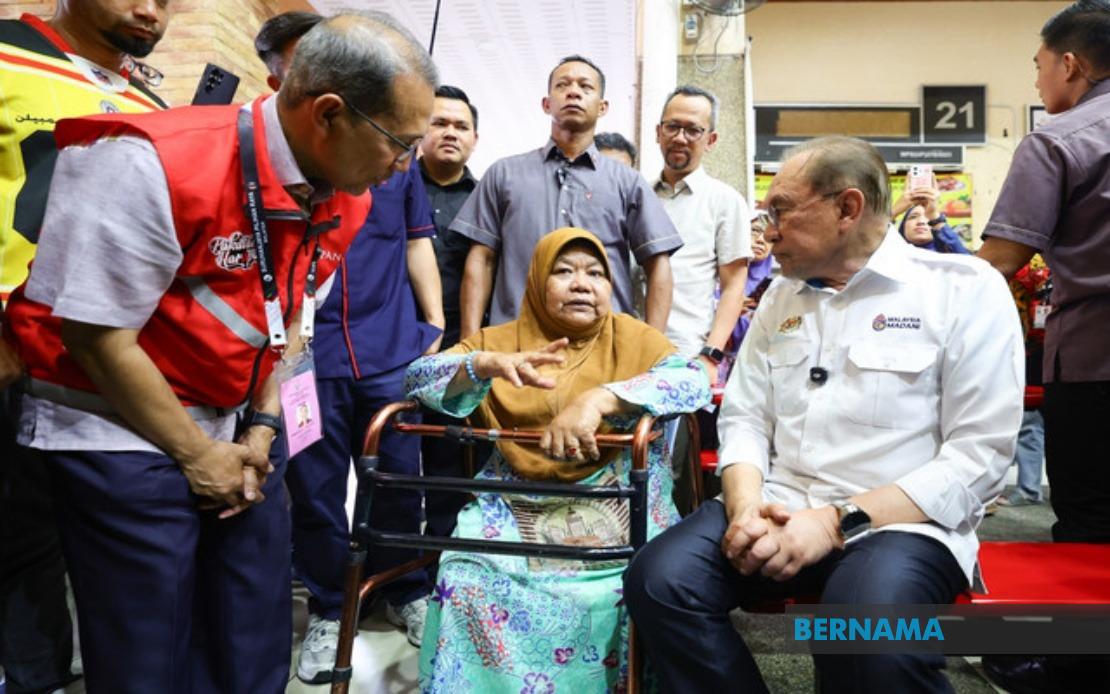
In Seremban on July 22, a determined 68-year-old woman with disabilities realised a lifelong aspiration when she encountered Prime Minister Datuk Seri Anwar Ibrahim during his campaign visit to Benteng Ampangan. Jumaah Mohd Alif, who has lost her left leg in an accident over three decades ago, rode her three-wheeled motorcycle from her village in Kampung Gedung Lalang despite light rain falling in the area. The journey represented far more than a simple trip for her; it symbolised her unwavering commitment to connecting with the country's top political leader in a manner she had only previously imagined.
For Jumaah, the spontaneity of the encounter made the moment even more profound. She explained that villagers had informed her just the previous day that Anwar would be visiting the nearby Ampangan area. Rather than let the unfavourable weather discourage her, she made the decision to undertake the journey immediately, viewing it as an opportunity that might never come again. The drizzle that fell that morning became irrelevant in the face of what she considered an exceptional chance to interact personally with Malaysia's leader, something that had eluded her throughout her life until that day.
The significance of this meeting cannot be overstated for Jumaah, who had spent decades observing Anwar from a distance or through television broadcasts. She had never genuinely anticipated that circumstances would align to permit a face-to-face conversation with the Prime Minister. This encounter transcended the typical nature of political campaign interactions; for her, it represented validation that her existence and concerns held weight in the eyes of those steering the nation's direction. The opportunity to speak directly with Anwar about issues affecting her life allowed her to express concerns that might otherwise remain unheard by those in the highest echelons of government.
Jumaah used this rare opportunity to articulate her hopes for the future direction of government policy. She voiced expectations that the administration would maintain its commitment to safeguarding the welfare of Malaysia's most vulnerable populations, particularly elderly citizens and individuals living with disabilities like herself. This plea reflects broader concerns within the disabled community regarding adequate social safety nets, accessibility, and inclusion in mainstream society. Her words carried particular weight given that she had demonstrated through her own actions the determination that many persons with disabilities possess, despite the systemic and physical barriers they frequently encounter.
Anwar's presence in Negeri Sembilan that day formed part of a broader political effort by the ruling coalition. As chairman of Pakatan Harapan, he was actively campaigning to consolidate and expand the coalition's electoral support during the state election campaign. His visit to Ampangan represented a strategic engagement with voters in a crucial swing state, where every vote counted toward maintaining coalition control of the state government. The timing of the campaign coincided with the Election Commission's announcement that early voting would commence on July 28, with the general polling day scheduled for August 1.
The timing of this encounter highlights the intersection of personal aspiration and political mobilisation. Jumaah's determination to meet the Prime Minister occurred within the context of an active electoral campaign, where political leaders make themselves more visible and accessible to the public than in ordinary circumstances. Yet her journey through the rain speaks to something beyond mere opportunism; it demonstrates how individuals from marginalised groups seek direct access to power holders in hopes of securing attention to their concerns. For someone who has navigated life with a significant physical disability for over three decades, the effort to reach Anwar represented an investment in the possibility that her voice might influence policy direction.
The story of Jumaah's determination also underscores the lived experiences of Malaysia's disabled population, a demographic that constitutes a significant portion of the electorate yet frequently remains invisible in mainstream political discourse. Her willingness to brave inclement weather and physical challenges to meet a political leader reflects the desperation that sometimes accompanies marginalisation. When ordinary channels for representation feel insufficient, individuals take extraordinary measures to ensure their concerns reach those in power. Jumaah's motorcycle ride became a statement about the importance of disability representation and the persistent need for government attention to this community's welfare.
Negeri Sembilan's electoral significance in the Malaysian political landscape adds another layer to this encounter. As a state that could swing between different political alliances, every vote and every community's support matters considerably. The disabled community's electoral participation and loyalty can prove decisive in closely contested elections. Anwar's engagement with Jumaah, whether incidental or deliberate, sends a signal about the coalition's commitment to acknowledging diverse voter groups. For disability advocates watching from the sidelines, such moments represent progress in recognising persons with disabilities as politically significant constituents worthy of direct engagement.
The broader implications of this encounter extend beyond Seremban's borders. In Southeast Asia, where disability rights remain relatively nascent in political consciousness compared to Western democracies, Malaysia's leadership figures engaging with disabled citizens carries symbolic importance. It suggests, however incrementally, a shift toward more inclusive political participation. Jumaah's story will likely resonate with many others facing similar barriers, potentially inspiring greater civic engagement among people with disabilities throughout Malaysia.
As the Negeri Sembilan state election progresses toward its conclusion, the human stories emerging from the campaign trail often carry more weight than manufactured political messaging. Jumaah's journey through drizzle to meet Anwar exemplifies the tangible connections that voters seek with their leaders. Her willingness to invest physical effort and face personal discomfort to secure a few moments of direct conversation reflects the democratic process at its most fundamental level—citizens seeking to be heard by those who govern them. Whether this encounter translates into concrete policy improvements for Malaysia's disabled community remains to be seen, but for Jumaah herself, the achievement of this long-held dream represents a personal triumph that transcends electoral cycles and political calculations.

