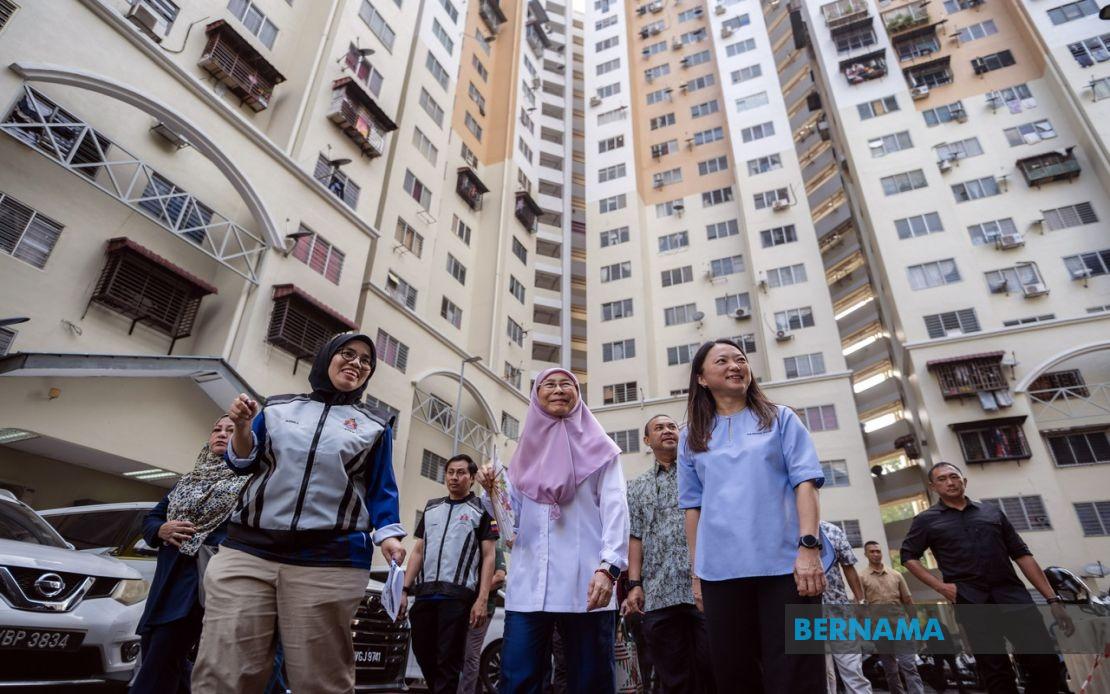
The Desa Tun Razak People's Housing Project has reached a significant milestone with the completion of major upgrading works valued at RM9.6 million, positioning it among 22 successfully renovated PPR compounds across Kuala Lumpur. The work is being carried out as part of a broader RM300 million government investment announced this year, aimed at systematically revitalizing the capital's ageing public housing stock which serves over 8,000 households.
Minister in the Prime Minister's Department (Federal Territories) Hannah Yeoh emphasized during an inspection that the strategic approach marks a deliberate shift away from sporadic maintenance cycles. Rather than addressing problems reactively, the government has secured a dedicated maintenance fund that will allow for systematic, coordinated improvements across all 61 PPR units in Kuala Lumpur. This comprehensive strategy reflects recognition that public housing projects require sustained financial commitment beyond their initial development phase to maintain structural integrity and resident safety standards.
The allocation received backing from all Kuala Lumpur Members of Parliament, signalling cross-party consensus on the need for coordinated housing maintenance. This parliamentary agreement underscores the political importance placed on public housing conditions, particularly given the concentration of lower-income families residing in PPR compounds. The Desa Tun Razak facility, which has housed residents since 1998, represents one of the older PPR developments in need of modernization and safety enhancements.
Specific work undertaken at the Desa Tun Razak site addressed critical infrastructure deficiencies. Electrical wiring systems were replaced to meet contemporary safety standards, road surfaces were resurfaced to improve accessibility and reduce hazards, and fire safety infrastructure was substantially upgraded. These interventions directly respond to concerns highlighted by multiple fire incidents that affected PPR buildings during the previous year, prompting urgent action to prevent future tragedies and protect vulnerable residents.
According to Kuala Lumpur Mayor Datuk Fadhlun Mak Ujud, the RM9.6 million expenditure was distributed strategically across priority areas. Repainting works constituted the largest single component at RM7 million, improving aesthetic conditions and protecting structural surfaces from environmental degradation. Fire prevention systems and electrical infrastructure upgrades absorbed RM1.68 million, addressing the most pressing safety concerns. Road resurfacing consumed nearly RM1 million, with additional investment directed toward upgrading fire riser systems and drainage infrastructure that had deteriorated over the site's two decades of operation.
The completion of 22 PPR projects to date represents meaningful progress toward the year-end target when all improvements funded through the RM300 million allocation are expected to be finalized. This timeline suggests an acceleration in renovation pace across the capital's public housing sector, reflecting the government's commitment to comprehensive renewal rather than fragmented, piecemeal interventions. The expectation of completing all 61 projects within a defined timeframe provides residents with clarity about when their compounds will receive attention and benefit from systematic upgrades.
Parking congestion remains an unresolved challenge at the Desa Tun Razak facility, reflecting broader infrastructure pressures in high-density public housing environments. Kuala Lumpur City Hall has committed to identifying nearby vacant land that could serve as temporary parking areas, providing some relief to residents struggling with chronic space shortages. This practical response acknowledges that building and infrastructure upgrades must extend beyond structural maintenance to address lifestyle constraints that significantly impact resident daily experience and satisfaction.
Bandar Tun Razak Member of Parliament Datuk Seri Dr Wan Azizah Wan Ismail used the occasion to appeal to residents for collective stewardship of upgraded facilities. Her call for cultivating a culture of property care reflects understanding that government investment alone cannot sustain public housing quality without resident engagement and responsibility. The message implicitly recognizes that maintenance cycles will become meaningless if renewed facilities deteriorate rapidly through neglect or damage, requiring active partnership between authorities and community members.
The Desa Tun Razak project represents a case study in systematic public housing renewal applicable across Malaysia's broader PPR network. Beyond Kuala Lumpur, numerous states operate aging public housing compounds facing similar infrastructure challenges. The successful completion of nearly 22 projects and organizational framework established through coordinated parliamentary input offers a replicable model for other federal territories and potentially state-administered PPR developments. The emphasis on dedicated maintenance funding, cross-party coordination, and integrated service improvements—combining electrical systems, fire safety, structural work, and parking solutions—demonstrates a mature approach to managing public assets.
The broader significance of this renewal initiative extends beyond physical infrastructure to address equity concerns in urban Malaysia. Public housing residents, predominantly from lower-income segments, have historically experienced delayed or inadequate maintenance, creating safety risks and living condition disparities compared to other residential communities. The RM300 million allocation and systematic completion schedule signal renewed government prioritization of this demographic's living standards. For Malaysian observers and residents in similar facilities nationwide, the Desa Tun Razak completion illustrates that sustained public investment in PPR maintenance remains feasible and can be achieved through coordinated governance and parliamentary consensus.

