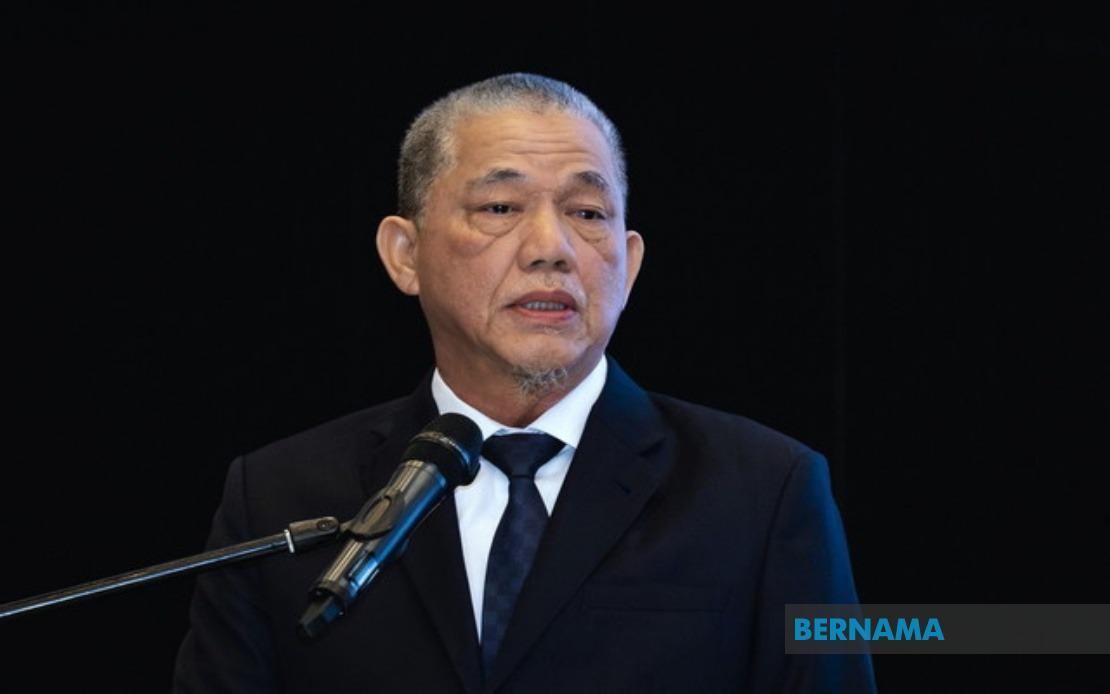
Deputy Prime Minister Datuk Seri Fadillah Yusof will proceed with heart bypass surgery at the National Heart Institute (IJN) in the near term, according to recommendations made by his medical team. The announcement was made public through a statement released by his press secretary, Datuk Misiah Taib, who also serves as the communications officer for Fadillah's portfolio as Minister of Energy Transition and Water Transformation (PETRA).
Fadillah, one of Malaysia's most senior politicians and a key figure in the current federal government structure, is reported to be maintaining stable health at this time. Medical professionals advising him have suggested a period of comprehensive rest prior to the surgical procedure. The family has requested privacy during this medical phase, asking that the minister refrain from accepting visitors to allow his medical team to conduct thorough pre-operative assessments and treatment protocols without interruption.
The timing of this announcement carries significance for Malaysia's political landscape. As Deputy Prime Minister, Fadillah holds a position critical to the functioning of the federal executive branch, and any extended absence from duty naturally raises questions about governmental continuity and delegation of responsibilities. The revelation that he requires surgical intervention of this magnitude suggests that underlying cardiovascular concerns had been identified through recent medical evaluations.
By international standards, coronary artery bypass grafting remains one of the most commonly performed major surgical procedures, particularly among individuals in high-stress administrative positions. The procedure involves creating new pathways for blood flow around blocked coronary arteries, thereby restoring adequate oxygen supply to heart muscle tissue. For patients who follow post-operative rehabilitation protocols diligently, recovery timelines and long-term prognosis are generally favourable, especially when the surgery is undertaken while the patient remains in relatively stable condition.
The family's formal request for the public's prayers and well-wishes reflects the gravity with which they view the upcoming medical intervention, while simultaneously seeking to maintain hope and positivity regarding outcomes. Such public communication around the health challenges of senior government figures is increasingly common in Malaysia, balancing transparency with the family's desire to preserve dignity during a vulnerable period.
Fadillah's role encompasses significant portfolio responsibilities related to Malaysia's energy infrastructure and water resources—sectors crucial to the nation's development trajectory. These ministries handle complex policy matters ranging from renewable energy transition initiatives to water security in an increasingly stressed hydrological environment. The anticipated period of reduced engagement will likely necessitate delegation of certain responsibilities to other government officials or to senior civil servants within his ministerial offices.
The National Heart Institute, where Fadillah will undergo the procedure, represents Malaysia's leading cardiac care facility and has established a strong track record in complex heart surgeries. The institution's selection indicates confidence in domestic medical capabilities, a matter of national relevance given Malaysia's positioning as a medical tourism hub in Southeast Asia. Fadillah's choice to seek treatment domestically also sends a subtle signal about confidence in Malaysian healthcare infrastructure.
For the broader Malaysian political context, any significant health event involving a senior minister inevitably prompts discussion about succession planning, though such matters remain largely speculative absent formal announcements. Fadillah's position as Deputy Prime Minister was established through the coalition arrangements that have defined recent Malaysian federal politics, and any extended absence could influence calculations within ruling coalition dynamics.
The statement notably emphasises family gratitude for public support and prayers, a cultural acknowledgment that resonates within Malaysian society's predominantly faith-based framework. This framing transforms what might otherwise be purely a medical matter into a moment of national unity and collective concern for a senior public servant's wellbeing. Such expressions also subtly demonstrate that despite the pressures of high office, family remains central to Fadillah's identity and values.
Medical observers note that successful outcomes from coronary bypass surgery in individuals of active working age typically enable relatively normal resumption of professional duties, contingent upon appropriate rehabilitation and lifestyle modifications. Should Fadillah's recovery progress as expected, he would likely resume ministerial functions within several months, though the initial period following hospital discharge typically demands significant rest and graduated resumption of activities.
The public disclosure of health challenges by government ministers reflects evolving standards of transparency in Malaysian governance. While respecting individual privacy, providing basic information about a senior official's medical status and anticipated absence helps manage government operations smoothly and maintains public confidence through communication rather than rumour. This balanced approach acknowledges both the minister's right to medical confidentiality and the public interest in understanding governmental capacity during potential periods of transition.

