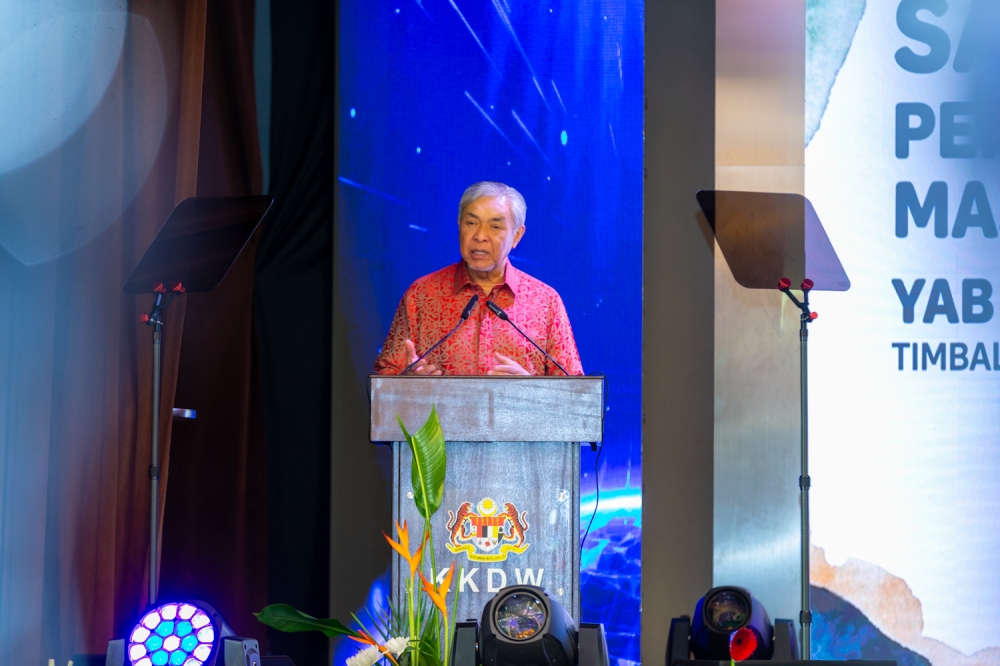
Deputy Prime Minister Datuk Seri Ahmad Zahid Hamidi has rejected allegations that senior leaders from four major political blocs held a closed-door meeting, moving to quash speculation about potential shifts in Malaysia's political alignment. Speaking in Putrajaya on July 21, Zahid characterized the circulating claims as baseless and emphasised his unwavering dedication to the existing unity government framework that has underpinned Malaysia's governance structure since 2022.
The rumours alleged that representatives from Barisan Nasional, Perikatan Nasional, GPS, and Gabungan Rakyat Sabah had convened to discuss reconfiguring their political partnerships. Such reports, if true, would have signalled a substantial realignment in Malaysian politics, potentially threatening the stability of the incumbent administration. The speculation had circulated widely on social media and political circles, prompting swift denial from the government's number two.
Zahid's statement carries particular weight given his position as Deputy Prime Minister and his prominence within Umno, the dominant party in the Barisan Nasional coalition. His categorical dismissal signals to party members, coalition partners, and the broader political community that there is no imminent restructuring of the ruling alliance. The timing of such denials is strategically important, as maintaining confidence in the unity government's cohesion remains essential to its legislative effectiveness and public legitimacy.
The unity government, formally established following the 2022 general election, comprises multiple political entities with historically divergent ideologies and support bases. This unusual arrangement united Barisan Nasional, Pakatan Harapan, and several East Malaysian partners to form a governing majority in Parliament. Such diverse coalitions inherently generate periodic tensions and speculation about realignments, particularly when individual parties perceive opportunities to enhance their negotiating positions or when leadership transitions occur within constituent organisations.
Political scientists observing Malaysian governance have noted that rumours of coalition restructuring tend to surface during periods of internal party manoeuvrings or when prominent figures consolidate power. Zahid's emphatic rebuttal seeks to create certainty during a potentially delicate phase, preventing conjecture from destabilising parliamentary arithmetic or triggering destabilising responses from coalition partners. His statement essentially reassures all stakeholders that the foundational agreement binding the unity government remains intact and operative.
For Malaysian business and investor communities, political stability signals confidence in policy continuity and predictable legislative outcomes. Persistent rumours about coalition instability can unsettle financial markets and complicate long-term economic planning. By publicly rejecting the reported meeting, Zahid addresses not only internal party concerns but also broader economic confidence. This dimension becomes increasingly relevant as Malaysia navigates post-pandemic economic recovery and regional competitive pressures.
The unity government model, whilst unconventional, has delivered legislative stability and enabled the passage of significant legislation that might otherwise face obstruction. However, critics argue that such broad coalitions can dilute policy coherence and create opportunities for political grandstanding. The repeated need to deny rumours of coalition fracture suggests that underlying tensions within this diverse partnership persist, even if they remain manageable within the current framework.
Zahid's reaffirmation of support for the unity government reflects broader Umno strategy under current leadership, which has prioritised stabilising governance after turbulent years of political contestation. The party's senior leadership recognises that precipitating coalition breakdown would invite electoral consequences and diminish Umno's ability to advance its policy agenda. This calculation shapes the public messaging from top-tier Umno figures when speculation emerges about potential political realignments.
Regionally, Malaysia's political stability carries implications for Southeast Asian diplomatic dynamics and ASEAN cohesion. A destabilised Malaysian government could complicate regional initiatives and dilute Malaysia's voice within collective forums. International observers therefore monitor signals of Malaysian political stability as indicators of regional strategic predictability. Zahid's statement, whilst addressing a domestic audience, implicitly conveys to regional partners that Malaysia's governance apparatus remains steady.
The broader pattern of coalition rumours reflects a political environment where numerous significant actors hold meaningful leverage. With no single party commanding overwhelming parliamentary majorities, coalition management becomes an ongoing exercise requiring negotiation, compromise, and periodic reinforcement of commitment. As Malaysia approaches potentially significant political moments, including future electoral cycles, such dynamics will likely intensify, generating periodic moments of uncertainty that require leadership reassurance.
Moving forward, the unity government's sustainability depends on continued commitment from constituent parties and their senior leadership. Zahid's unambiguous statement serves this purpose, establishing clear red lines against coalition restructuring at least in the immediate term. However, Malaysia's political trajectory remains subject to broader currents including factional competition within parties, demographic shifts in electoral preferences, and evolving public expectations regarding governance quality and economic performance. The unity government arrangement, regardless of its current stability, exists within a dynamic political environment requiring constant navigation and periodic recalibration.

