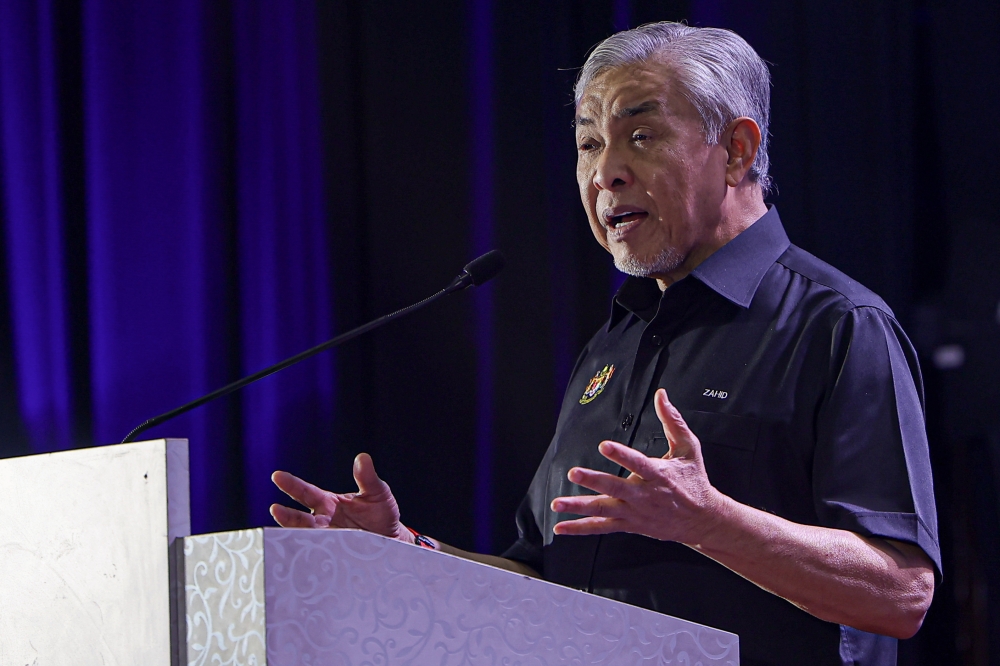
Deputy Prime Minister Datuk Seri Ahmad Zahid Hamidi has levelled serious allegations that ministry personnel experienced undue pressure to participate in Barisan Nasional-related activities during recent state polling exercises, a charge that strikes at longstanding concerns over the impartiality of the Malaysian civil service during electoral periods.
The remarks, made in Putrajaya, underscore persistent tensions within the ruling coalition regarding the appropriate conduct of government officers when political campaigns are in full swing. The distinction between civil service neutrality and party mobilisation has long been a contentious issue in Malaysian politics, with critics arguing that the machinery of government is sometimes deployed to benefit the dominant political coalition at the expense of electoral fairness.
Ahmad Zahid's statement carries particular weight given his position as the second-highest ranking member of the federal executive. His willingness to publicly air these grievances suggests growing friction within Barisan Nasional itself, potentially indicating disagreements over campaign strategy and the extent to which state resources should be leveraged for electoral advantage. Such internal criticism from a senior minister is relatively unusual and hints at broader dissatisfaction with how certain quarters are managing the party's recent electoral challenges.
The timing of these allegations coincides with Malaysia's ongoing efforts to navigate a complex political landscape characterised by shifting coalitions and increasingly competitive electoral contests. Recent state elections have demonstrated that Barisan Nasional can no longer assume automatic victory in traditional strongholds, forcing the coalition to adopt more aggressive campaign tactics. However, such approaches risk crossing ethical lines when government employees become ensnared in partisan activities.
Civil service neutrality represents a fundamental pillar of democratic governance, ensuring that public institutions serve all citizens equitably rather than advancing the interests of any particular political faction. When state machinery becomes weaponised for electoral purposes, it distorts the playing field and undermines public confidence in the impartiality of institutions. Officers who feel compelled to participate in party events may experience conflicts of interest and professional compromised positions, raising questions about their ability to discharge duties without bias.
Malaysia's Public Service Commission and Prime Minister's Office have previously issued guidelines attempting to establish clear boundaries between civil service functions and political party activities. However, enforcement remains inconsistent, and lower-ranking officials often find themselves in precarious positions when superior officers suggest, implicitly or explicitly, that attendance at party events is expected or necessary for career advancement.
The allegations gain resonance within the broader Southeast Asian context, where several nations grapple with similar challenges regarding political neutrality of state institutions. Thailand, Indonesia, and the Philippines have all confronted scandals involving government misuse for electoral purposes, suggesting this represents a regional phenomenon rather than an isolated Malaysian concern. International observers monitoring democratic norms frequently cite civil service impartiality as a crucial indicator of electoral integrity.
For opposition parties, Ahmad Zahid's comments provide ammunition for accusations that Barisan Nasional routinely abuses state resources during campaigns. They may seek to weaponise these statements in future electoral contests, demanding stronger safeguards and enforcement mechanisms. This could intensify pressure on the government to demonstrate genuine commitment to separating party politics from administrative functions, particularly ahead of the next general election.
The incident also illuminates potential fractures within Barisan Nasional's leadership structure, with different factions apparently holding divergent views on campaign methodologies. Zahid's criticisms may indicate tensions between his faction and other BN component parties or individuals who prioritise aggressive mobilisation over institutional propriety. Such divisions, if they persist and deepen, could weaken the coalition's capacity to respond cohesively to electoral challenges.
Moving forward, the government faces mounting pressure to strengthen institutional safeguards protecting civil service independence. This might involve clearer guidelines, more robust monitoring mechanisms, and meaningful consequences for officers or supervisors who violate neutrality principles. Without decisive action, these allegations risk calcifying into perceptions of systematic abuse, further eroding public trust in governmental institutions.
The broader implications extend to Malaysia's democratic health and international standing. Nations that fail to protect civil service neutrality frequently experience declining governance indicators and weakened institutional resilience. By addressing these concerns transparently and implementing genuine reforms, Malaysia can reinforce its commitment to democratic principles and institutional integrity, setting a positive example within Southeast Asia.

