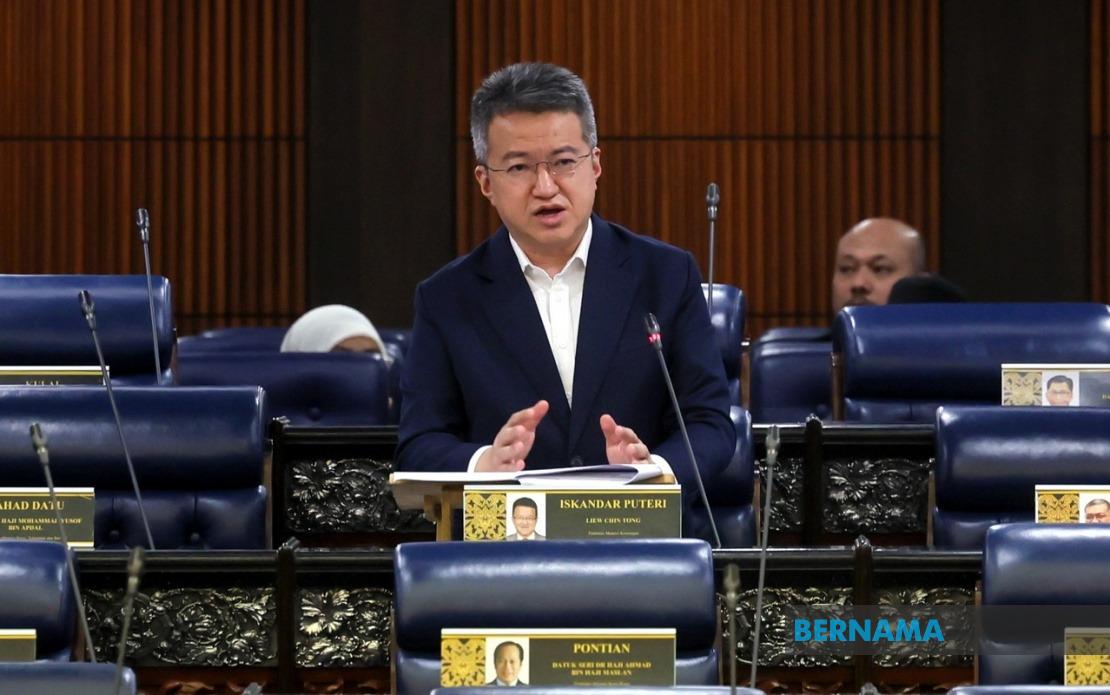
Malaysia's Deputy Finance Minister Liew Chin Tong has categorically denied suggestions that fugitive financier Low Taek Jho, commonly known as Jho Low, slipped into the country alongside a Chinese delegation to conduct secret negotiations over the 1Malaysia Development Berhad scandal. During parliamentary Question Time this week, Liew offered a terse rebuttal to allegations that had circulated in media reports claiming Jho Low was spotted at clandestine talks in Malaysia late last year aimed at hammering out a settlement package involving the Ministry of Finance.
The denial comes amid persistent speculation about whether the enigmatic businessman, who has remained a fugitive throughout the decade-long saga, might make an appearance in his home country to resolve the enormous financial liabilities hanging over the 1MDB affair. Opposition lawmaker Syed Saddiq Syed Abdul Rahman, representing the MUDA party, had pressed the government on the matter after news outlets reported on the alleged secret meeting. Liew's brief response underscores official sensitivity around any suggestion that Jho Low could re-enter Malaysian territory or play a direct role in resolving one of the nation's most notorious financial scandals.
The government has cast its recovery efforts as a comprehensive operation spanning multiple fronts and legal mechanisms. Liew articulated this strategy when responding to a separate question from DAP's Chong Chieng Jen regarding 1MDB's outstanding debts and the administration's capacity to reclaim misappropriated assets. According to the Deputy Minister, authorities have intensified their push to recover funds through both criminal prosecutions and civil litigation, with particular emphasis on holding senior figures accountable for their roles in the scheme.
A landmark court decision last December significantly strengthened the government's hand in these proceedings. On December 26, 2025, the High Court found former Prime Minister Najib Tun Razak guilty on 25 counts of money laundering and abuse of power connected to 1MDB-linked bribery. The court handed down a 15-year prison sentence alongside a colossal fine of RM11.38 billion, representing one of the most severe punishments imposed in Malaysia's corruption history. This verdict validated years of investigation and prosecution, cementing Najib's culpability despite his persistent denials.
Beyond Najib's conviction, the government has pursued multiple other targets through the civil courts. The Ministry of Finance has launched a damages claim against Datin Seri Rosmah Mansor, Najib's wife, seeking to recover approximately US$380 million, equivalent to roughly RM1.56 billion, in compensation for 1MDB funds that were allegedly channelled into acquiring luxury goods. Court documents and investigative reports have detailed how these funds financed an extravagant shopping spree encompassing high-end handbags, jewellery, and other prestige items, effectively converting state money into personal adornments for the family.
Yet the most substantial legal action targets Jho Low himself, the figure widely understood to have orchestrated and masterminded the entire 1MDB misappropriation scheme. The government has pursued criminal proceedings against the fugitive businessman while simultaneously advancing a civil claim valued at US$3.78 billion, translating to approximately RM15.4 billion. These dual-track efforts reflect the determination to pursue Jho Low through every available legal avenue, even as his whereabouts remain unclear and extradition prospects uncertain. The sheer scale of the civil claim underscores official assessment of his central culpability in the fraud.
Liew's parliamentary statements also emphasised the broader ramifications of the 1MDB catastrophe for the nation. The scandal has inflicted what he characterised as four distinct categories of harm to Malaysia's interests and standing. Direct financial losses represent the most tangible impact, encompassing the billions in misappropriated state funds. Beyond this sits the opportunity cost, measuring what Malaysia's economy and development could have achieved had those resources been deployed productively rather than siphoned away. The third category encompasses irrecoverable losses—assets and investments that have been permanently lost or damaged beyond redemption.
Perhaps most damaging to long-term national interests is the reputational harm the scandal has inflicted on Malaysia's global standing. The 1MDB affair thrust the country into international infamy, damaging its credibility in financial circles, complicating diplomatic relationships, and reinforcing negative perceptions about governance and institutional integrity. This reputational scarring extends far beyond the immediate financial figures, affecting Malaysia's capacity to attract quality foreign investment, negotiate international agreements, and maintain the soft power necessary for regional influence. Rebuilding that damaged reputation will require sustained demonstration of accountability and institutional reform.
The government's multi-pronged approach to accountability reflects recognition that no single legal victory fully resolves the scandal's dimensions. While Najib's conviction marked a watershed moment, pursuing civil damages against Rosmah and maintaining criminal and civil cases against Jho Low ensures that the search for justice and fund recovery remains active. The size of the financial claims—particularly the RM15.4 billion civil suit against Jho Low—indicates authorities view asset recovery as an ongoing, potentially lengthy process that may span multiple jurisdictions given the international nature of the misappropriated funds.
For Malaysian citizens and regional observers, these continued legal battles signal that accountability mechanisms are functioning despite the scandal's complexity and the accused parties' considerable resources and international connections. The parliamentary exchange, while brief, illustrates how questions about 1MDB continue to surface in national discourse, reminding policymakers that public scrutiny of the recovery process remains intense. As the government navigates criminal convictions, civil claims, and international asset recovery efforts, the shadow of 1MDB continues to influence perceptions of Malaysian governance and institutional effectiveness across the region.

