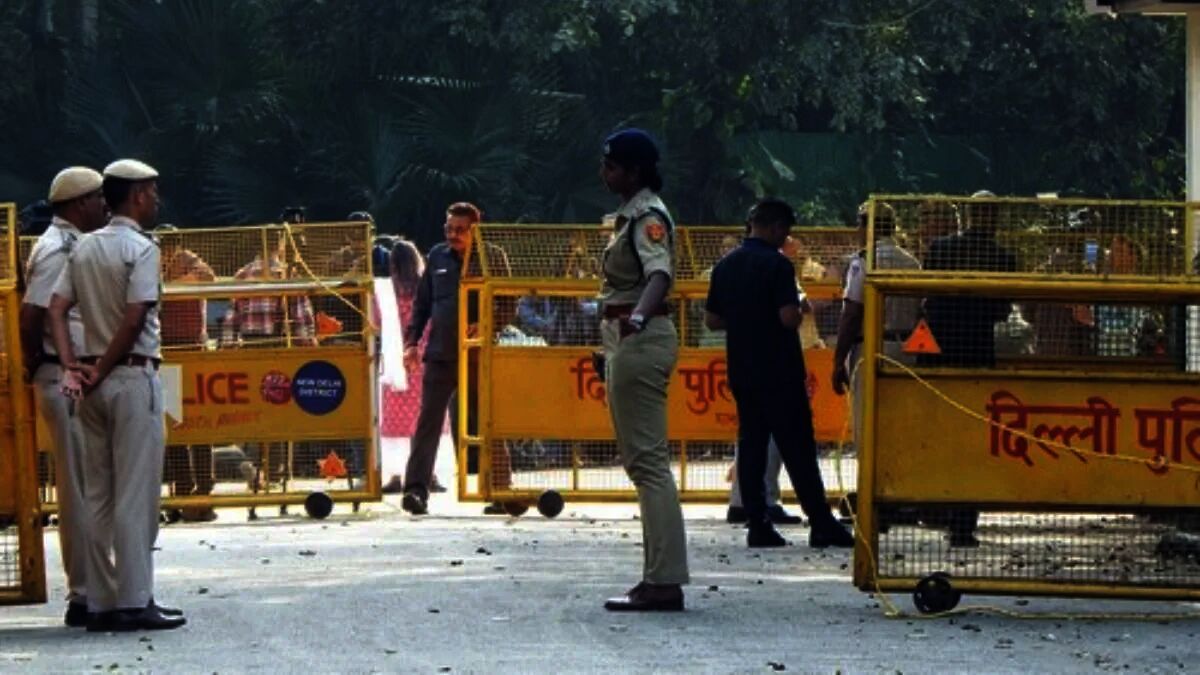
Delhi Police moved swiftly on Thursday, July 30, to counter widespread rumours spreading across social media platforms that Jantar Mantar, India's most iconic protest venue, had been locked or shut down. In an official statement released through social media channels, the police rejected what they characterised as entirely unfounded claims, emphasising that the landmark site in the national capital continues to function as an active and authorised location for peaceful demonstrations. The clarification underscores growing concerns about misinformation surrounding the protest space, which has historically served as the primary hub for civil society activism and citizen grievances in the country.
The police statement provided specific operational details governing the use of Jantar Mantar for demonstrations. According to the Standard Operating Procedure established by Delhi Police in compliance with a Supreme Court order, the venue is permitted to accommodate a maximum of 1,000 persons at any given time. This cap on attendance represents a structured framework designed to balance citizens' constitutional right to protest with public order and safety considerations. Authorisation for demonstrations at the site requires formal applications from organisers or individual protesters, processed through competent authorities and subject to adherence to prescribed conditions and regulations.
The denial came in response to multiple social media posts and news reports claiming the protest site had been sealed. Several images circulating online showed barricades at Jantar Mantar allegedly being welded shut, fuelling speculation about government restrictions on the space. These visuals, along with unverified claims on platforms like X and WhatsApp, contributed significantly to the viral nature of the rumours. The police statement directly addressed this phenomenon, urging citizens to refrain from believing or sharing unverified information and instead rely exclusively on official communications for accurate updates—a tacit acknowledgment of how misinformation can rapidly proliferate in the digital age.
The timing of these rumours is particularly significant given recent developments at the protest venue. Jantar Mantar had hosted an extensive 37-day agitation spearheaded by the Cockroach Janta Party, a civil society organisation that mobilised demonstrators around the controversial NEET-UG (National Eligibility cum Entrance Test for Undergraduate) paper leak and related educational policy issues. This prolonged occupation of the space had maintained sustained public visibility and media attention, drawing thousands of participants concerned about examination irregularities and systemic failures in India's medical education entrance system.
The demonstration concluded following significant political developments. On July 25, Union Education Minister Dharmendra Pradhan announced his resignation from the cabinet portfolio, attributed partially to mounting pressure from the sustained agitation and broader public outcry over the examination leak and subsequent administrative failures. His resignation was seen as a response to the political costs of the education sector crisis. Dharmendra Pradhan's departure and replacement by Union Minister Pralhad Joshi marked a significant bureaucratic and political transition, signalling government acknowledgment of the gravity of the situation.
For Malaysian and Southeast Asian observers, the Jantar Mantar episode provides instructive insights into how urban protest spaces function within democracies. India's designation of a specific, permanent venue for demonstrations reflects institutional arrangements that attempt to channel civic expression while maintaining administrative oversight. By contrast, most Southeast Asian nations have adopted less formalised approaches to protest regulation, with varying degrees of state tolerance depending on political contexts and the nature of grievances being raised. Malaysia's own protest culture has evolved significantly over the past two decades, with venues like Dataran Merdeka and Padang Merbok experiencing periodic restrictions and reopenings reflecting changing governmental attitudes towards public assembly.
The rapid spread of unverified claims about Jantar Mantar's closure reflects broader challenges facing information ecosystems across South and Southeast Asia. Misinformation regarding government restrictions on civic spaces tends to gain traction quickly, particularly when it aligns with existing public anxieties about democratic freedoms. The police's proactive response through official statements demonstrates recognition that countering false narratives about protest space availability requires timely, authoritative communication. In Malaysia's context, similar issues have emerged around permit requirements for assemblies and perceptions of shrinking civic space, making the Delhi Police's transparency efforts relevant to regional governance discussions.
The incident also highlights how extended protest movements can create underlying tensions regarding access to public spaces. The 37-day Jantar Mantar occupation had generated ongoing public discussion about the appropriate balance between sustained civil activism and normal civic usage of shared spaces. When agitations conclude, questions inevitably arise about whether venues will remain available for future demonstrations or whether they will face restrictions. The police clarification attempting to provide certainty on this point suggests official recognition that maintaining confidence in the protest space's continued availability is crucial for the legitimacy of India's democratic institutions.
The barricade welding shown in circulating images likely represented standard perimeter maintenance or temporary crowd management measures rather than permanent closure—a distinction that apparently needed explicit official articulation. This gap between physical security arrangements and their interpretation as permanent restrictions illustrates how visual information can be misread or deliberately misrepresented in social media contexts. The police statement's emphasis on relying exclusively on official sources reflects pragmatic acknowledgment that combating misinformation requires education alongside clarification, particularly when contested interpretations of visual evidence are involved.
Moving forward, the Jantar Mantar clarification carries implications for how Indian authorities manage civic space governance. By reasserting the site's status as an active protest venue immediately after a major agitation, the police avoided creating political vacuum wherein activists might question whether their activism had precipitated permanent restrictions. This represents deliberate institutional messaging designed to sustain the legitimacy of India's protest ecosystem. For regional peers, including Malaysia, the episode offers practical lessons in how transparent communication about civic space policies can address public anxieties more effectively than silence, which inevitably invites speculation and rumour in digital media environments characterised by high distrust of official narratives.

