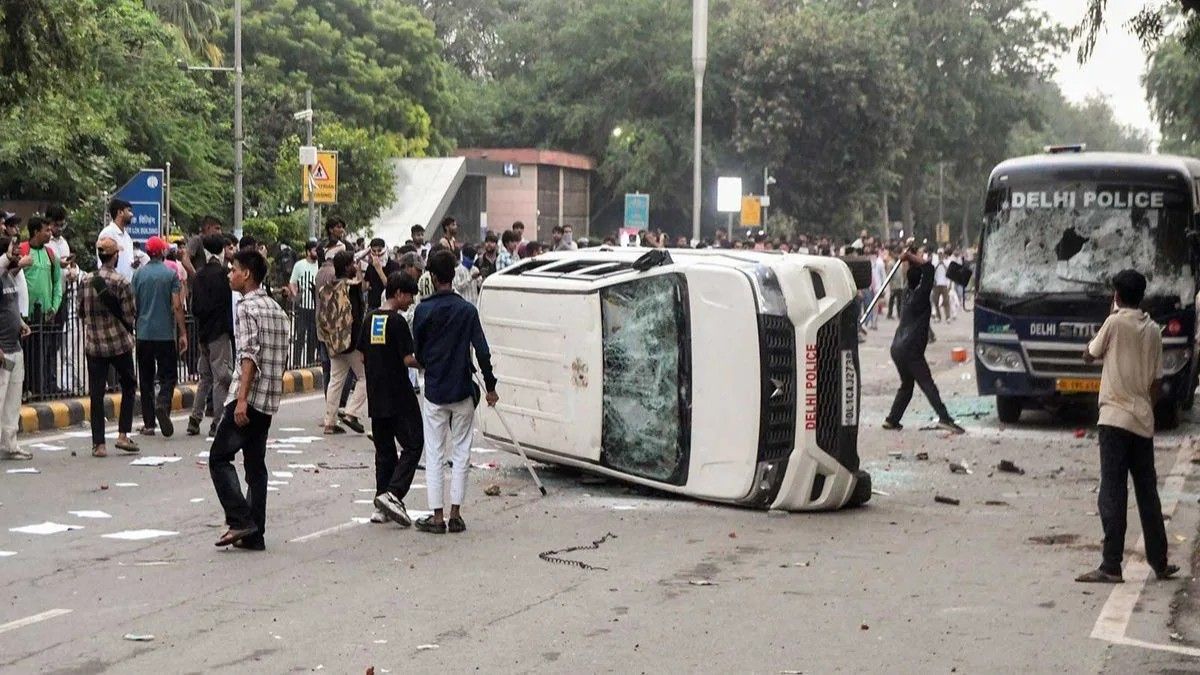
Authorities in New Delhi have initiated criminal proceedings through ten separate cases connected to the Cockroach Janta Party's "Sansad Chalo" demonstration, which descended into violence as protesters sought to reach Parliament. The police department's New Delhi zone issued a statement via social media platform X explicitly refuting viral videos purporting to document fresh stone-throwing and law enforcement action at the Jantar Mantar demonstration site on Tuesday, characterising such claims as "false and misleading" and appealing to residents to trust only official channels for accurate information.
The enforcement action spans multiple stations within New Delhi's police jurisdiction, with the Parliament Street precinct handling four separate cases, Connaught Place managing three, while individual complaints were lodged at Mandir Marg, Barakhamba Road, and Kartavya Path stations. The cases encompass allegations ranging from pre-meditated violence and obstruction of government functions to physical attacks on police personnel and destruction of civic infrastructure. Among the charges are violations under the Bharatiya Nyaya Sanhita, firearms legislation, and statutes protecting public amenities from intentional damage.
The underlying tensions erupted when demonstrators attempted to advance toward Parliament on Monday, advancing demands centred on the resignation of India's Union Education Minister Dharmendra Pradhan, citing purported examination system failures and regulatory lapses. Security personnel recorded one particularly serious allegation involving an alleged violent assault targeting a Rapid Action Force officer during the march. A separate investigation examines claims of unauthorised aerial drone activity within the New Delhi administrative zone, suggesting organisational coordination beyond spontaneous protest activity.
Investigators are currently reviewing more than 250 video recordings to identify individuals involved in the violent episodes and to establish whether orchestrated planning preceded the disruptions. Police characterised Monday's demonstrators as displaying "unruly, aggressive and violent behaviour" despite authorities having imposed restriction orders and repeatedly cautioning participants to maintain order. The department subsequently disseminated its own footage depicting stone-throwing incidents in the Connaught Place vicinity, simultaneously calling upon protesters to exercise restraint and cooperate with law enforcement operations.
Protests reconvened at Jantar Mantar on Tuesday after demonstrators returned to reclaim their gathering space following security personnel's removal of temporary structures and stage installations. The venue maintained a substantial security presence comprising Delhi Police units and Rapid Action Force contingents. This sustained deployment underscores official concerns about potential further disruptions, reflecting the volatile environment that has characterised the capital's demonstration landscape in recent months.
The Cockroach Janta Party's representative Ashutosh Ranka declared the agitation would persist indefinitely until government authorities accede to the organisation's principal demand regarding the education minister's departure. Ranka's statements incorporated allegations that Monday's confrontations resulted in injuries among demonstrators, including students and volunteer participants. The spokesperson further asserted that female protesters experienced mistreatment, specifically naming Geetanjali J. Angmo, whose spouse is prominent activist Sonam Wangchuk, as having endured abuse during the police response.
Delhi Police maintained their position that no supplementary incidents of stone-pelting or enforcement measures materialised on Tuesday, reinforcing their appeal to the public regarding the dangers of disseminating unverified digital content across social media ecosystems. This defensive posture reflects broader governmental challenges in managing information narratives during contentious public demonstrations, where competing accounts frequently circulate simultaneously across digital platforms, complicating citizens' ability to distinguish verified occurrences from speculation.
The situation illuminates persistent tensions between India's protest constituencies and law enforcement apparatus, particularly regarding educational policy and bureaucratic accountability. For Malaysian observers, the incident offers instructive parallels regarding how demonstrations can escalate when governance grievances intersect with enforcement responses, and how digital misinformation can amplify public confusion. The case also demonstrates the complexities confronting authorities attempting to maintain public order while safeguarding individual rights to peaceful assembly and expression.
The scale of investigations undertaken—encompassing multiple police stations, extensive video analysis, and charges spanning multiple legal statutes—suggests official determination to pursue accountability comprehensively. However, the simultaneous allegations of protester injuries and police conduct raise questions about proportionality and operational procedures that typically emerge during post-demonstration reviews. The continuation of Jantar Mantar gatherings despite security operations indicates unresolved underlying grievances that legal proceedings alone may not address.

